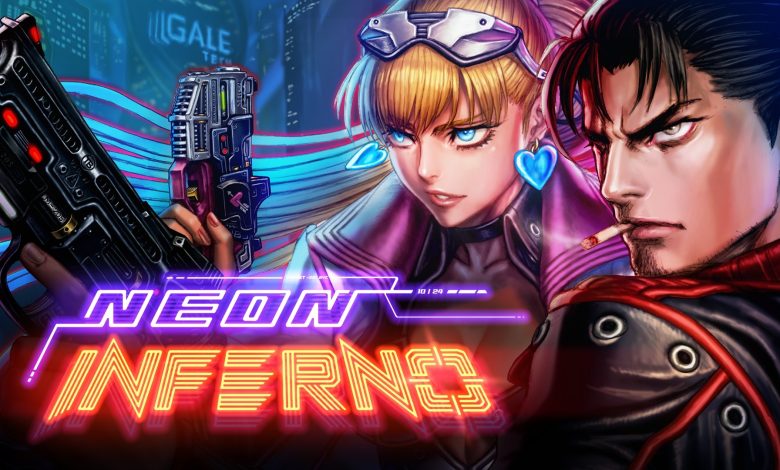

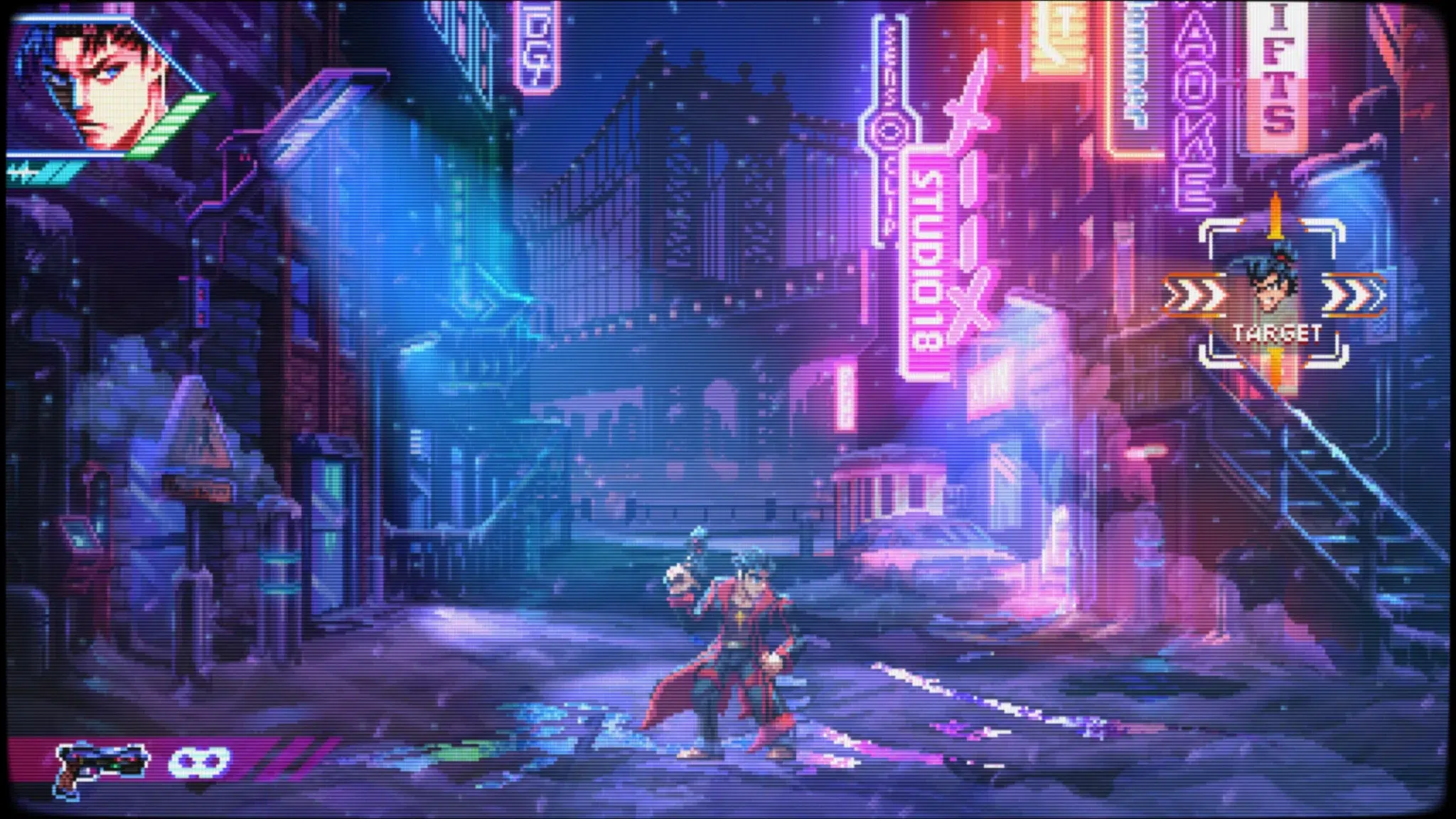
One of the things that caught my attention in Neon Inferno was the detailed spritework. I have a particular fondness for hand-drawn pixel art, especially if it brings back memories of the heyday of coin-ops and 16-bit and 32-bit home consoles. Combined with its fast-paced action and explosive soundtrack, I couldn't help but be drawn to this game.
Of course, if you're expecting dramatizations and stories that you'll remember for a long time, you've probably come to the wrong place. Neon Inferno does the bare minimum in terms of story. That is, it provides a nudge to externalize your violent instincts. A duo of hired assassins, Angelo and Mariana, who belong to the Italian Mafia in a dystopian New York, take on missions for the "family". These usually involve the elimination or protection of specific targets. As expected, they will encounter police officers, yakuza thugs, manned gunships (!) and more on their way to completing their missions.
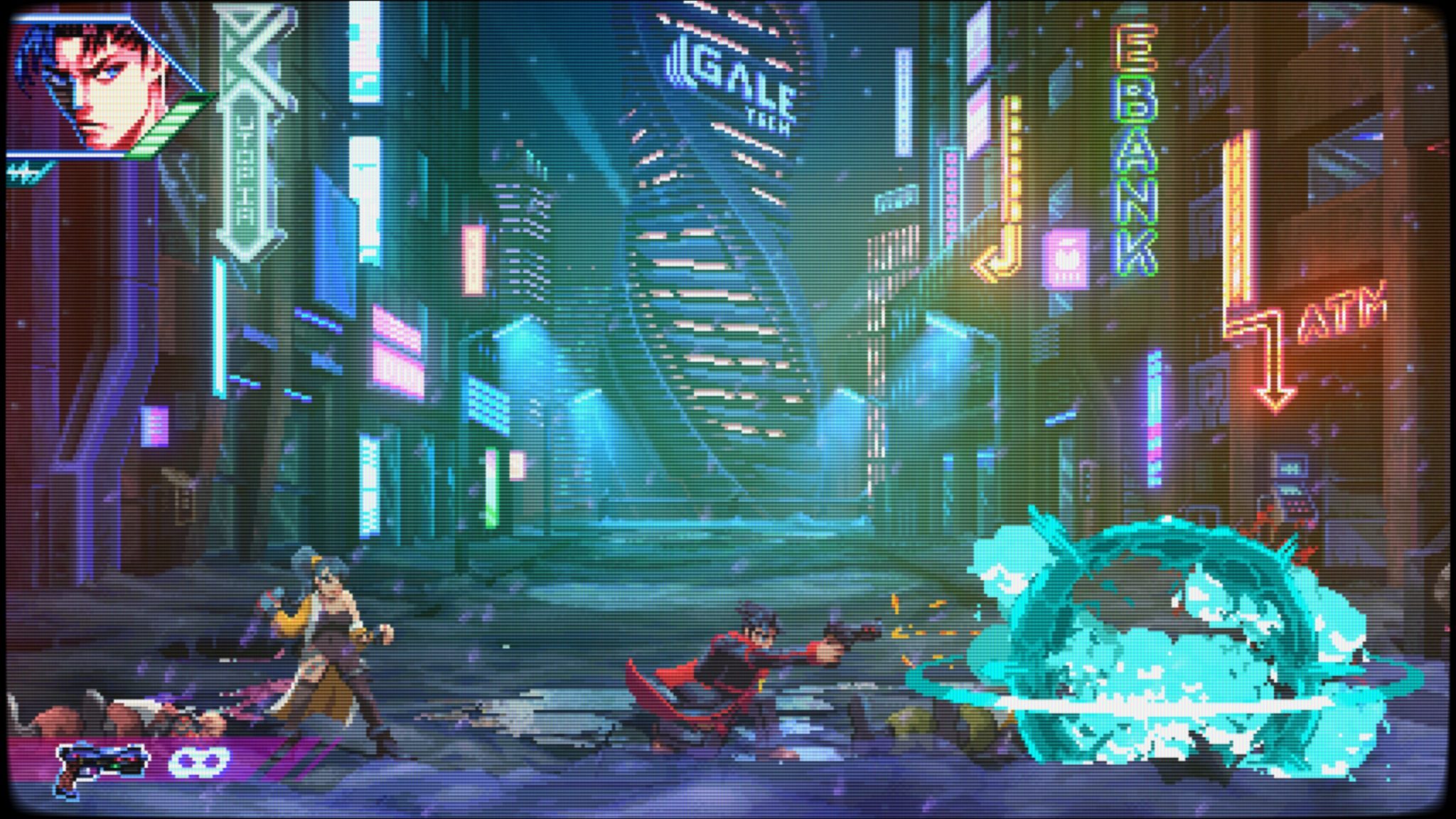
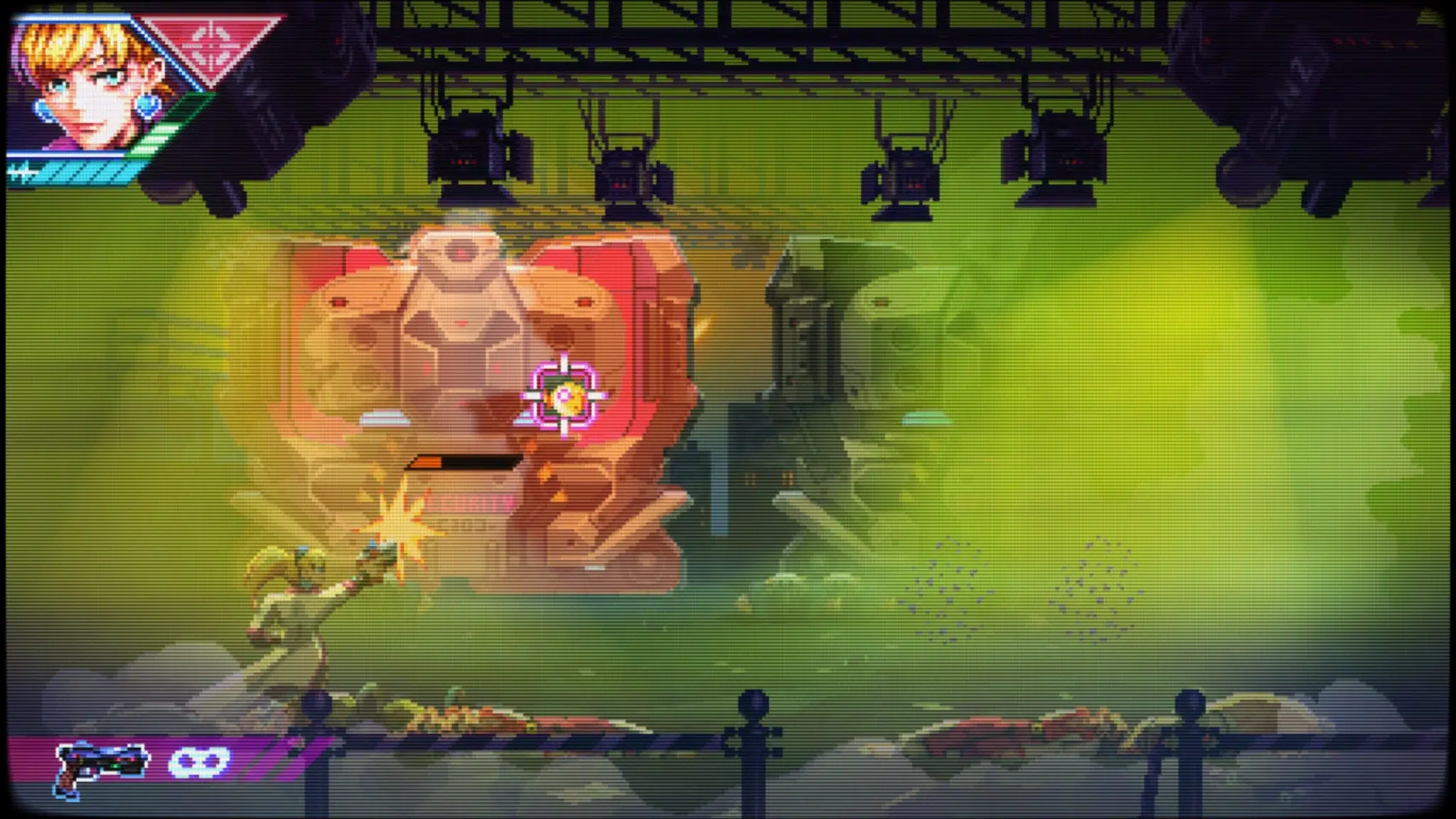
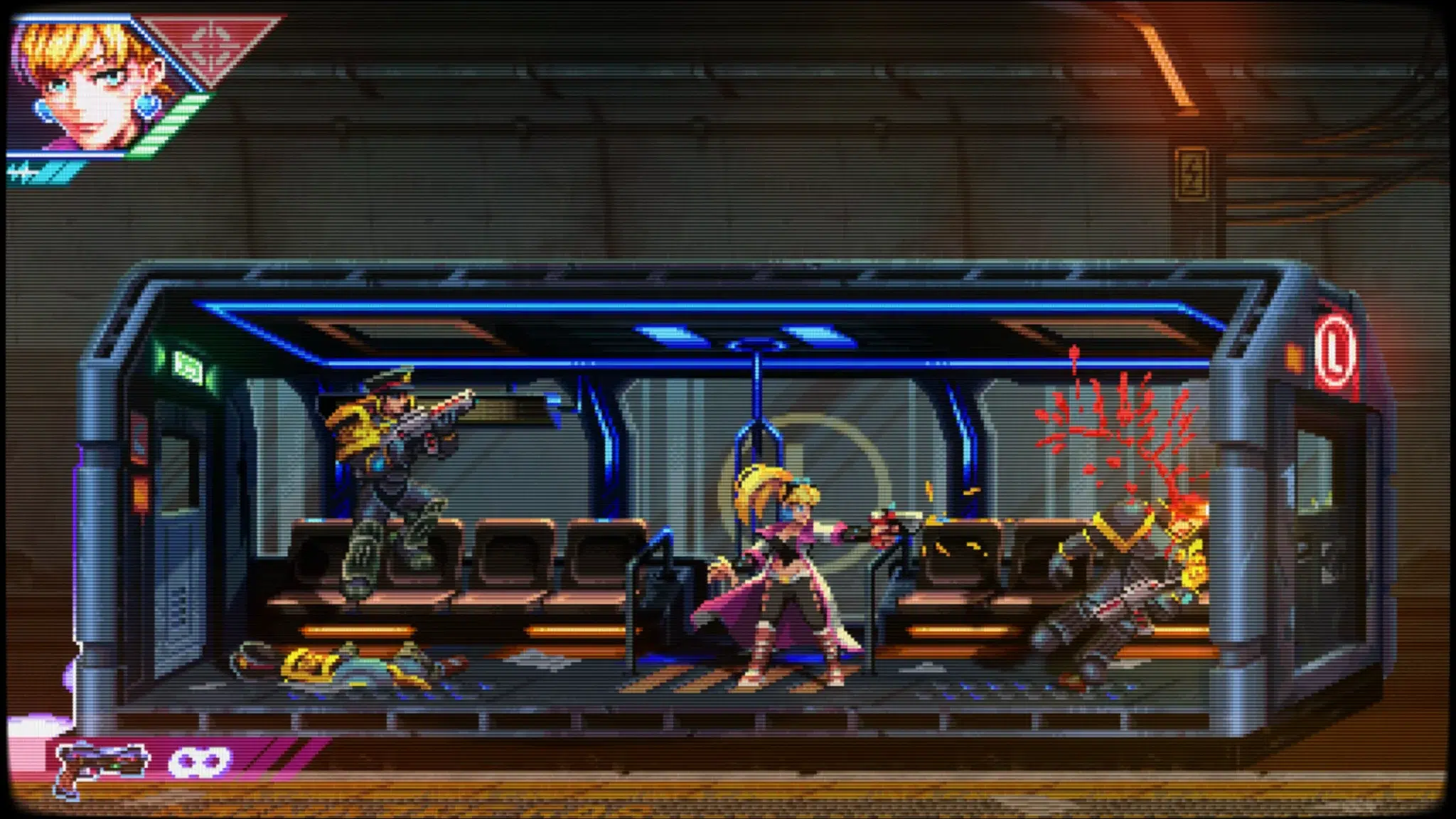
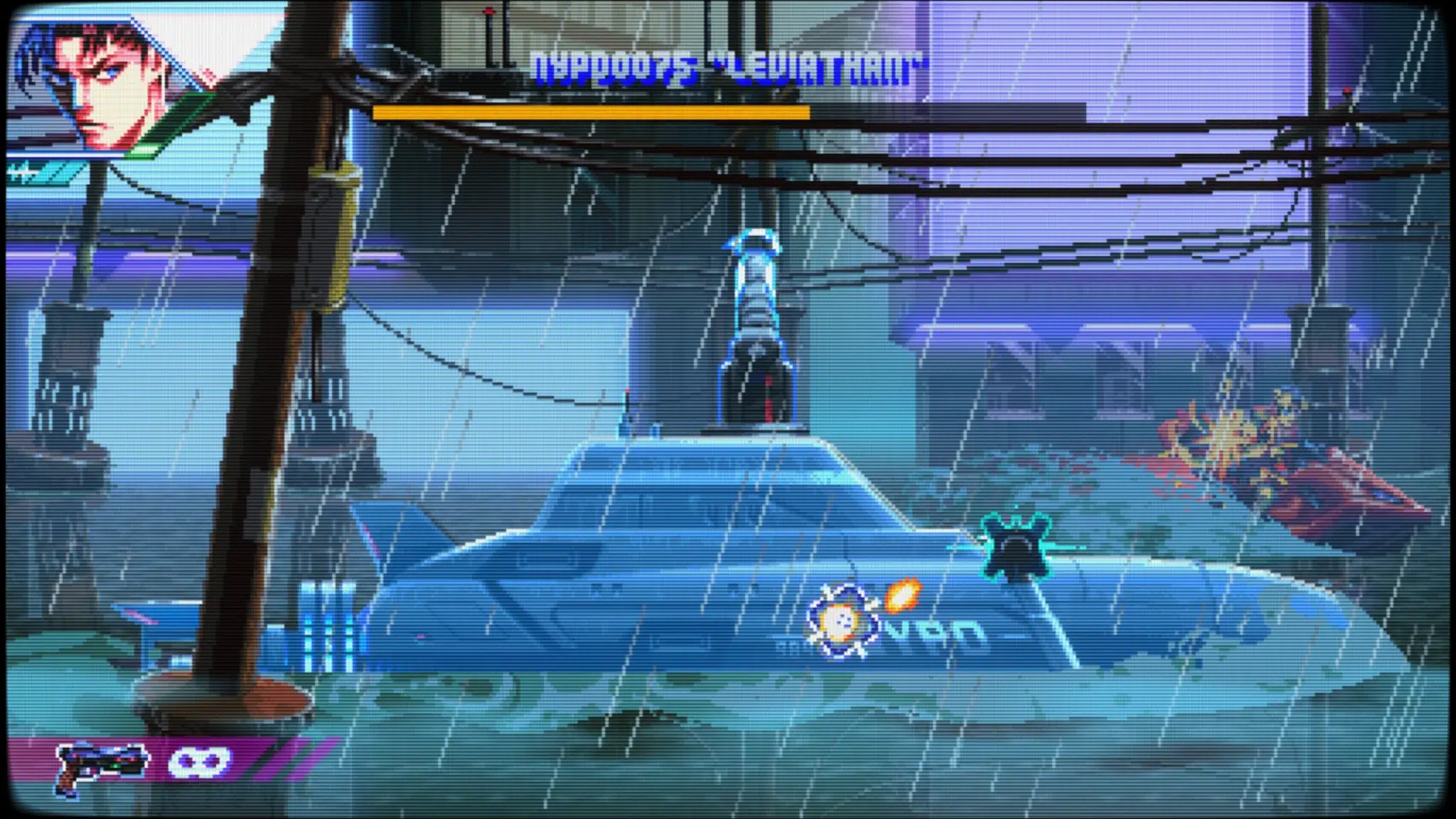
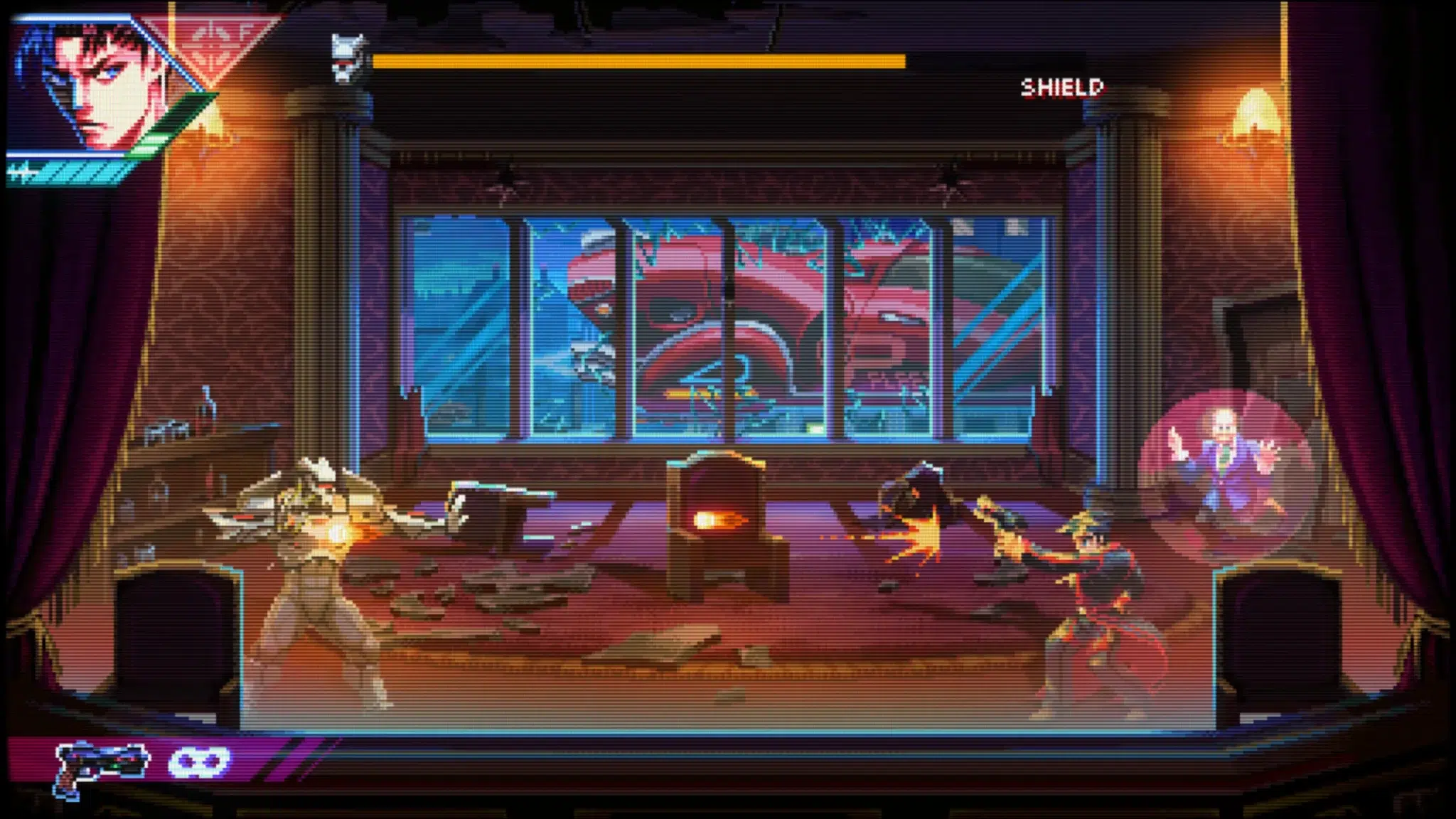
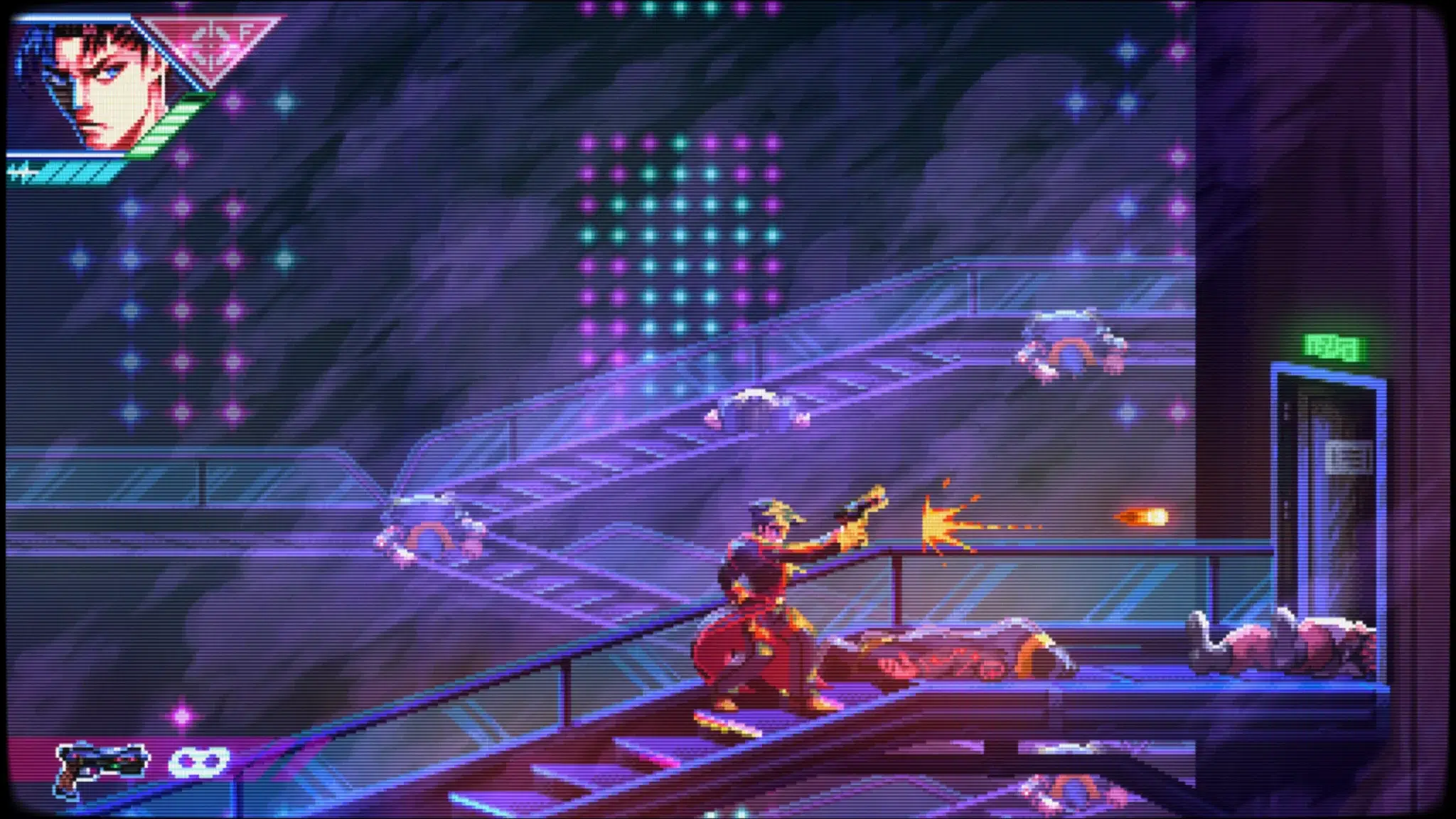
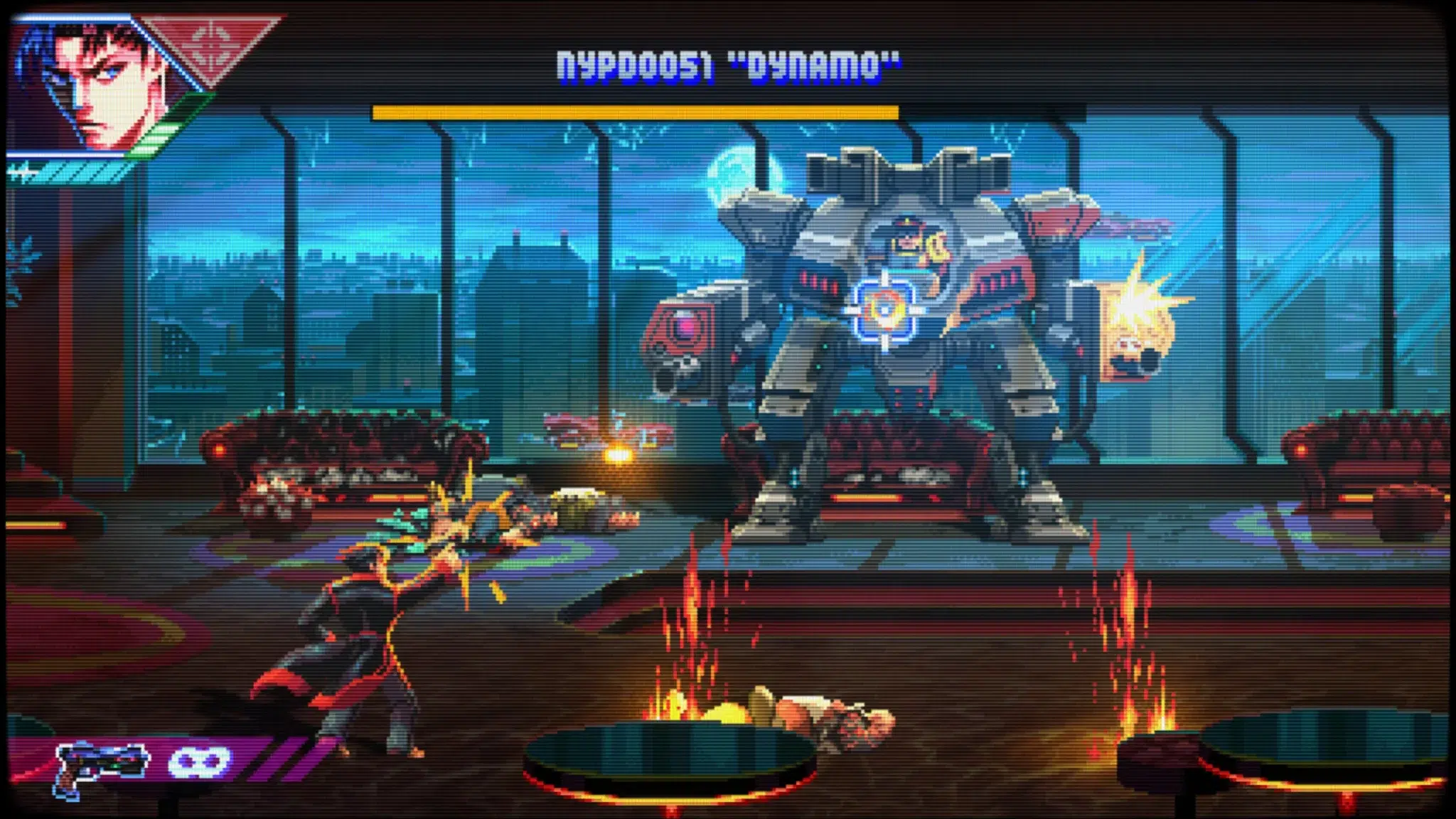
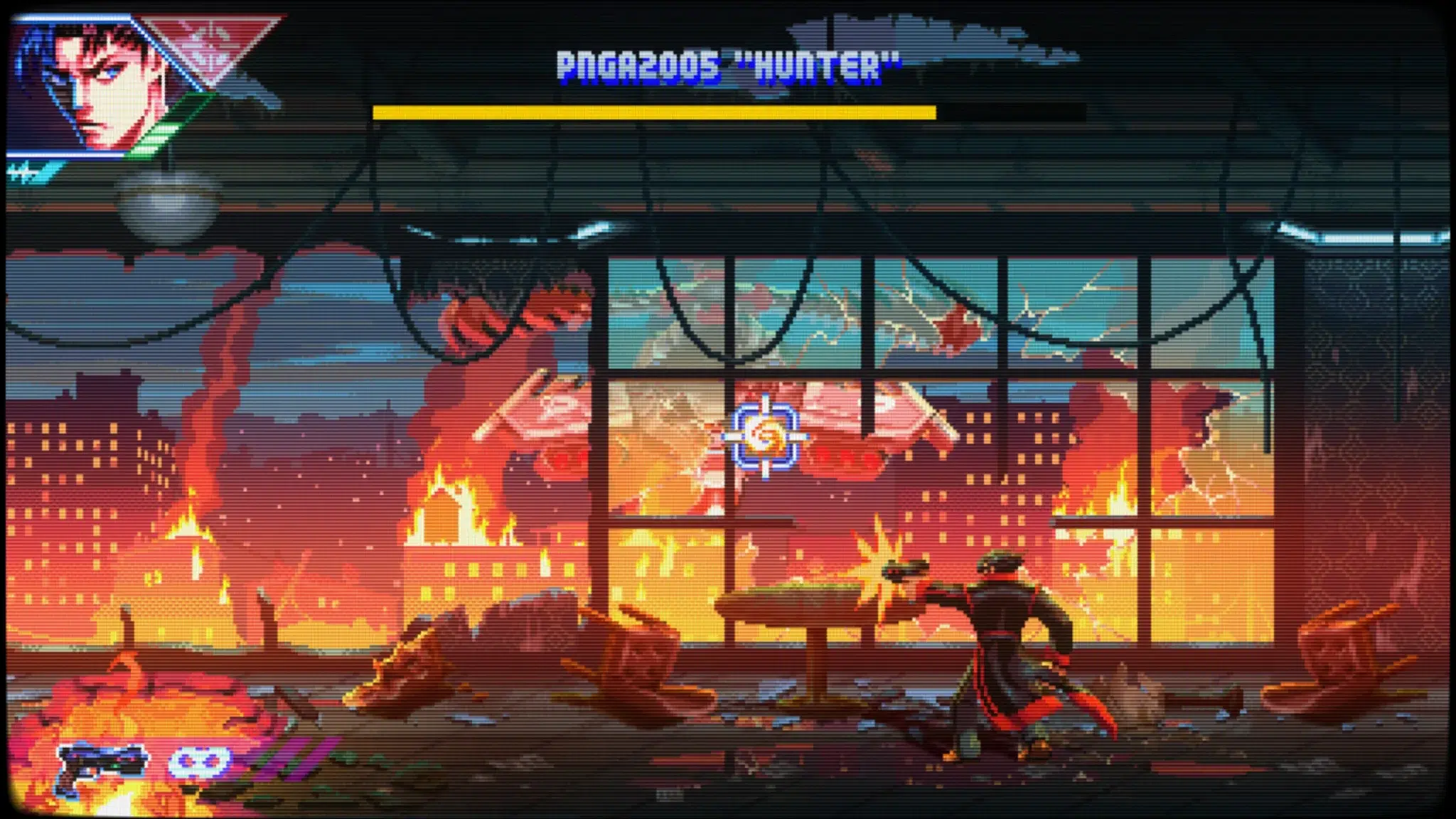
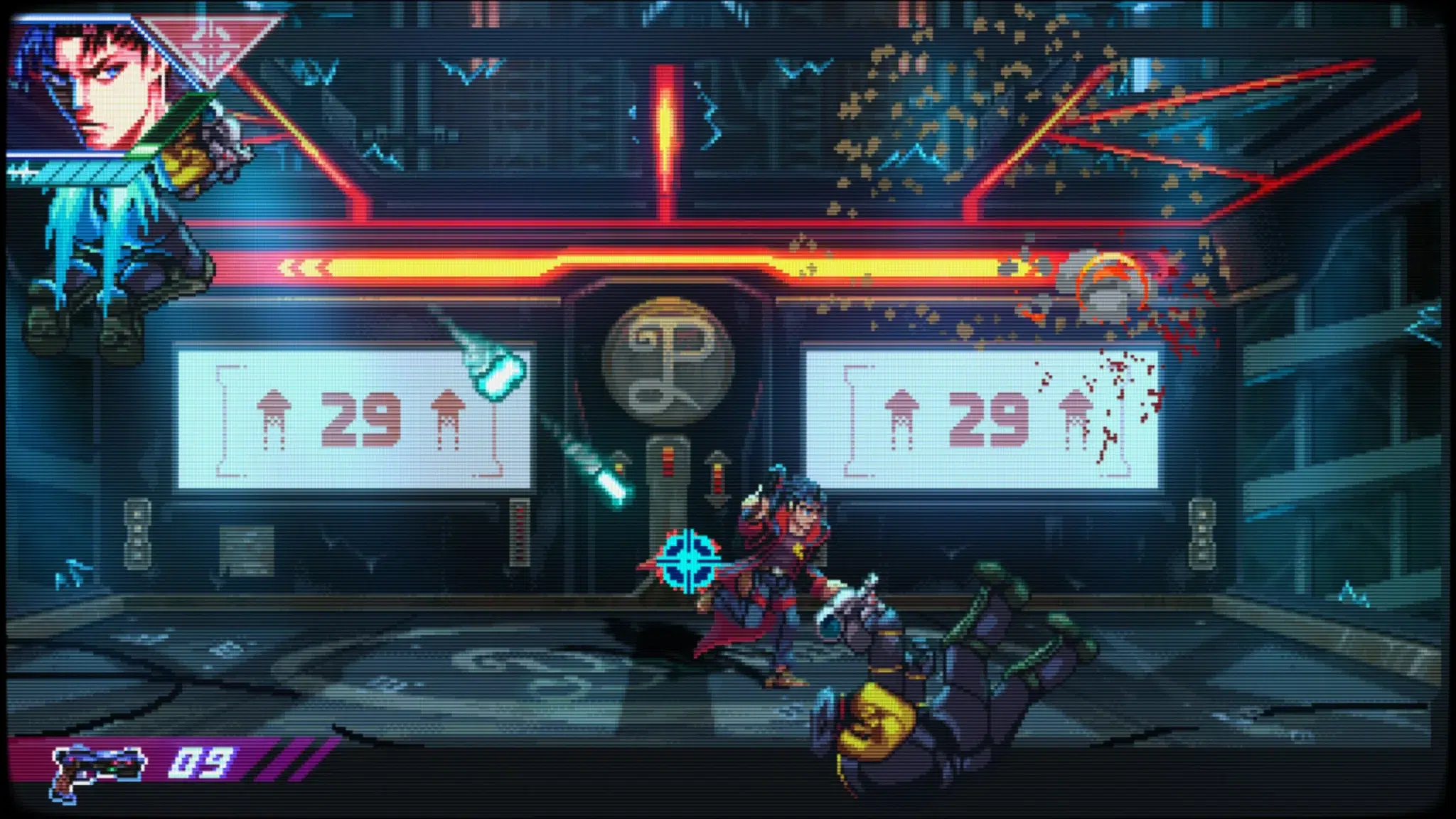
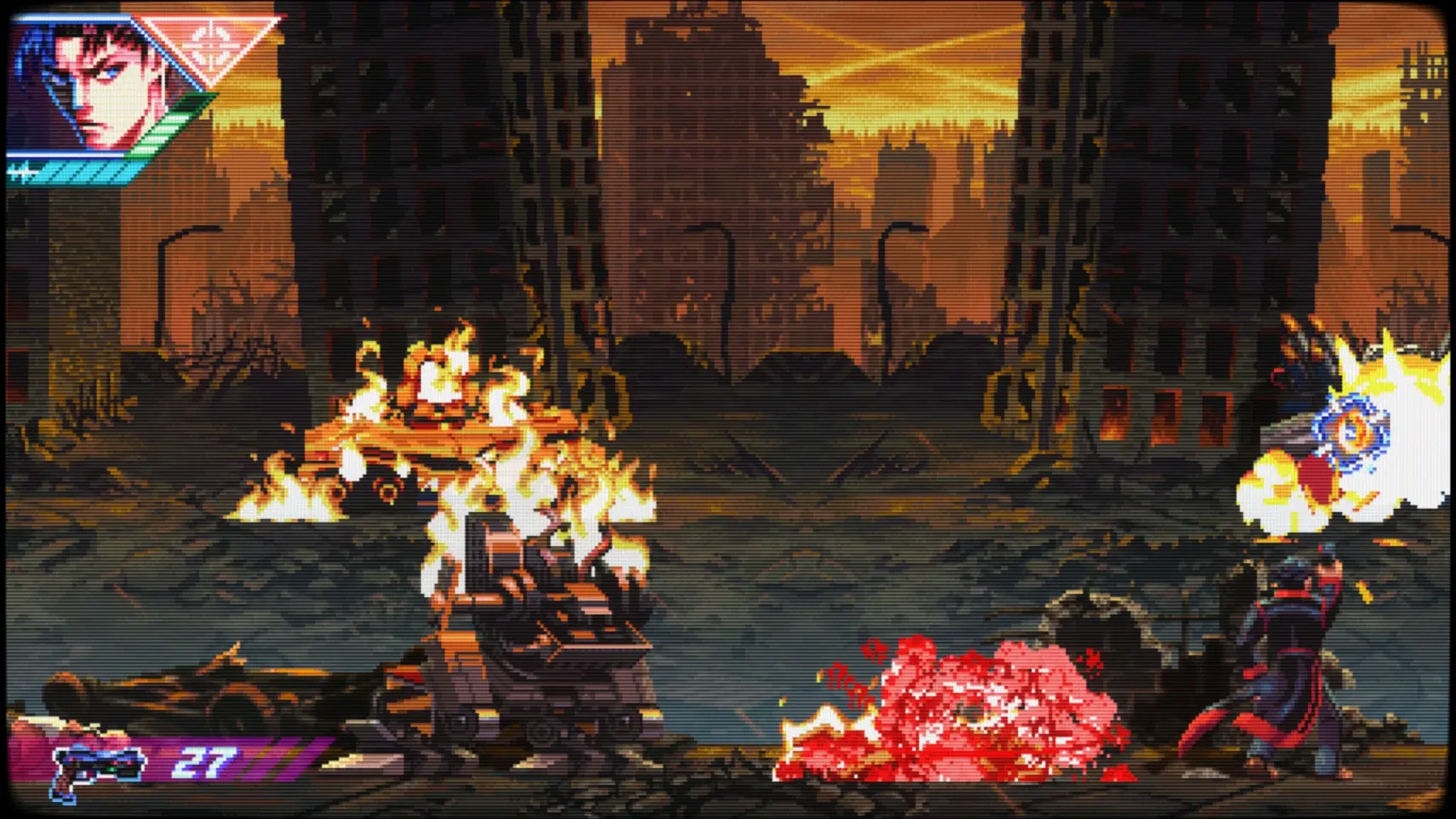
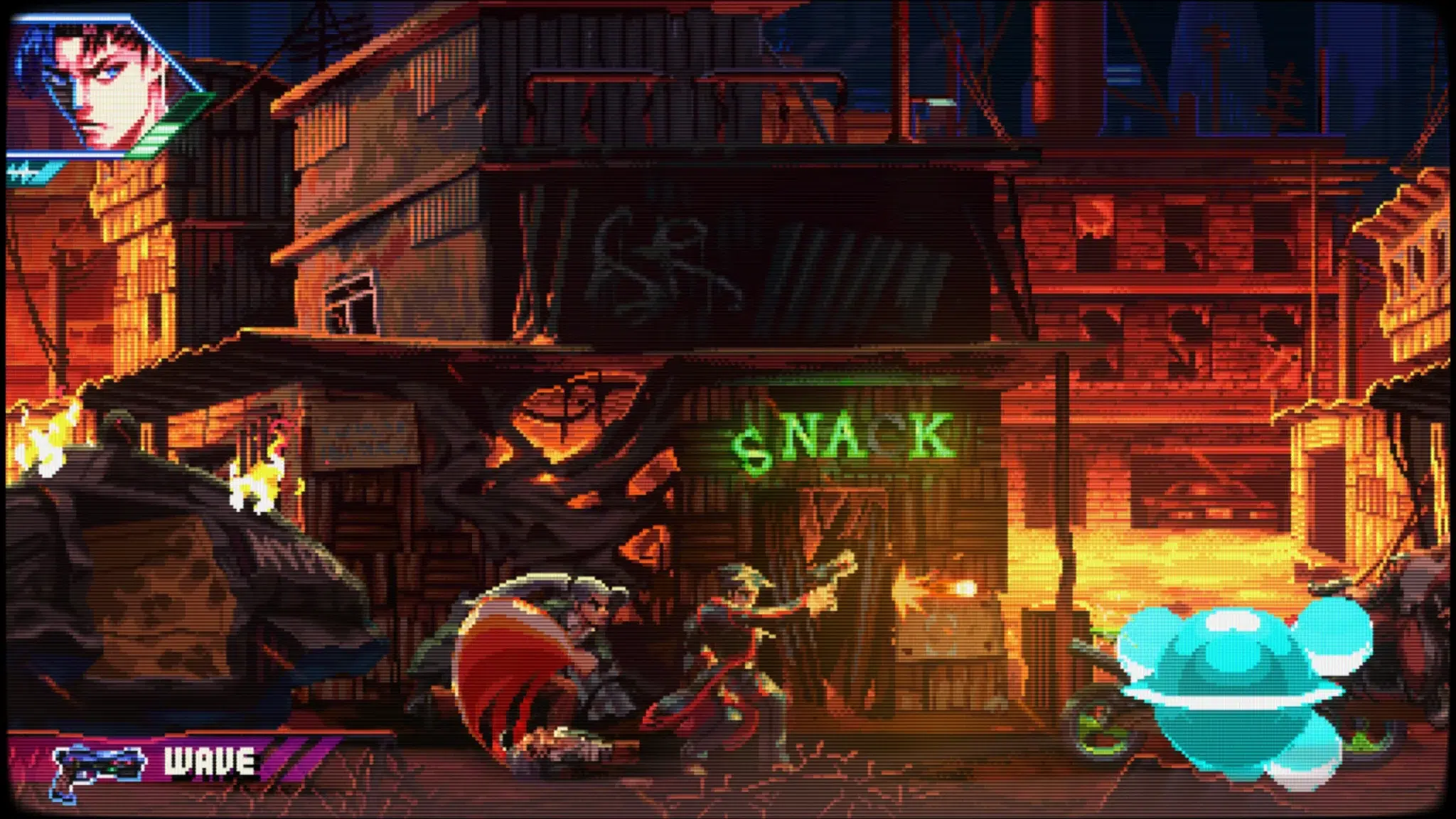
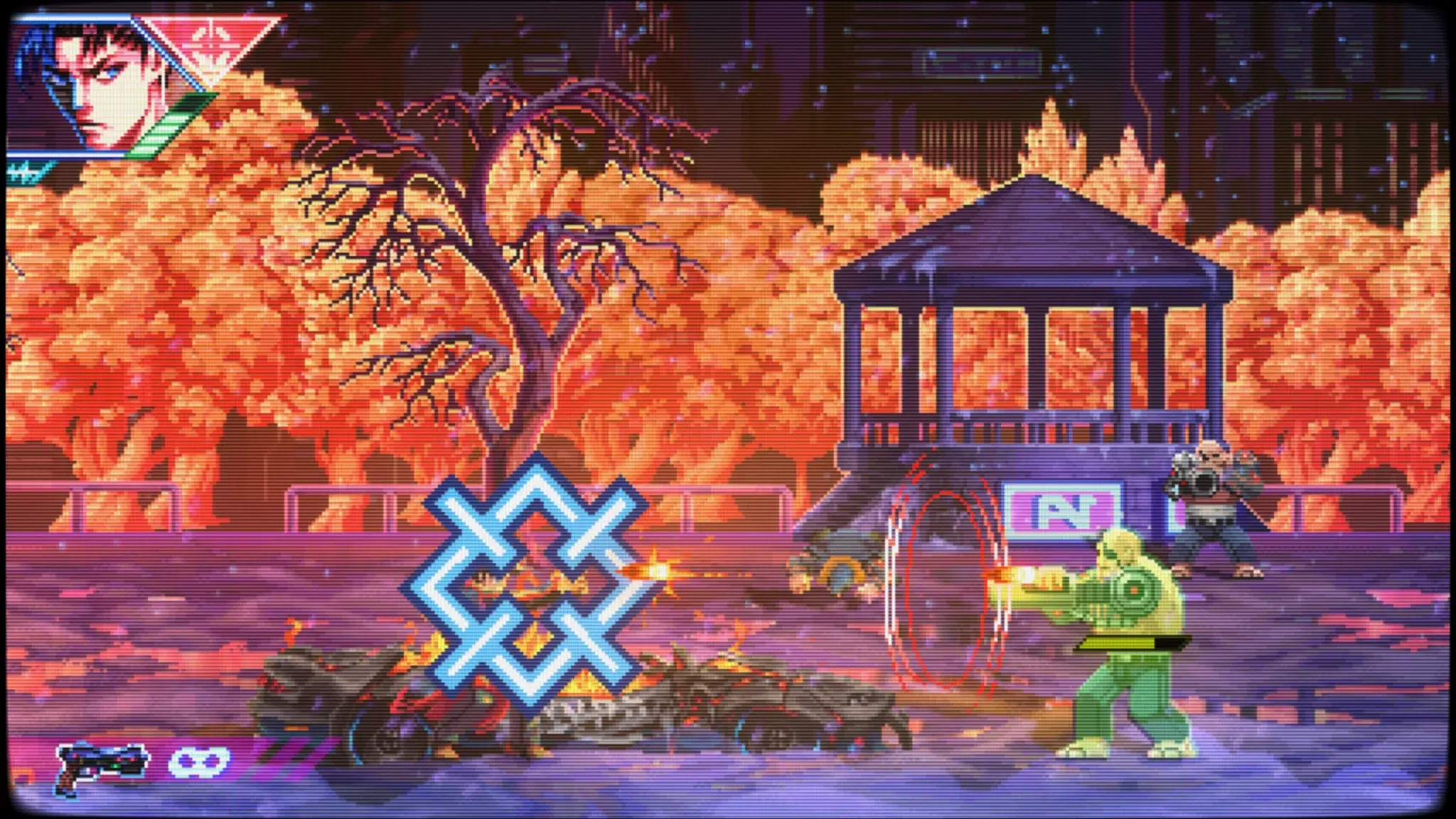
As you can imagine, the main attraction of Neon Inferno is its gameplay. It draws its influences from both the renowned run 'n' gun series Contra and shooting gallery games such as Wild Guns and Cabal. Here, the action takes place strictly in two dimensions, but our opponents appear both in the foreground and in the background. Thus, the action unfolds on both layers, as enemy targets often appear on both at the same time. In the foreground, targeting is classic 8-way, as in an old-school shooter. For the background, there is a separate crosshair that works exactly as if we had connected a light gun. Our character remains stationary in the second case, while in the first we can either move while shooting or stand still.
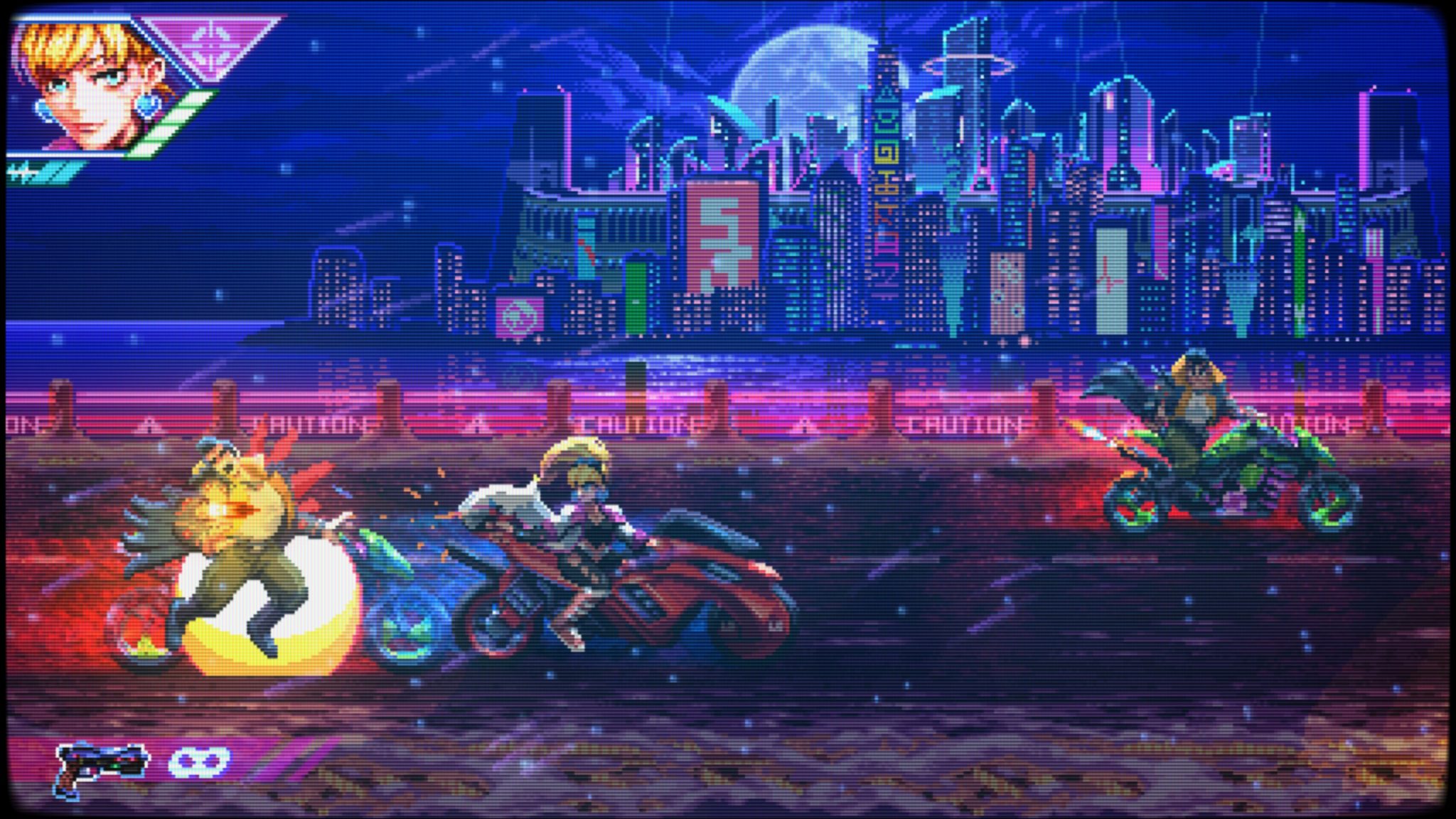
At the end of each mission, depending on our performance (e.g., speed of completion, civilian casualties, etc.), we receive a reward. The money we have saved up can be used in the shop, which is accessible between the stages. There we have the opportunity to buy various power-ups, such as homing bullets, rapid fire, etc., which come with a specific number of uses. Unfortunately, they are not permanently unlocked, and if we use them in one stage, we will have to buy them again.
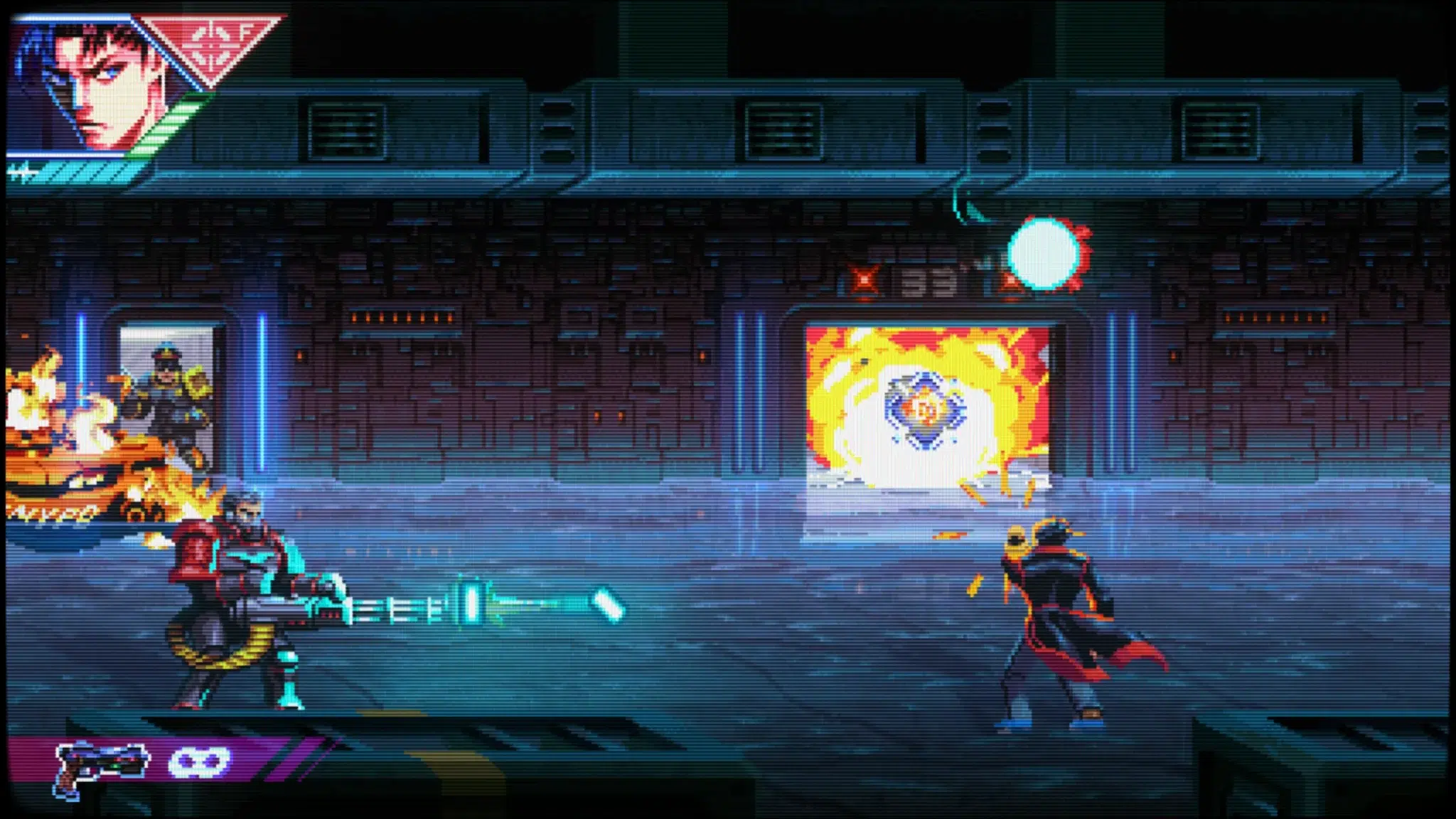
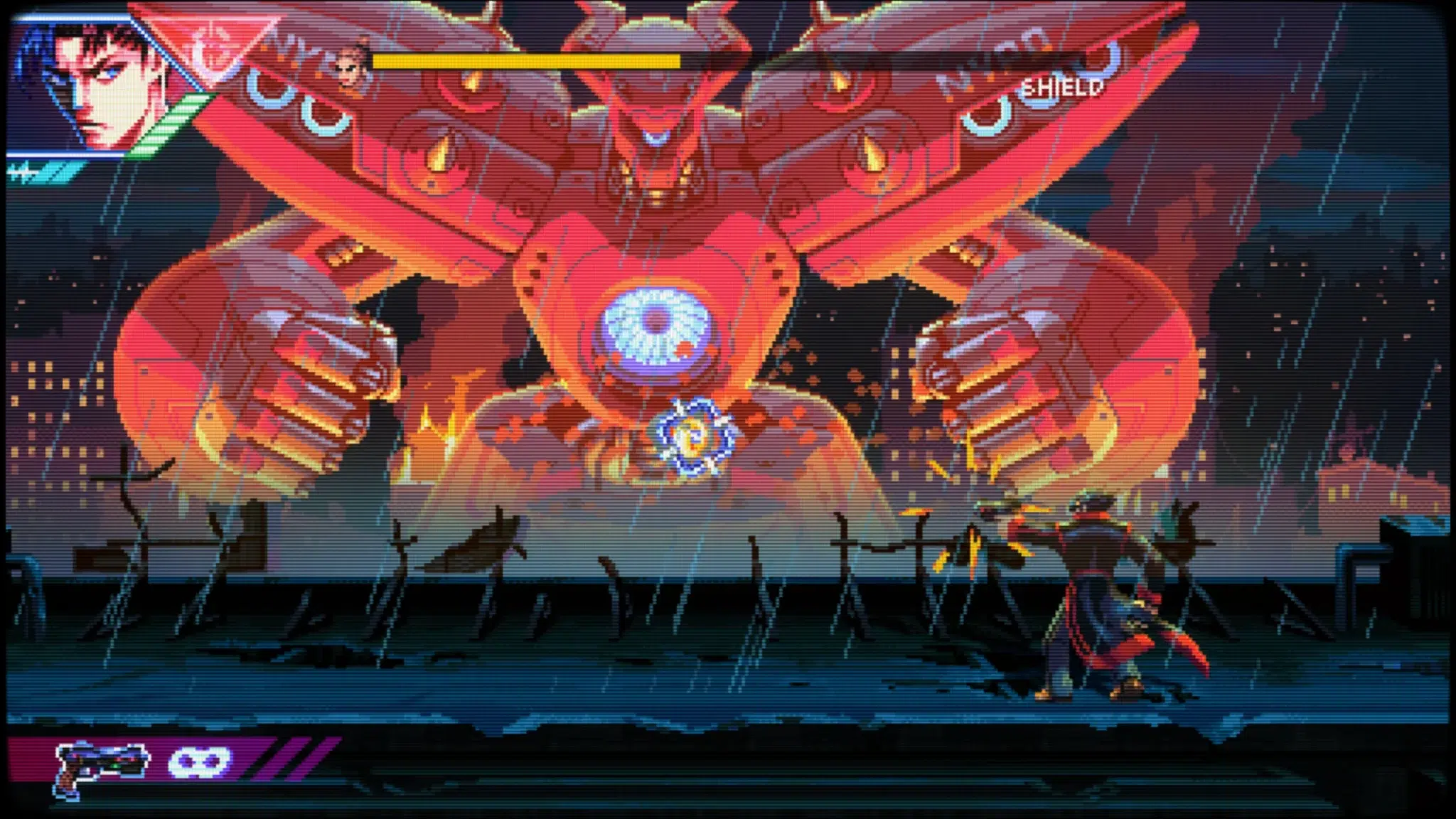
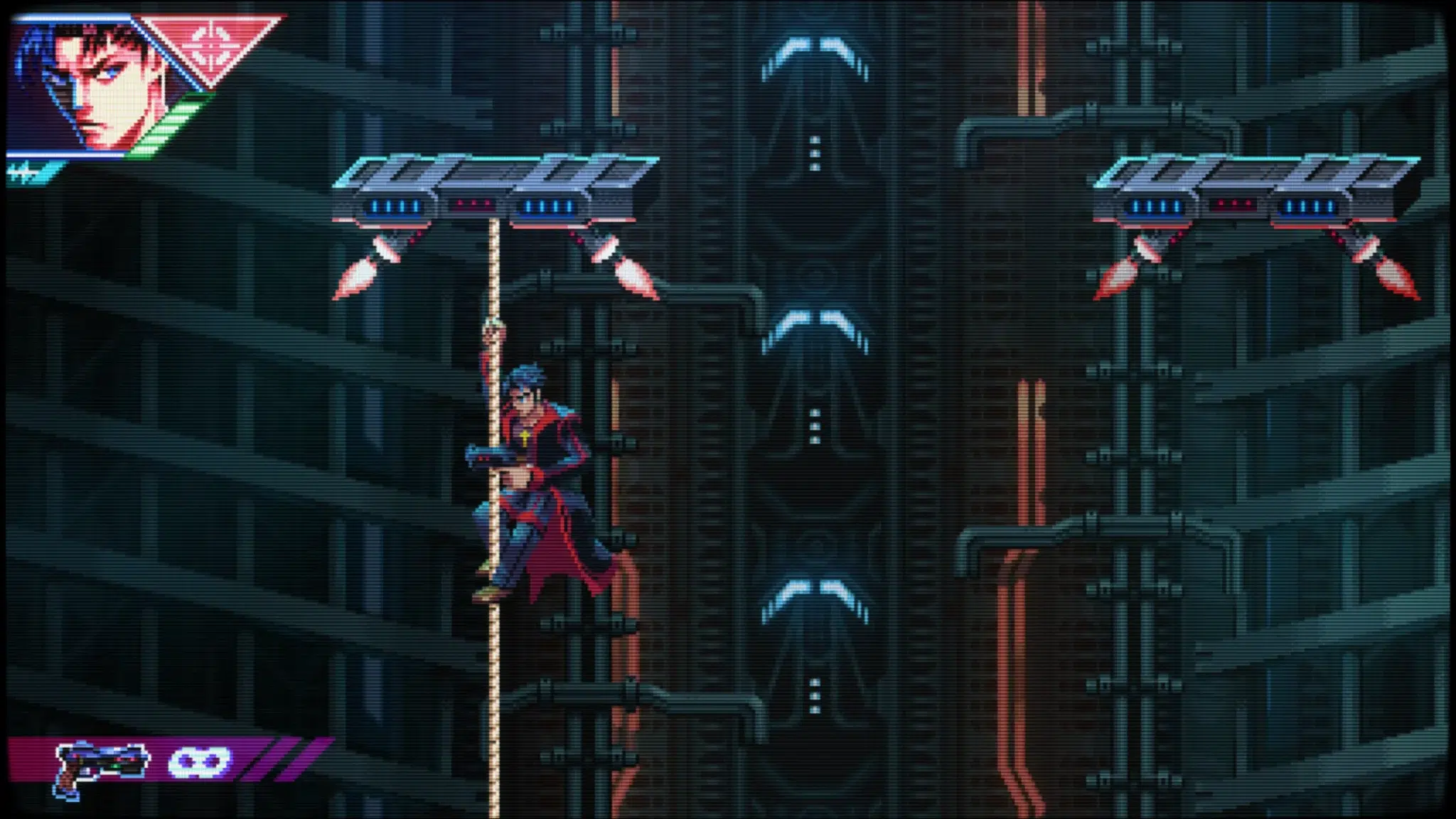
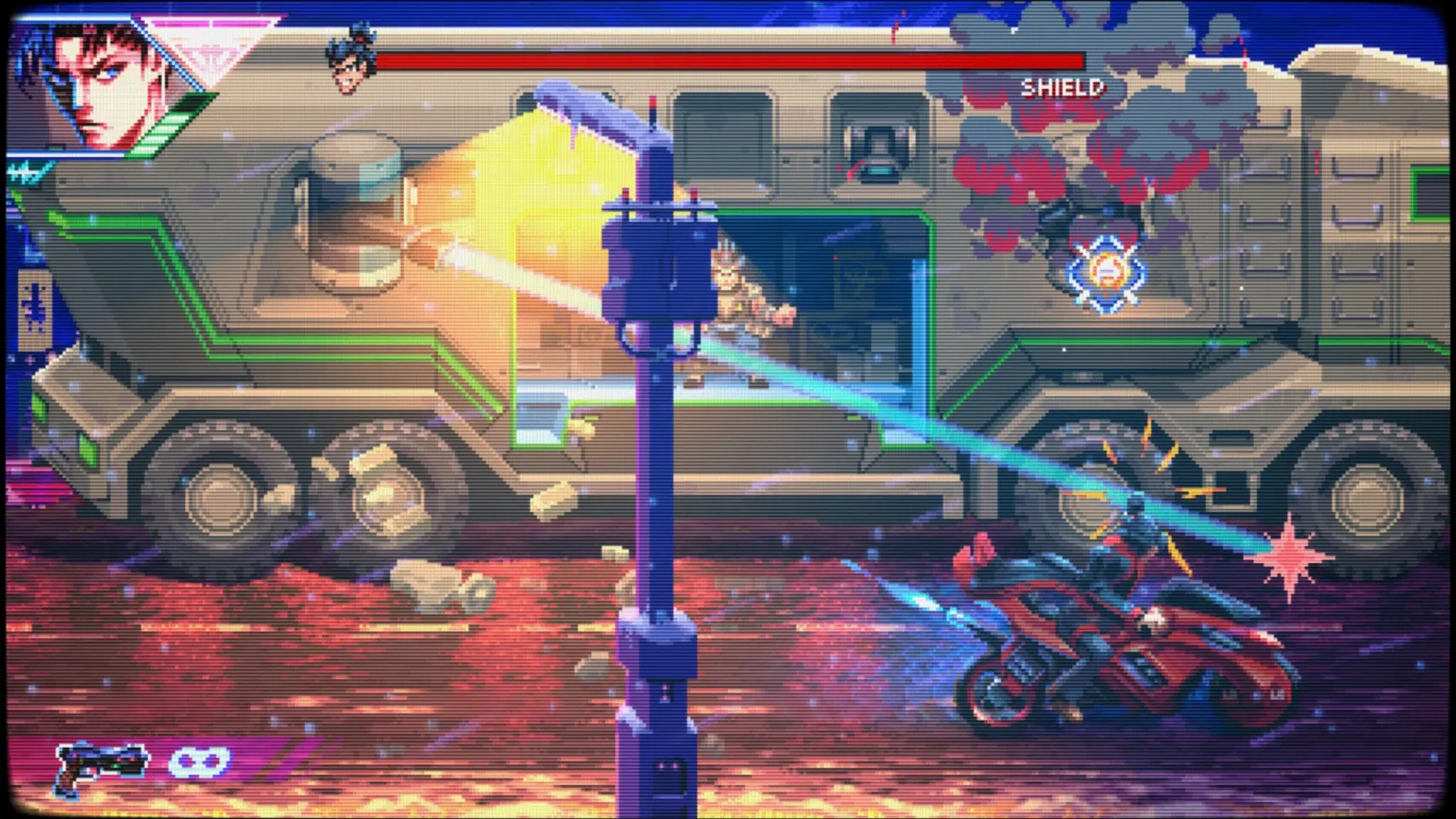
The most valuable moves in our repertoire are dodging and melee deflection of incoming shots. Dodging needs no special explanation. It is a forward roll that allows us to avoid bullets. There is a nice touch here. These are color-coded: green ones can be parried with the sword, while all the others can only be dodged. Not only that, but if we hold down the melee attack button, time slows down and we can repel enemy fire and send it back for extra damage, even to targets in the background. This adds variety to the gameplay and keeps us on edge at all times. The gameplay package is complemented by some basic platforming sequences and impressive bosses, which raise the challenge but are fair, with recognizable attack patterns.
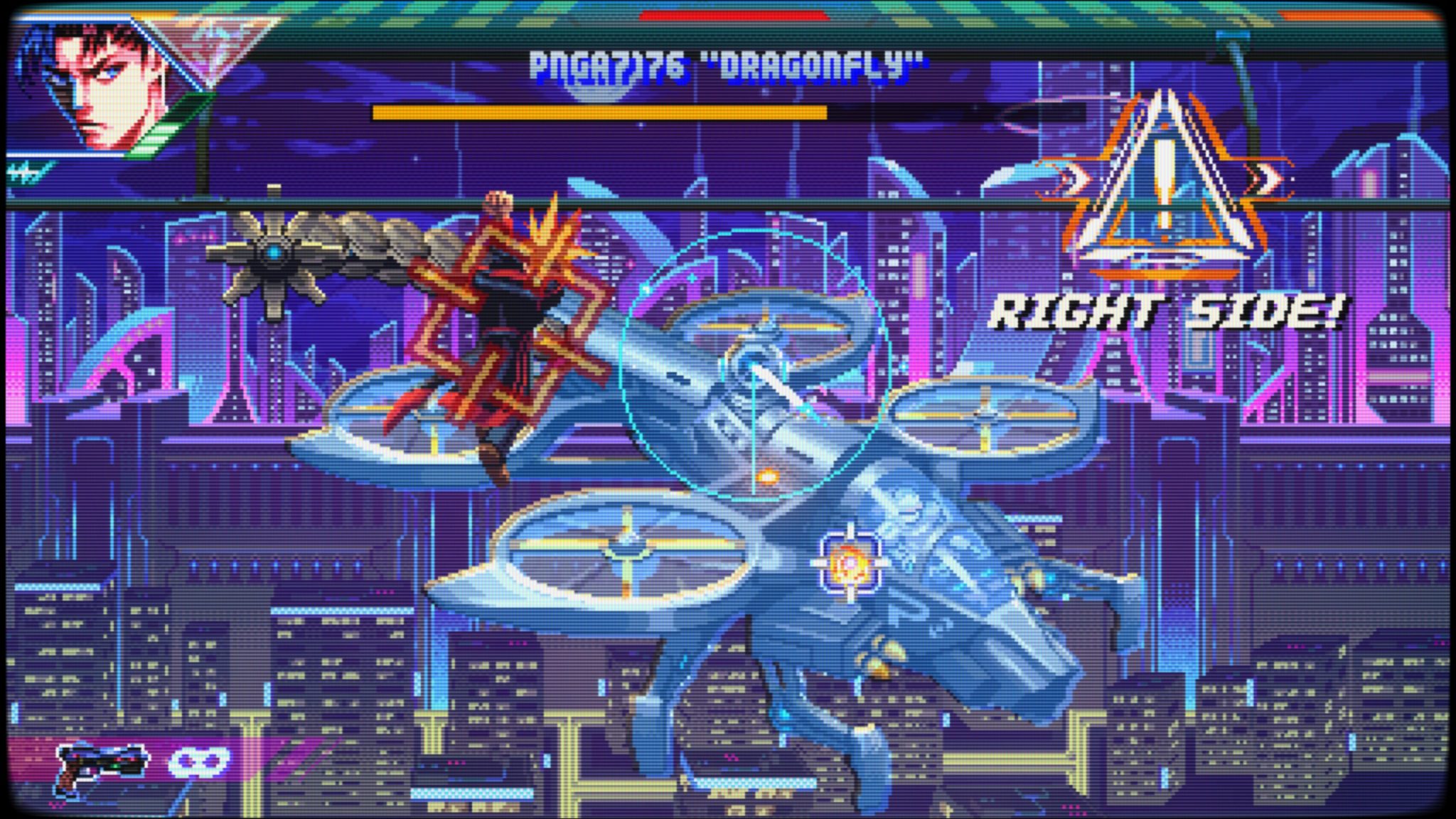
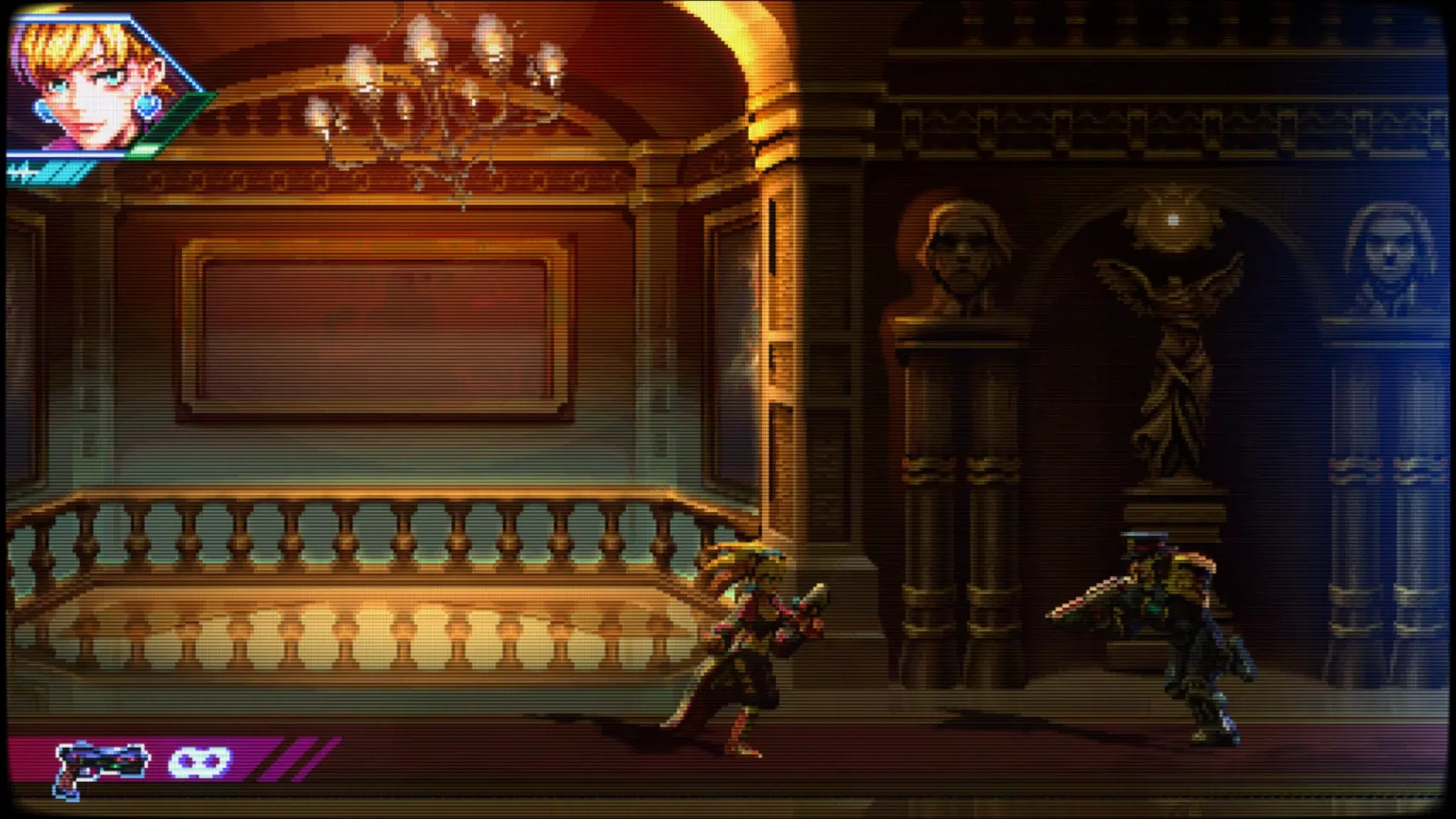
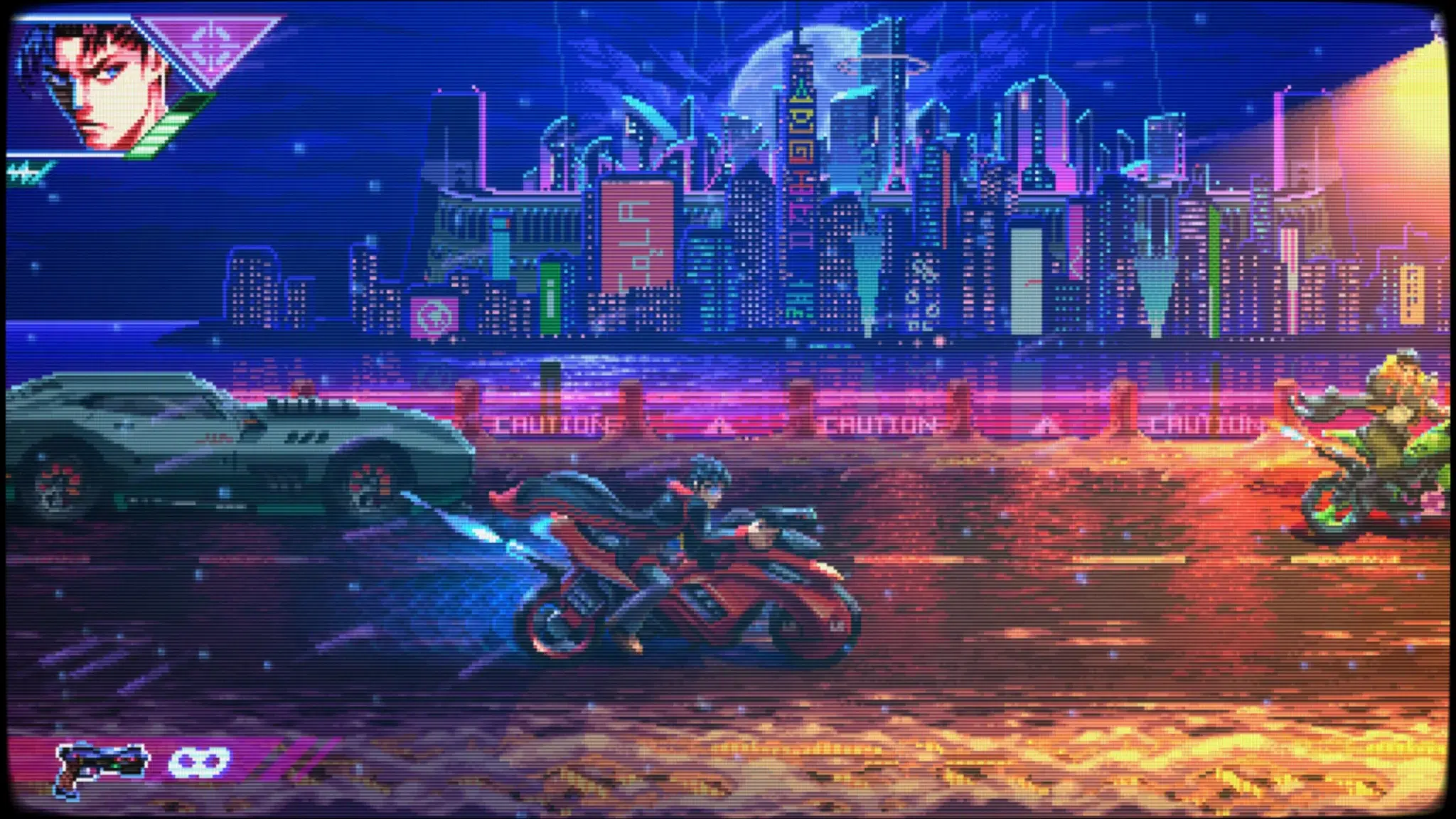
What undoubtedly steals the spotlight at first glance is Neon Inferno's presentation. We're talking about unparalleled detail in sprites and environments, taken from arcade cabinets we saw in the late '90s. The visuals are enhanced by a wide range of vivid colors. Now that I think about it, perhaps some animations and techniques would have been difficult to render on the hardware of that era. Be that as it may, the feeling of a lost arcade gem is strong with this one. Naturally, there are also appropriate filter options for the graphics, with scanlines standing out, and with their different levels of intensity, we can achieve the desired nostalgic effect. The package is rounded off beautifully by the background music that accompanies the action. From dark jazz passages to darkwave keyboards and metal riffs, we have a diverse soundtrack that make each effort a little bit easier.
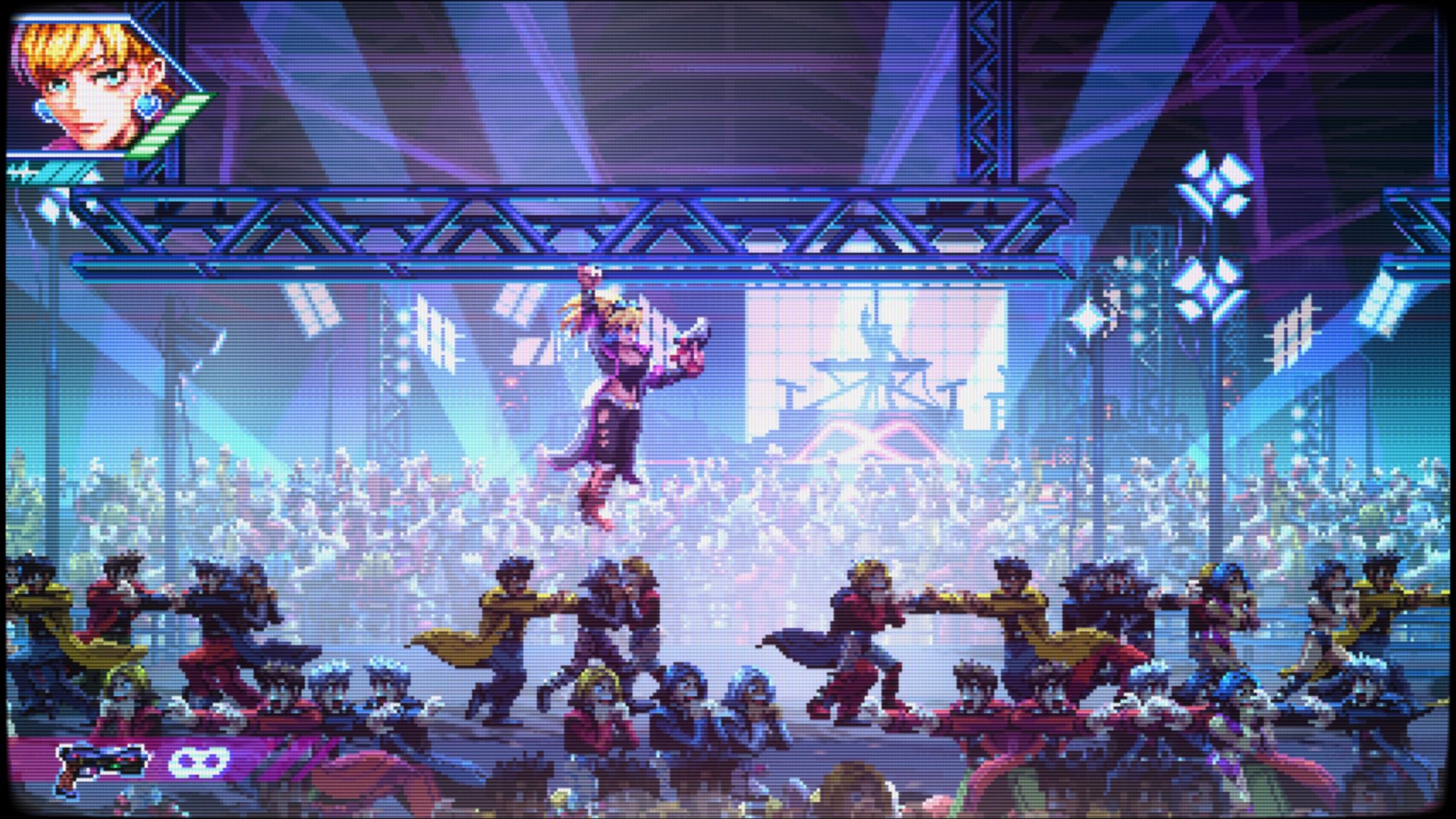
At this point, it is a common thing to examine the shortcomings of each title. Power-ups are completely absent, in any shape or form (in some capacity they can only be purchased through the store I mentioned above). The two playable characters have absolutely no difference, except in looks. I was disappointed by the absence of any healing items. And while I wouldn't consider this a bad thing necessarrily, in story mode, it makes arcade mode quite overwhelming for most players (health is only replenished between missions). Finally, Neon Inferno has the same issue I encountered in the developers' previous work, Steel Assault: it is relatively short. It may not be as short as that game, but the average player will see everything it has to offer in 1.5 to 2 hours, unless they have a completionist mentality.
Neon Inferno, despite some interesting gimmicks, does nothing we haven't seen before and is unlikely to appear on most lists of games that stood out this year. However, to give credit where it is due, it does what it sets out to do well. And that is to provide a few hours of frenzied shooting and mowing down opponents, all served up in a variety of dazzling (usually) cyberpunk environments. Fans of the genre, with or without friends, don't sleep on this one.
RATING - 80%
80%
An old-school Run 'n' Gun with a few modern touches, Neon Inferno is a small dose of adrenaline and nostalgia, the kind we need to take us back to a time when everything was simpler and carefree.