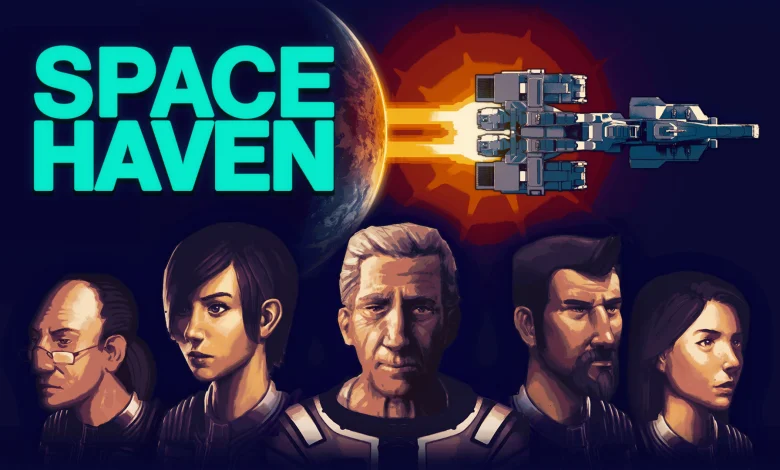

I must admit that Space Haven arrived completely out of nowhere to claim unbroken hours of midnight gameplay—hours that would normally be surrendered to doomscrolling and existential dread. Even though it has been available in Early Access for the past six years and boasts a massive, highly active community, it managed to fly entirely undetected under my radar. I happened to cross paths with it at the exact moment of its full 1.0 release. The game comes to us from Bugbyte, a three-person Finnish studio consisting of brothers Aksel and Allan Junkkila alongside Matti Vanhala. After more than a decade in the industry, this passionate team has realized their grand vision: a synthesis of prominent colony simulators like RimWorld, Oxygen Not Included, and FTL. Naturally, it pays homage to countless iconic works of the sci-fi genre, compounding a world that blends the thick desperation of Battlestar Galactica, the rugged adventure of Firefly, and the looming, menacing loneliness of Alien.
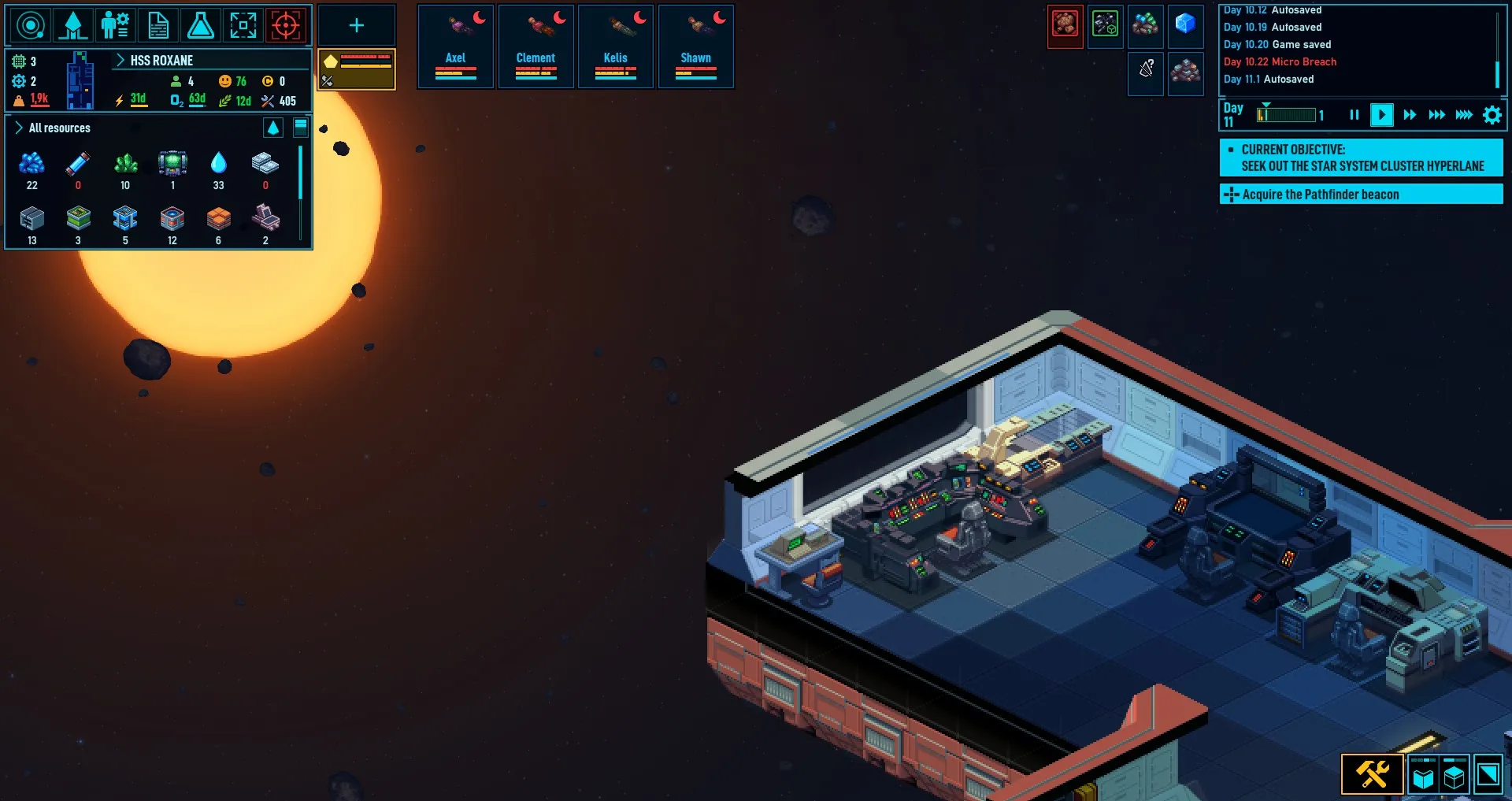
More specifically, Space Haven takes place in a near future where humanity has pushed Earth to the brink of final collapse. Yet, out of this bleakness emerges the possibility of interstellar travel via Faster-Than-Light propulsion tech. Thus, various factions and lone adventurers scatter toward the nearby stars in search of a new Garden of Eden for our species. The game begins by handing us the reins of one such small, opportunistic vessel and its skeleton crew.
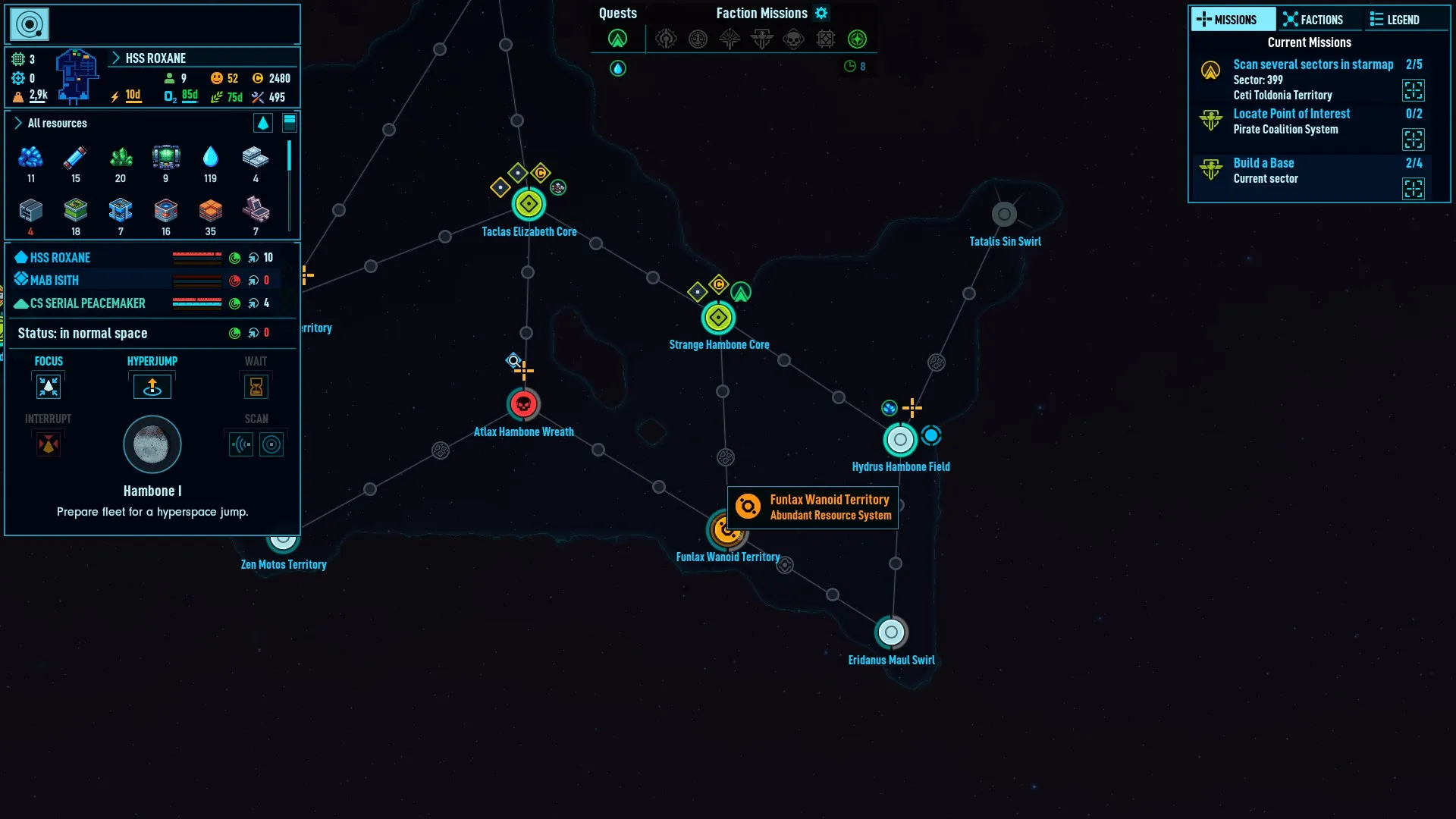
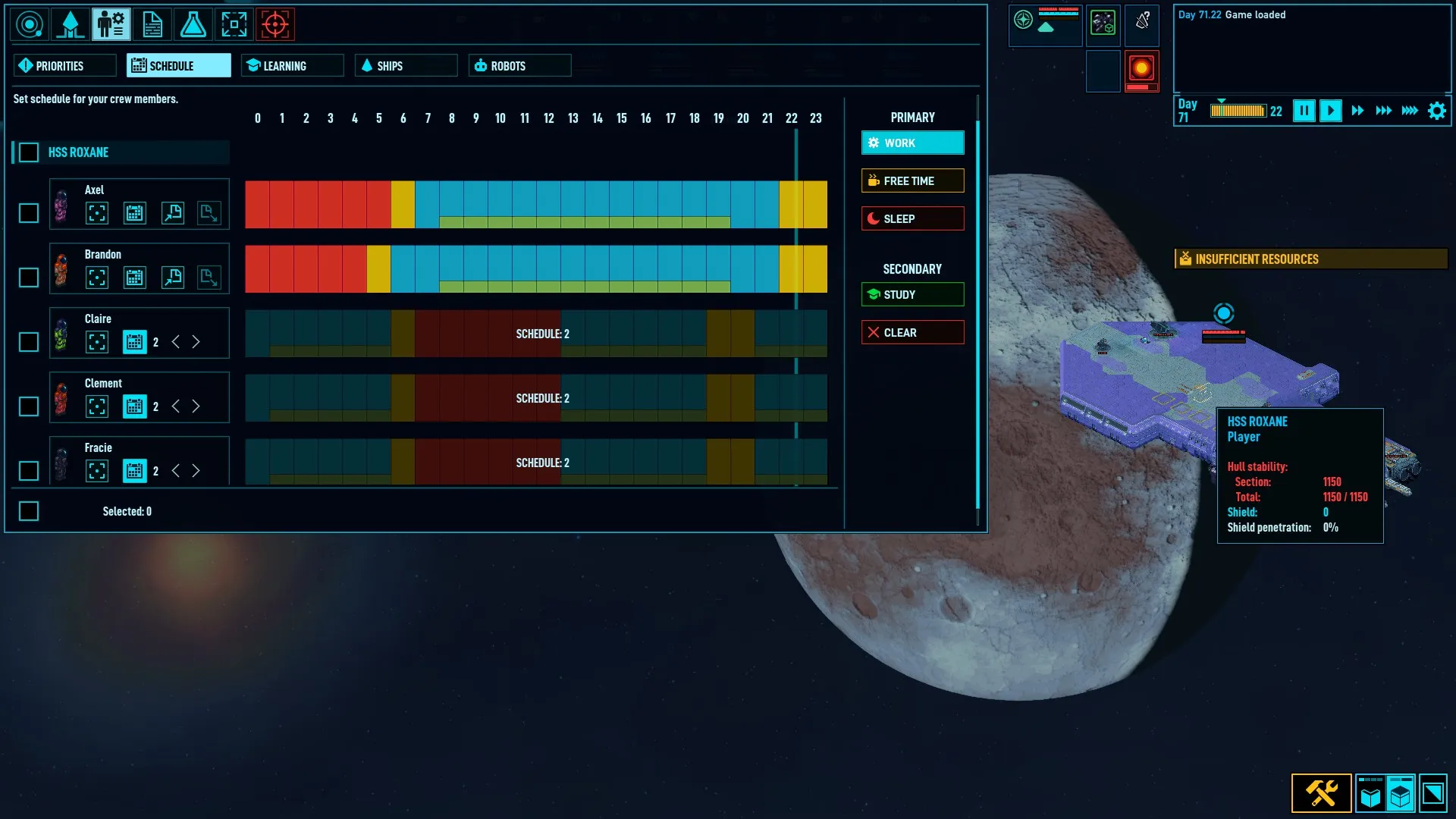
The core mechanic governing the loop is that of a colony sim with heavy survival elements, management of intricate production chains, and granular crew micro-management. In essence, you do not exert direct control over your crew, except when they are engaged in combat and you place them under your direct command through the "draft" process. Under normal circumstances, you must assign roles based on each crew member's specific attributes and staff the daily shift schedules with the appropriate personnel. Of course, the chores aboard a spaceship always outnumber the available hands; the shifts are frequent, continuous, and grueling.
During the initial phase of setting up our vessel, the game guides us through objective-driven missions acting as a tutorial to cover the fundamental concepts. However, even if newcomers follow these steps religiously, the grace period ends abruptly, and the learning curve sharply approaches 90 degrees. The true experience emerges primarily through friction with the mechanics and pure trial and error. Expanding your ship with an efficient layout becomes a literal matter of life and death. The continuous cycles of expansion-scarcity-crisis constantly reinforce the harmony of the game's ludonarrative—the seamless alignment between gameplay, emergent storytelling, and the narrative atmosphere the game strives to deliver.
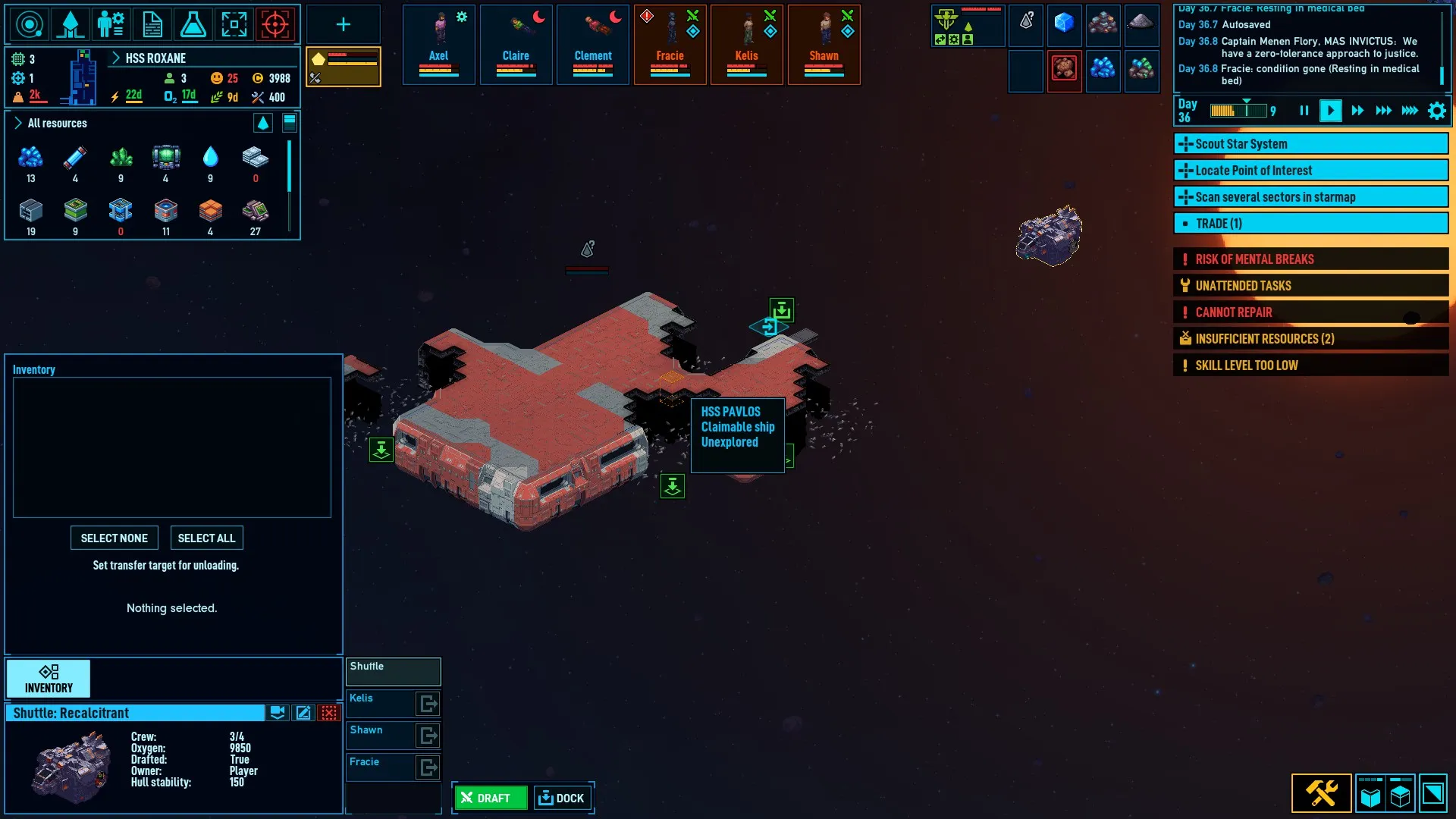
Generally speaking, Space Haven’s overarching lore is fairly loose. It relies on well-established sci-fi tropes and doesn't attempt to win any literary awards through its dialogue or the scattered data logs you uncover to flesh out the background of its world. The narrative’s true power stems from the experience of playing and the organic actions of the player—much like in Crusader Kings, where the story is forged through the internal narrative of the acting player rather than a predetermined script.
To illustrate this, let me share a specific example from my playthrough. Following the main storyline, I found myself running my crew ragged during a mission in the orbit of a planet that induces hallucinations. By the time the mission was wrapped up, I was pushed to the absolute limit regarding supplies and mental fortitude. I decided to warp back to a safe system for refueling and rest. During our jump between solar systems, my ship was interdicted by a band of pirates. My vessel dropped out of warp into a sector occupied by a pirate ship, with a derelict hull floating right between us. From the pirate ship, a boarding party had already launched and was in the process of securing the derelict; their shuttle was docked right onto it. In my sheer desperation, I crammed my own crew into our shuttle and flew straight to breach their main ship, hoping it would be practically empty. Indeed, they had left only the pilot behind. Upon capturing it, I realized that the rest of their crew aboard the derelict had run into a nest of alien organisms and were being slaughtered with no way to retreat. I could not help but imagine their desperate pleas over the radio to a mothership that was now entirely under my control.
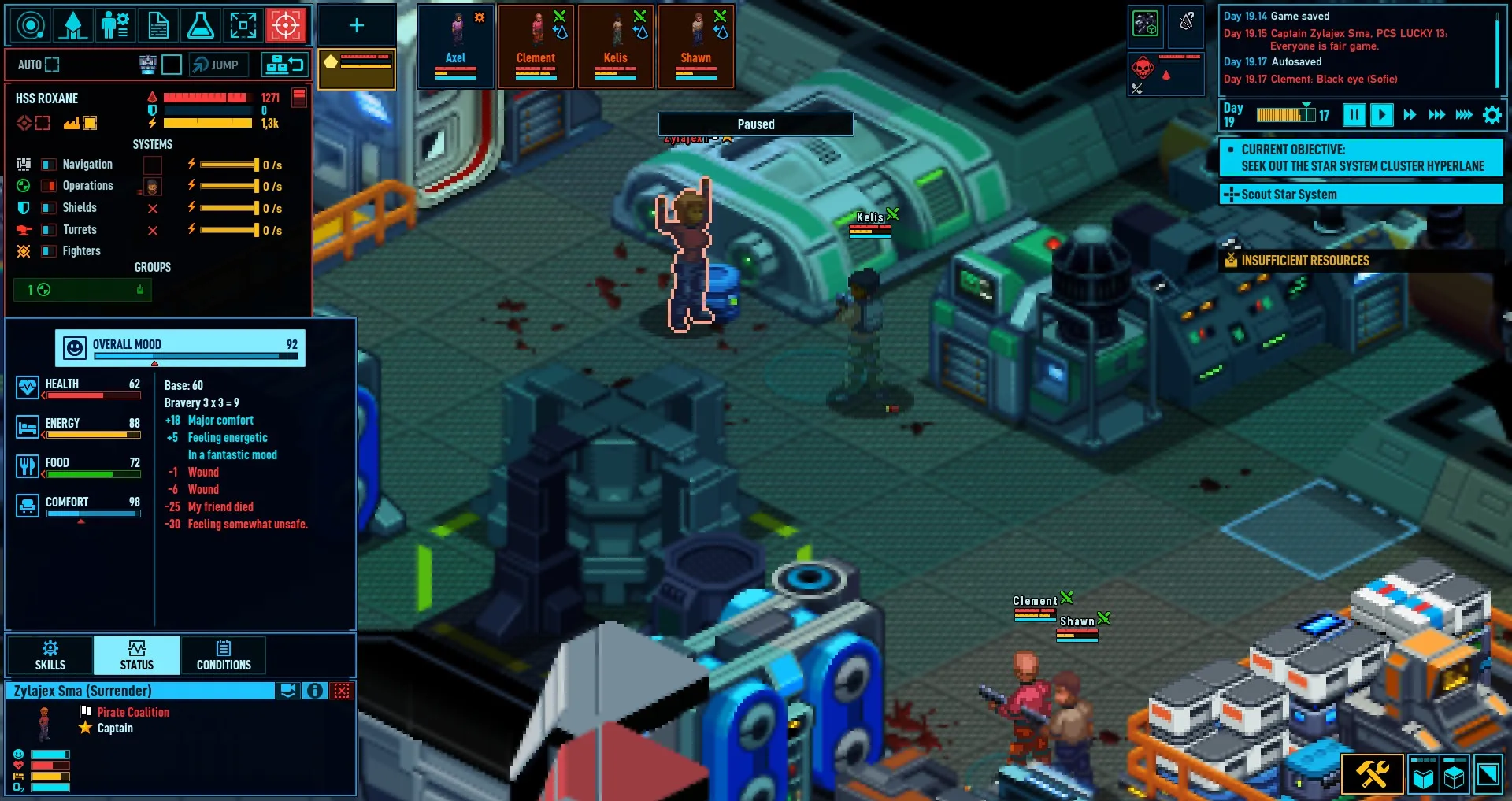
As I mentioned before, playing this game creates that rare condition where time slips away entirely without you realizing it. This is further aided by a classic Tech Tree that provides a constant sense of anticipation for what's next—a new weapon, an autopsy table, or robotic automations. While waiting for a new technology to finish researching, you simultaneously execute supply or credit runs, tweak crew work schedules or pathfinding routes within the ship, reorganize rooms, adjust air quality and pressure, scrap space debris, or mine asteroids. There is always something to do, always a problem to solve. And if you let your guard down too much, there is always the harsh reminder that your ultimate enemy is constantly surrounding you: the cold, unforgiving vacuum of space. An uncontrolled fire can reduce a bustling, vibrant ship into a hollowed-out carcass within minutes—just like the ones we constantly salvage on our journey. And all of this only accounts for the first 20 to 30 hours.
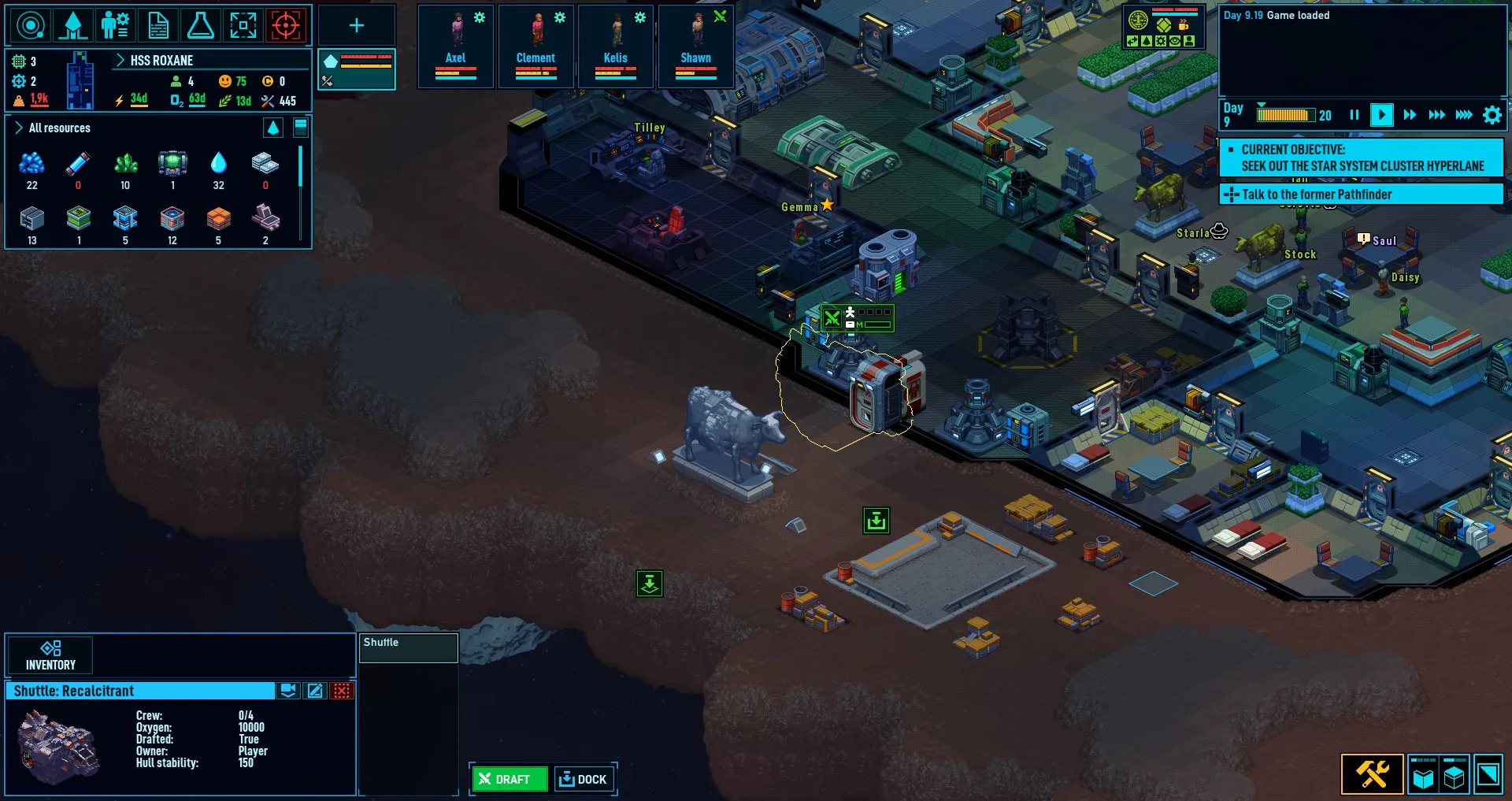
As the game progresses, we master the simpler challenges and move on to more complex problems that keep us equally consumed—such as the efficient design of an industrial production line, maintaining the crew’s psychological stability, and balancing the energy demands of weapon systems, shields, and power-hungry manufacturing modules. Furthermore, there are vast approaches to how you play. It is entirely feasible to build a prison transport ship, a dedicated dreadnought, a heavy cargo hauler, or even a static trading outpost. You can play as law-abiding allies of the Earth Flotilla or as opportunistic smugglers rushing to jettison human organs out of the airlock during an unexpected military inspection.
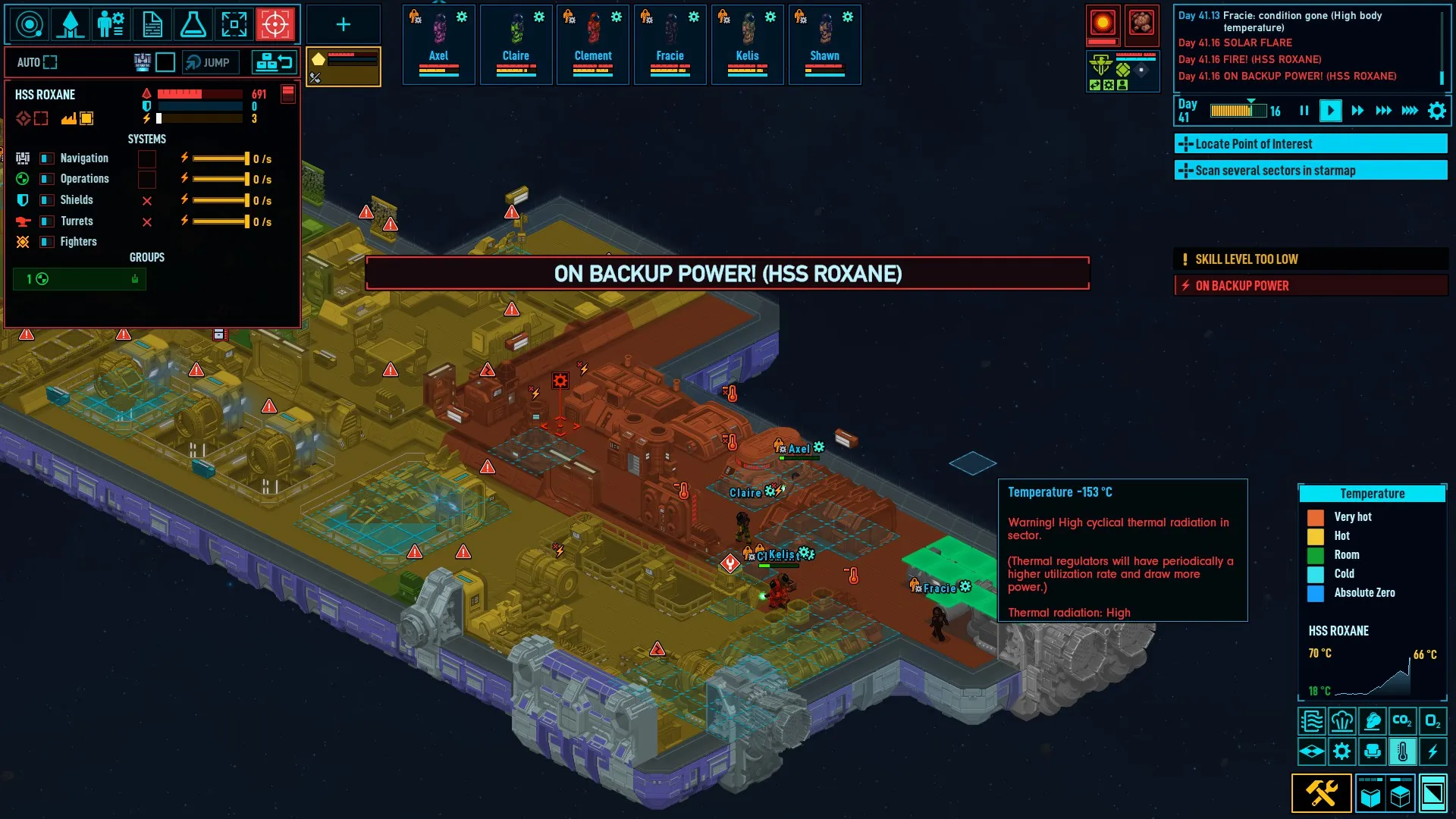
All these marvelous systems are further reinforced by the choice of a faithful, mid-90s isometric aesthetic that I personally find immensely attractive, backed by high-quality sound design and music that harmonizes beautifully with the sense of cosmic isolation. The UI has some room for improvement, both aesthetically and in the way it presents the game's hundreds of pieces of information, but generally, you get used to it and it doesn't pose any substantial problem. This density of information, in the end, was exactly what deterred me from playing the game on the Steam Deck, even though it is technically feasible. Besides, I think its retro logic calls for gameplay strictly on a desktop, traditionally with a mouse and keyboard as you would in 1996.
In conclusion, even though Space Haven does not innovate radically, it functions flawlessly as a title in full 1.0 release. It is truly impressive how a mere 250 MB managed to entertain me so worthily for over 30 hours, and to hold my interest enough that I still want to play more. It stands as a triumph of indie perseverance that will provide a generator of memorable stories for the niche audience that manages to conquer its steep learning curve.
RATING - 86%
86%
So say we all
An unforgiving yet deeply alluring colony sim that proudly honors its sci-fi roots. Blending flawless ludonarrative harmony with a mid-90s aesthetic beautifully tailored for old minds, this 250 MB titan offers practically inexhaustible gameplay. It is, without a doubt, the definitive antidote to midnight existential dread or sleep, whichever is your poison.