
Crimson Desert's story began a full seven years ago, with the initial goal of developing a prequel of sorts to Black Desert Online, the fairly popular MMORPG. Along the way, the project radically changed course and became a standalone release, transforming into a single-player open-world action-adventure game set in a completely new world with its own distinct lore. Which was a fortunate development, I would say: on one hand, its stand-alone nature eliminates the need for any prior knowledge of BDO’s history and lore; on the other hand, as an open-world action-adventure game, it has apparently become over the years one of the most highly anticipated games of its kind.
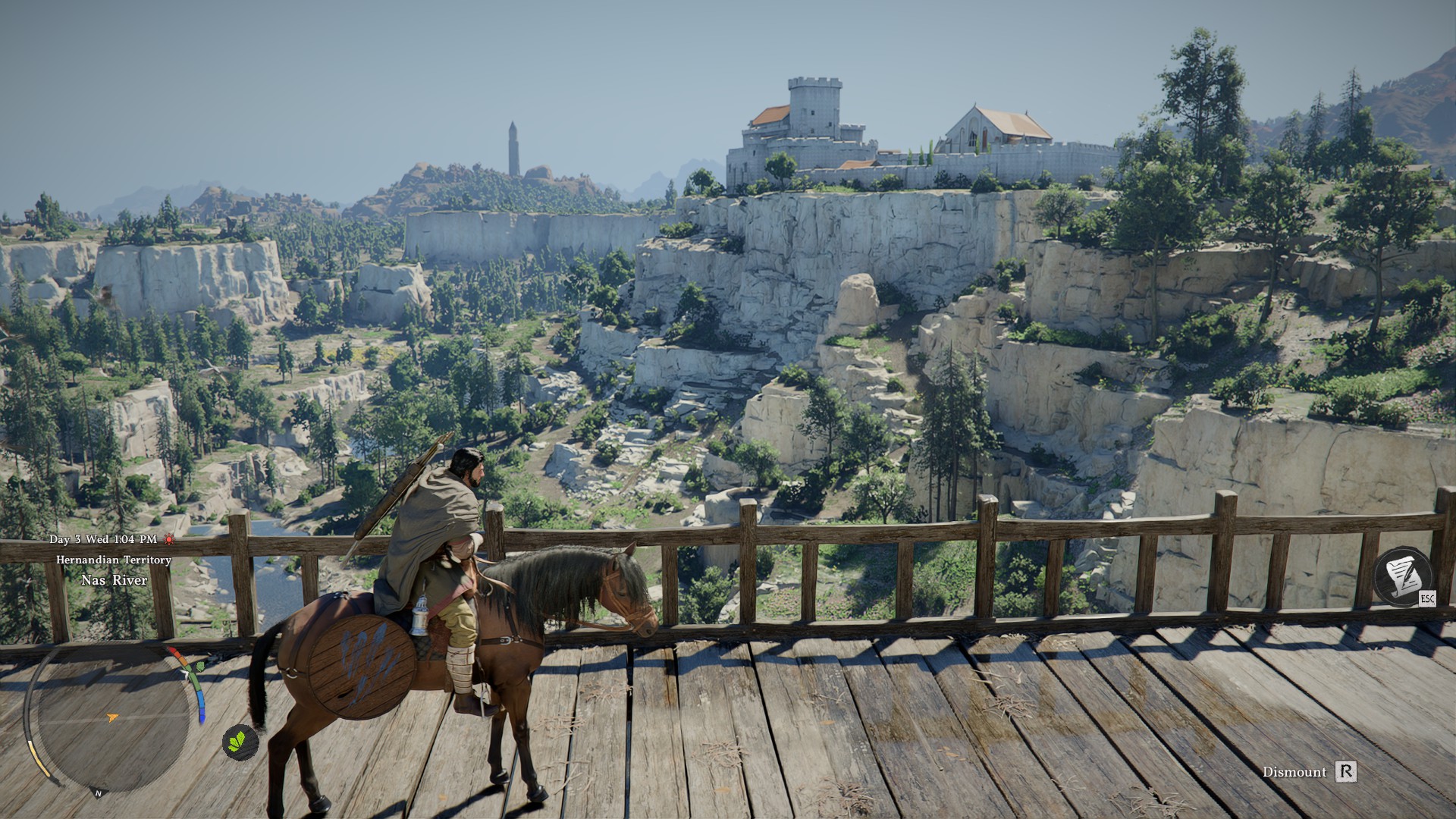
So, Crimson Desert is set in a fantasy world called Pywel, which is a mosaic of various fiefdoms, city-states, and tribes. I don’t want to say “kingdoms” or "nations,” since there are no kings or governments per se in this world, only various nobles in leadership positions—lords, dukes, barons—as well as tribal chiefs. The game’s main protagonist is Kliff, the leader of the Greymanes tribe/faction, which is based in the northern state of Peilune. It’s worth noting, of course, that as the plot unfolds, we unlock access to two other playable characters, each with different skills and available weapons (and we can even switch characters at will via a wheel, similar to GTA V), but Kliff remains the story's main protagonist.
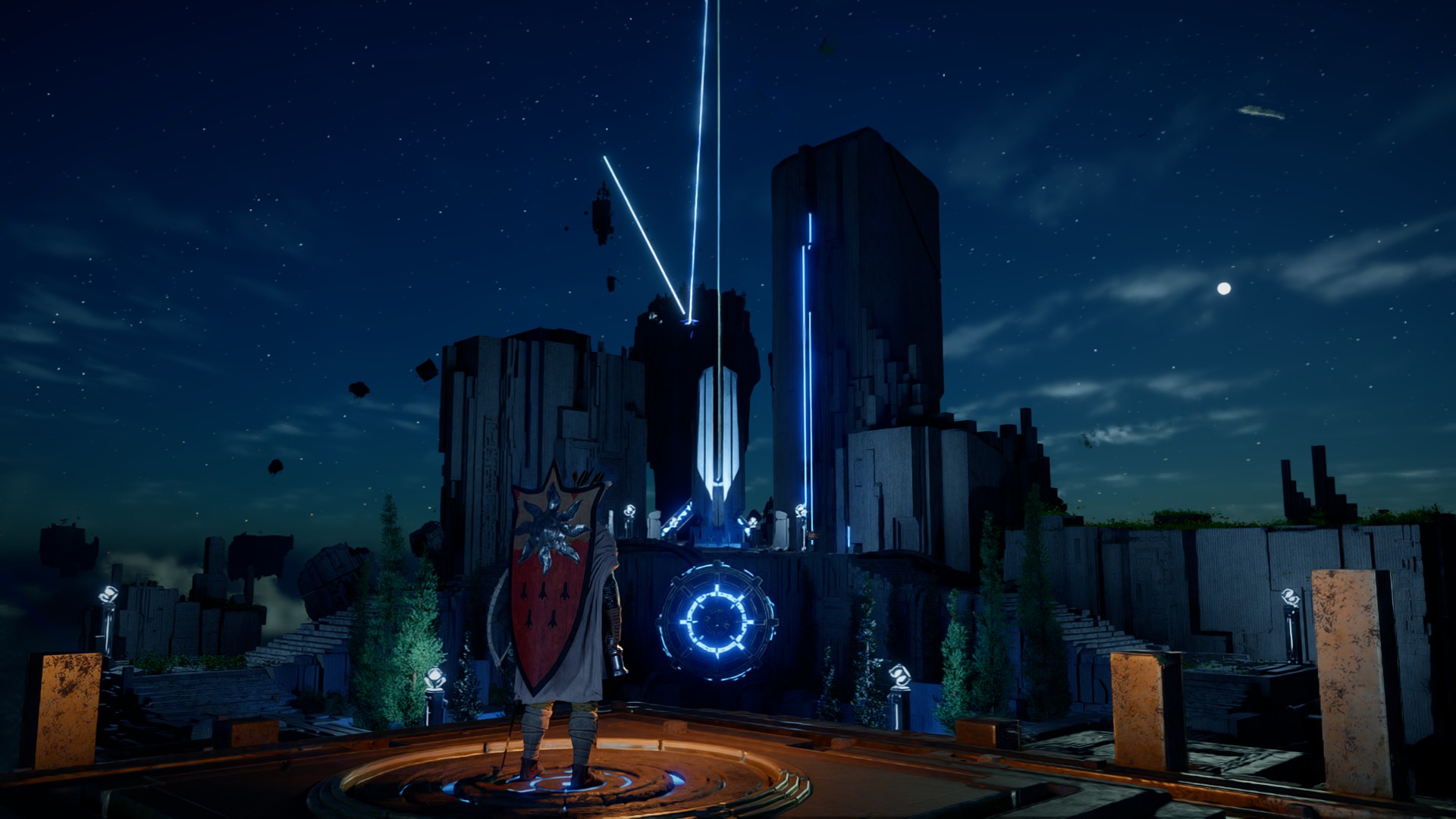
The plot kicks off in a rather grim fashion, as during the prologue we see the Greymanes come under a surprise attack from a rival tribe called the Black Bears , an attack that nearly wipes out the Greymanes and scatters the tribe’s surviving members to the corners of the world. Kliff himself miraculously survives the fatal wounds he sustains during the attack, passing through a mysterious parallel dimension with advanced technology and strange energy concentrations, before waking up unharmed in the southernmost state of Hernand.
The game's plot therefore unfolds along three distinct threads. The first is to locate the surviving members of the Greymanes, rebuild the clan from scratch, gather enough strength to return to Peilune, and exact revenge on the Black Bears and their allies. The second is to navigate the patchwork of states, tribes, and other factions in Pywel, and to see how wars, political games, and other ambitions of the world’s powers ended up influencing the fate of the Greymanes. The third, the exploration of the mysterious parallel dimension known as the Abyss, how it relates to Pywel’s past, the threats that stem from it, and how it ultimately benefits Kliff and the aspirations of both him and the Greymanes.
It’s worth pointing out something that may seem obvious to those who’ve even casually followed the game’s development, but is nonetheless noteworthy in terms of expectations for the game: Crimson Desert is primarily an action-adventure title with some RPG elements, and by no means a pure RPG. What does this mean? Two things, mainly. First of all, there is no RPG-style character development: there is no “character creation” phase, we don’t earn XP, and we don’t level up. The only RPG-like aspect of the character development segment is that we can choose the weapons and armor we’ll fight with (with some restrictions regarding the 3 playable characters— e.g., Kliff cannot use arquebuses or rapiers), in the fact that there are resistances and other modifiers determined by gear, and in the fact that we can develop/unlock skills (primarily combat-related, but also some that aid in exploration) by spending Abyss Artifacts found in the game world (through combat, from merchants, while exploring, by solving environmental puzzles, or as a reward for completing one of the many challenges) on the game’s Skill Tree.
The second aspect of its “non-RPG” nature—and perhaps the most important one—is that there are no choices of any kind in order to have an impact on the plot or its progression. The story of Kliff and the Greymanes, as well as the resolution of all the main and side quests in the world, are strictly predetermined elements that have a single, fixed outcome which will occur without us being able to influence it in the slightest through dialogue or any kind of role-playing.
Given all of the above, the essence of Crimson Desert lies in two areas: combat and the open world. And both of these areas are absolutely packed with content.
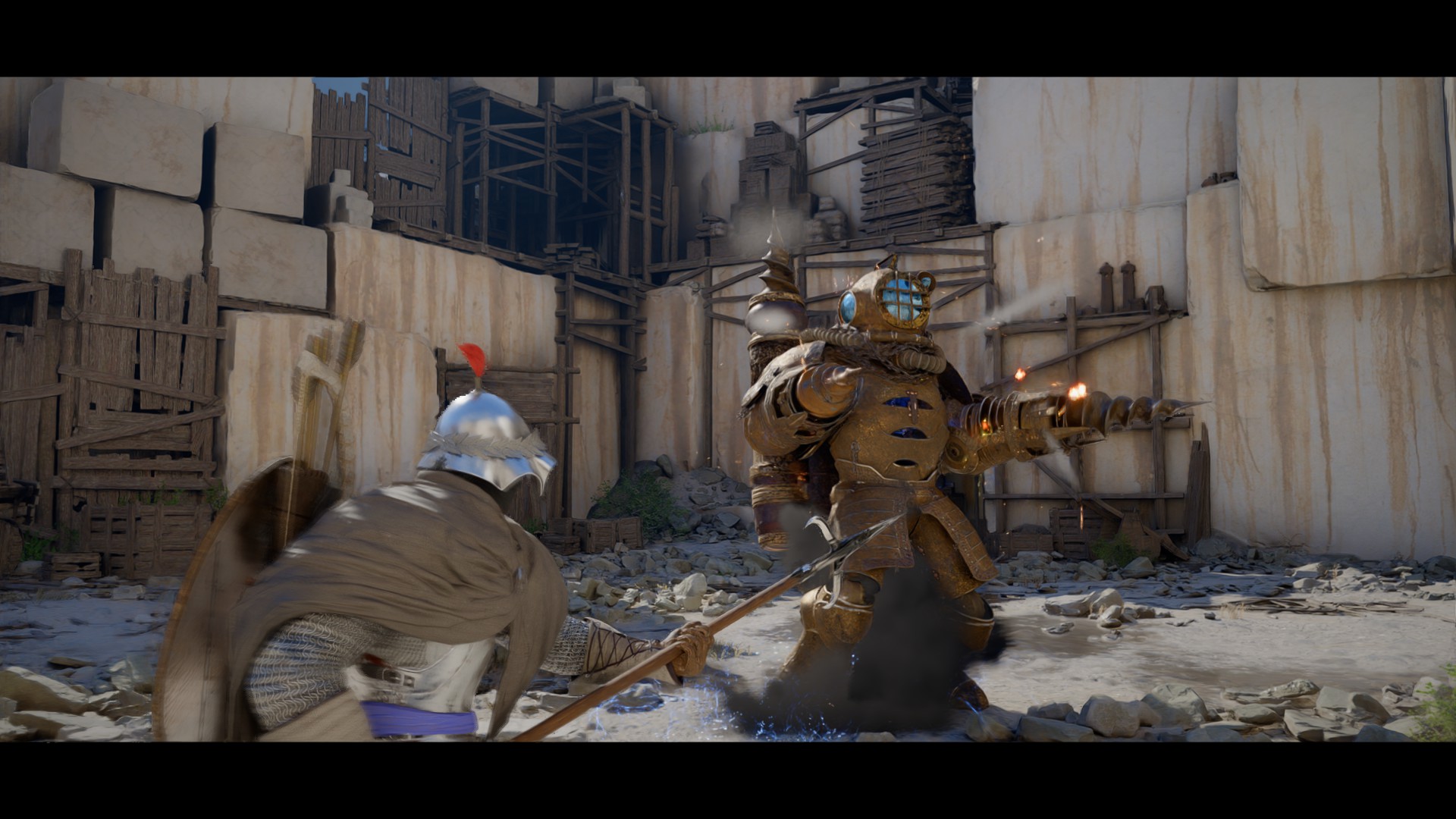
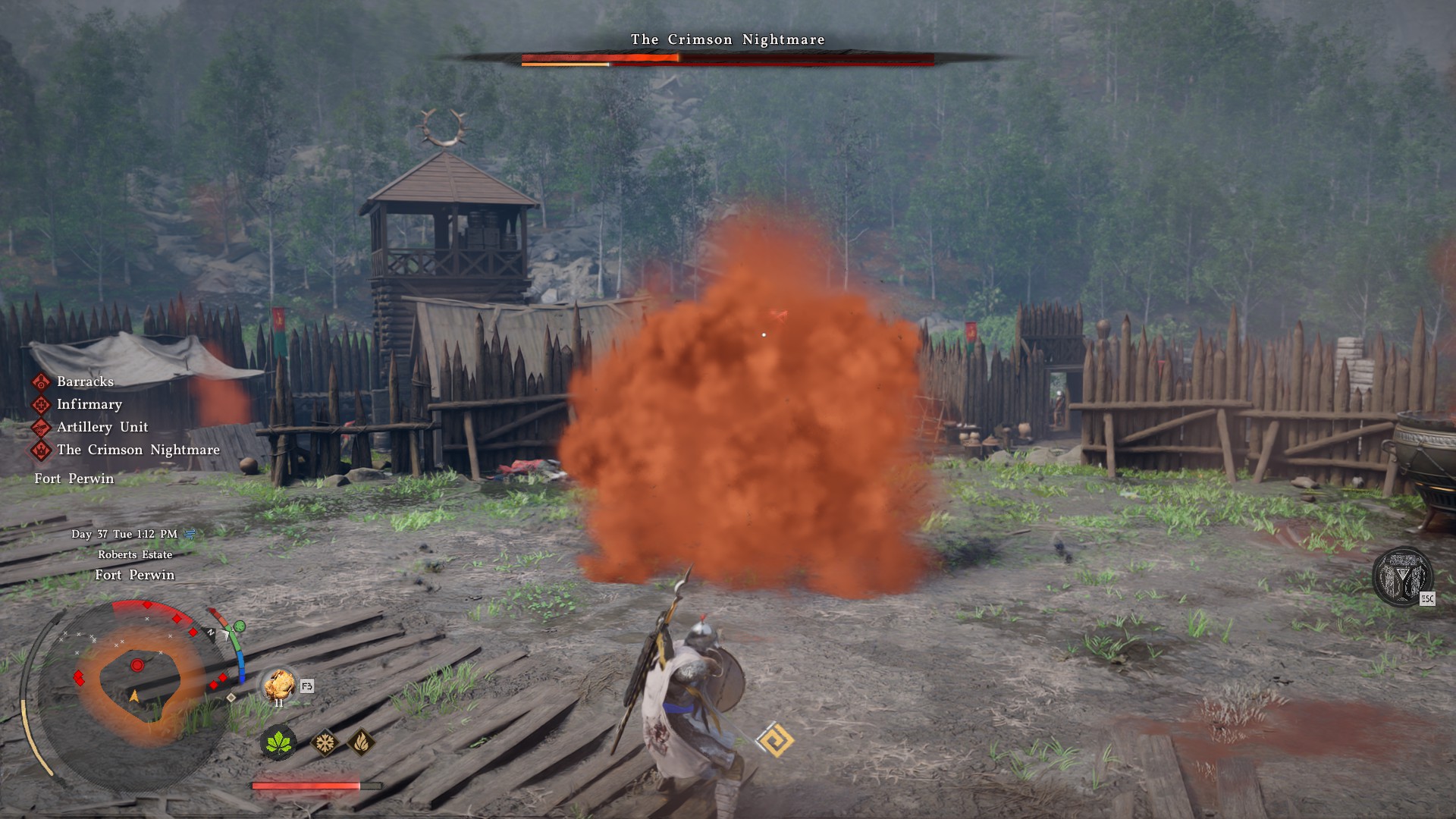
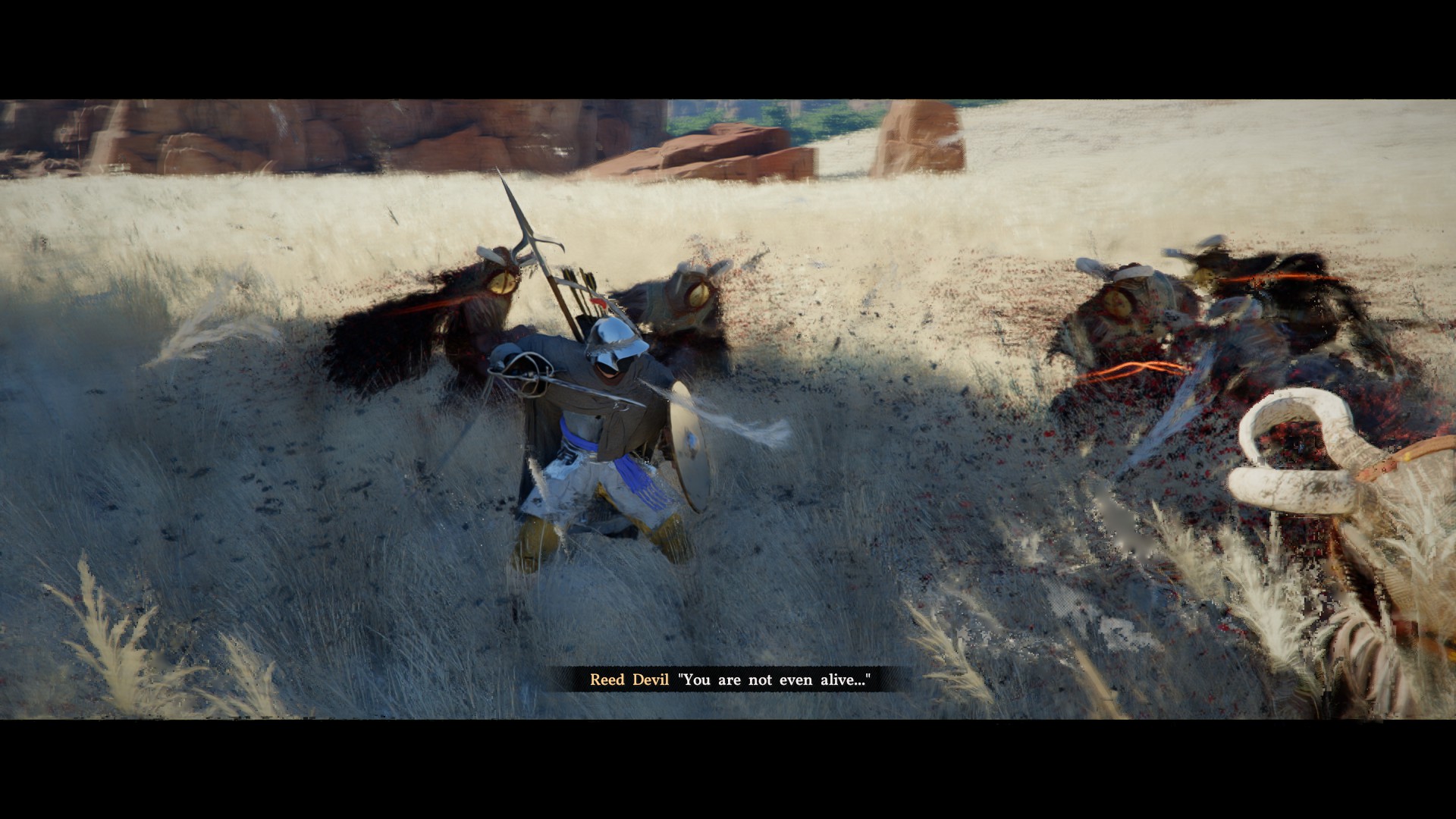
Combat is frantic and action-packed, with combos chaining together at a breakneck pace and the sheer number of enemies making every clash feel like a mini-genocide. The game features a wide variety of weapons, including one-handed, two-handed, daggers, maces, bows, arquebuses, and pistols, which, combined with the equally large number of armor types (separate item slots for helmets, gloves, boots, rings, necklaces, shields, plus the main armor set) offer a considerable amount of customization in how we approach combat. The greatest customization, however, lies in the offensive moves and combos themselves. Consider, for example, that the main keys are Ctrl, Shift, Alt, Tab, Space, and F, plus right and left clicks (separately or pressed simultaneously); each of which performs a different offensive or defensive move in battle, and combining any of them with a right or left click (or both simultaneously) performs a different type of combo or combat skill!
I have to admit that at first I was pretty overwhelmed by all the options, so I just spammed attacks by left-clicking or using the one combo I liked best (specifically an AoE attack by pressing the right and left mouse buttons at the same time) until I won. But upon studying the skill tooltips more closely and seeing exactly what each one does (and how they’re optimized with the right gear), there inevitably comes a magical moment when the character we control becomes a true killing machine with targeted and calculated moves, and with offensive tactics that adapt to the situation, depending on whether we’re fighting a well-armored boss or a horde of mobs. Given the number of such mobs, the scale of the slaughter ends up resembling that of a Diablo-style action RPG, with our character slaughtering anything that moves in his path.
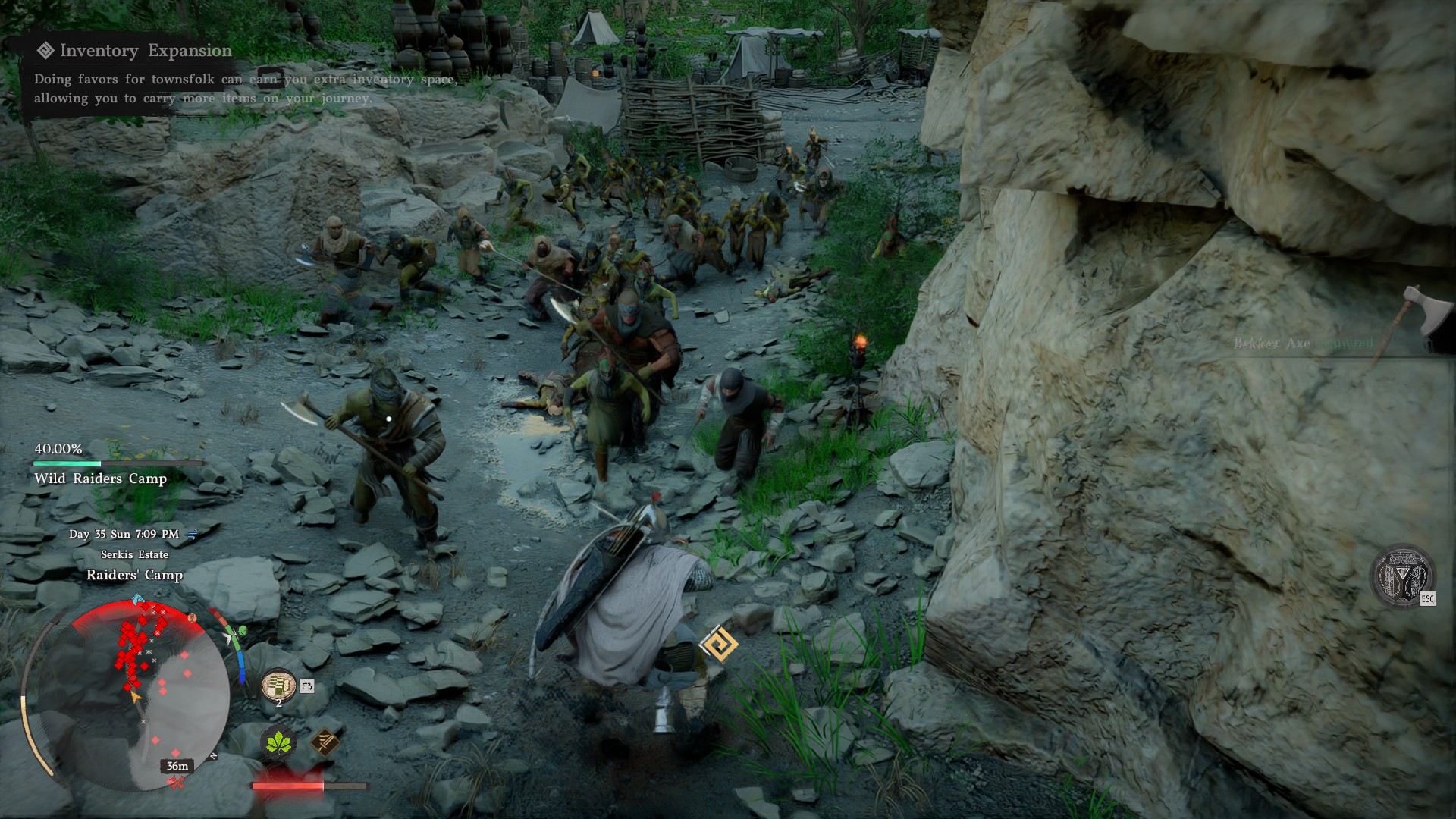
One of the features I liked most about Crimson Desert that really adds to the overall combat experience is the old-schooled, ramped-up difficulty. THERE IS NO LEVEL SCALING IN THE WORLD, NOR IS THERE AN OPTION TO CHOOSE THE DIFFICULTY AT THE START OF THE GAME. There is only one difficulty level, a “universal” one, and every area of the world has enemies with fixed power. Getting beaten up mercilessly in an area or against a boss? Just leave, explore elsewhere, upgrade your gear, unlock another skill, and boost your Health/Stamina through Abyss Artifacts, then try again later.
There’s no “story mode” playthrough option where enemies die in two hits, nor can you realistically rush through to the ending unless you’re a true master of the game who knows the combos and moves inside and out (or finds some crazy cheesing method ; to be honest, I beat at least 2 bosses by hitting them from behind corners they can’t reach or climbing to an inaccessible spot to heal—THESE THINGS ARE PART OF THE GAME TOO). Given all that, the plot’s progression becomes a constant challenge that demands precise moves, and the satisfaction you get from making progress when it happens is unmatched. I truly loved the difficulty of Crimson Desert, and I hope other games start to adopt a similar approach.
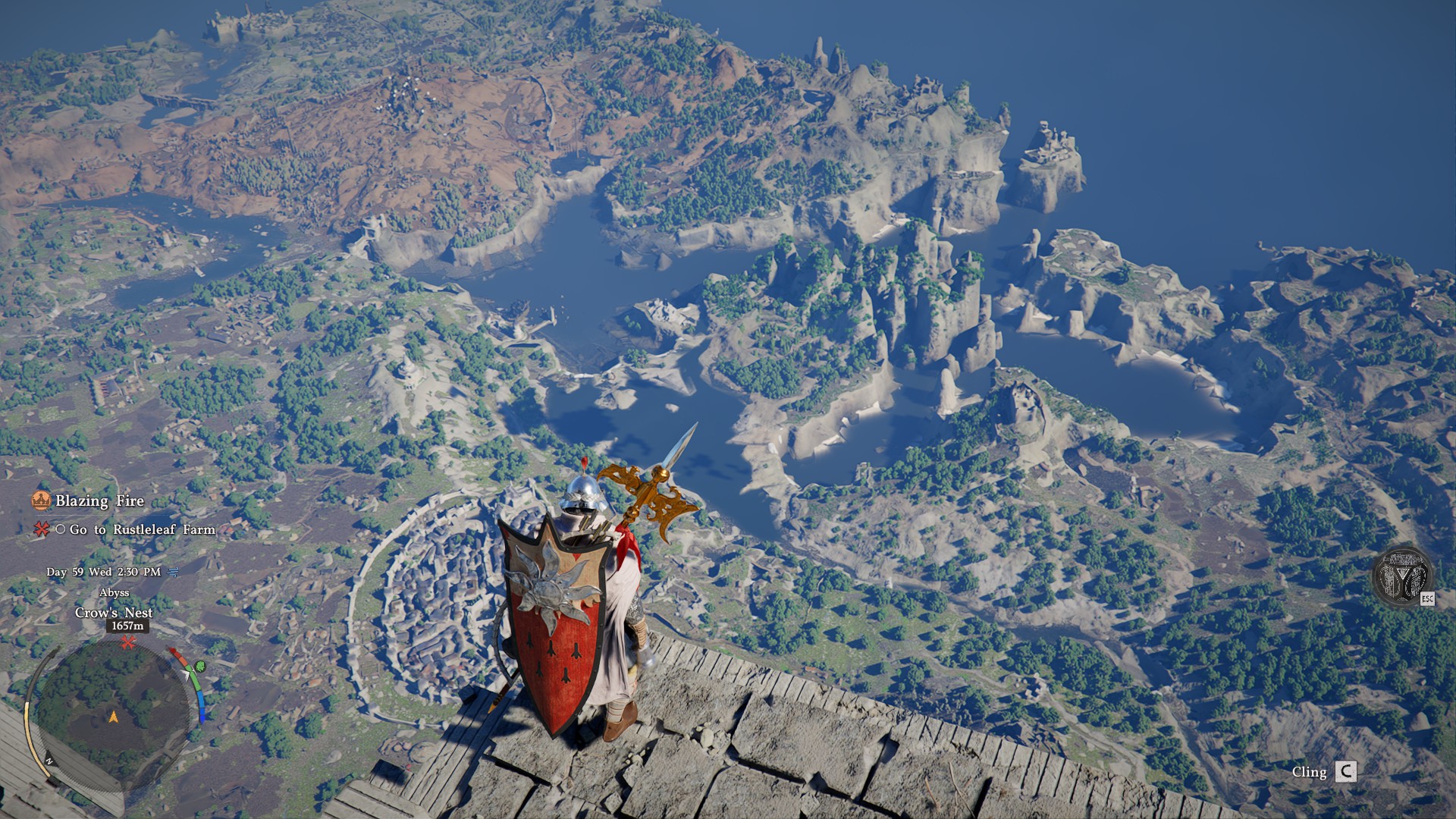
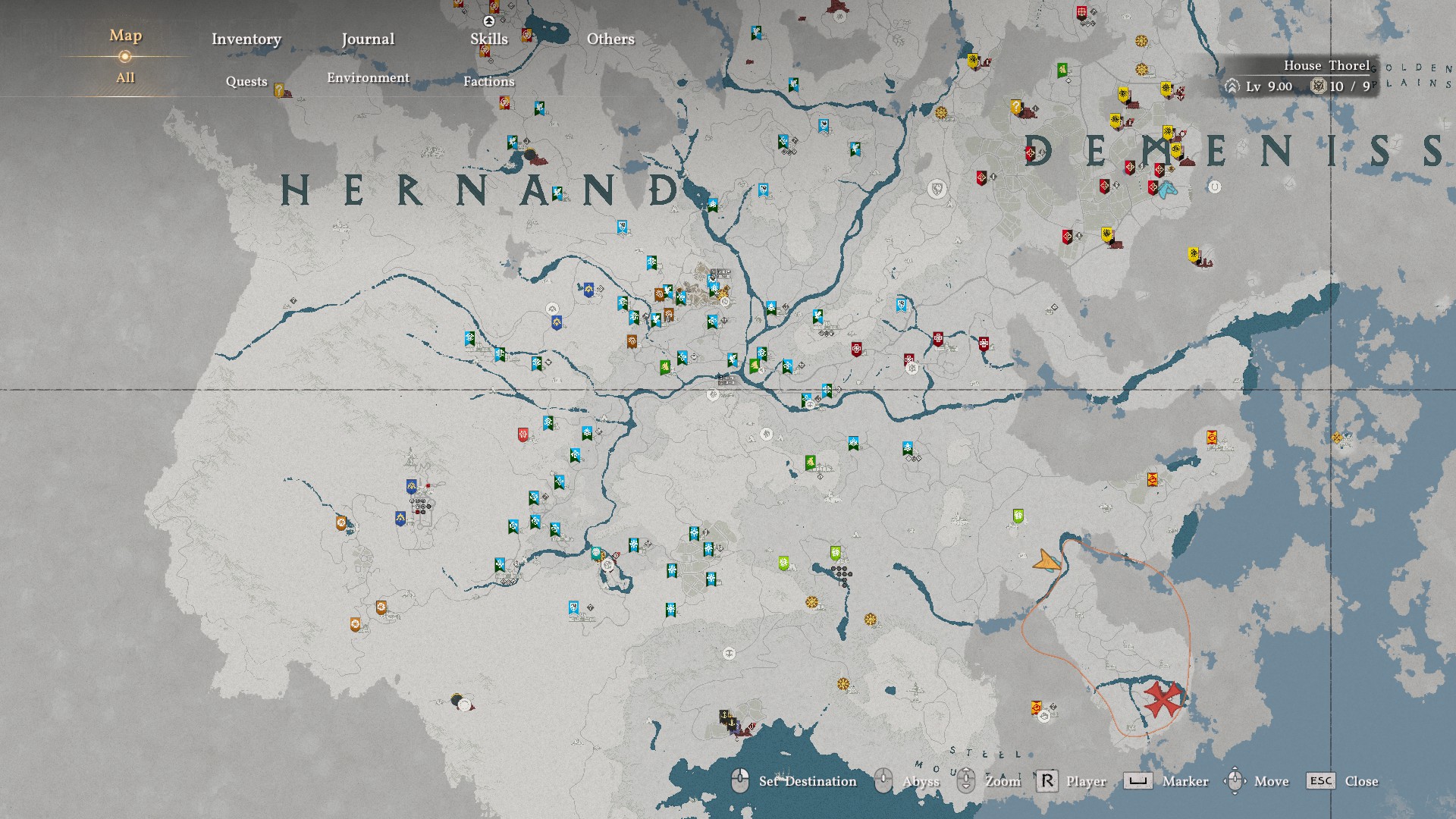
A similar challenge arises in aspects of the open world, the exploration of which, and the gameplay options it offers, is truly a massive topic. First, the absolute basics: the world is seamless (meaning not a single loading screen), HUGE in size (without exact measurements, I’d say comparable to that of Red Dead Redemption 2, maybe even a bit larger), with different biomes (green mountains, snow, grasslands, coasts, and desert, very roughly speaking), each of which has different enemies, different flora and fauna, and different resources to collect.
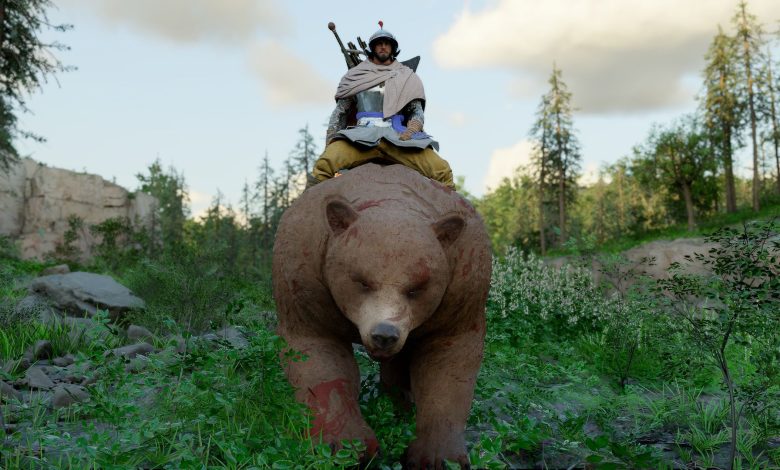
We can explore the open world in a variety of ways: on foot (following a logic similar to Ubisoft's Assassin's Creed titles), riding various horses, by carriage, by ship, by hot air balloon, on a… bear, ON A DRAGON, and I don’t even know what else; I read somewhere that there are around 30 (!) different types of mounts, and I haven’t even found half of them in the game yet. Needless to say, there’s also mounted combat, with mounts offering unique combat abilities (it’s a whole different experience to fight mobs while riding your trusty bear).
The open world is full of such a great variety of activities that it's almost ridiculous to try to list them all, but I’ll give it a shot.
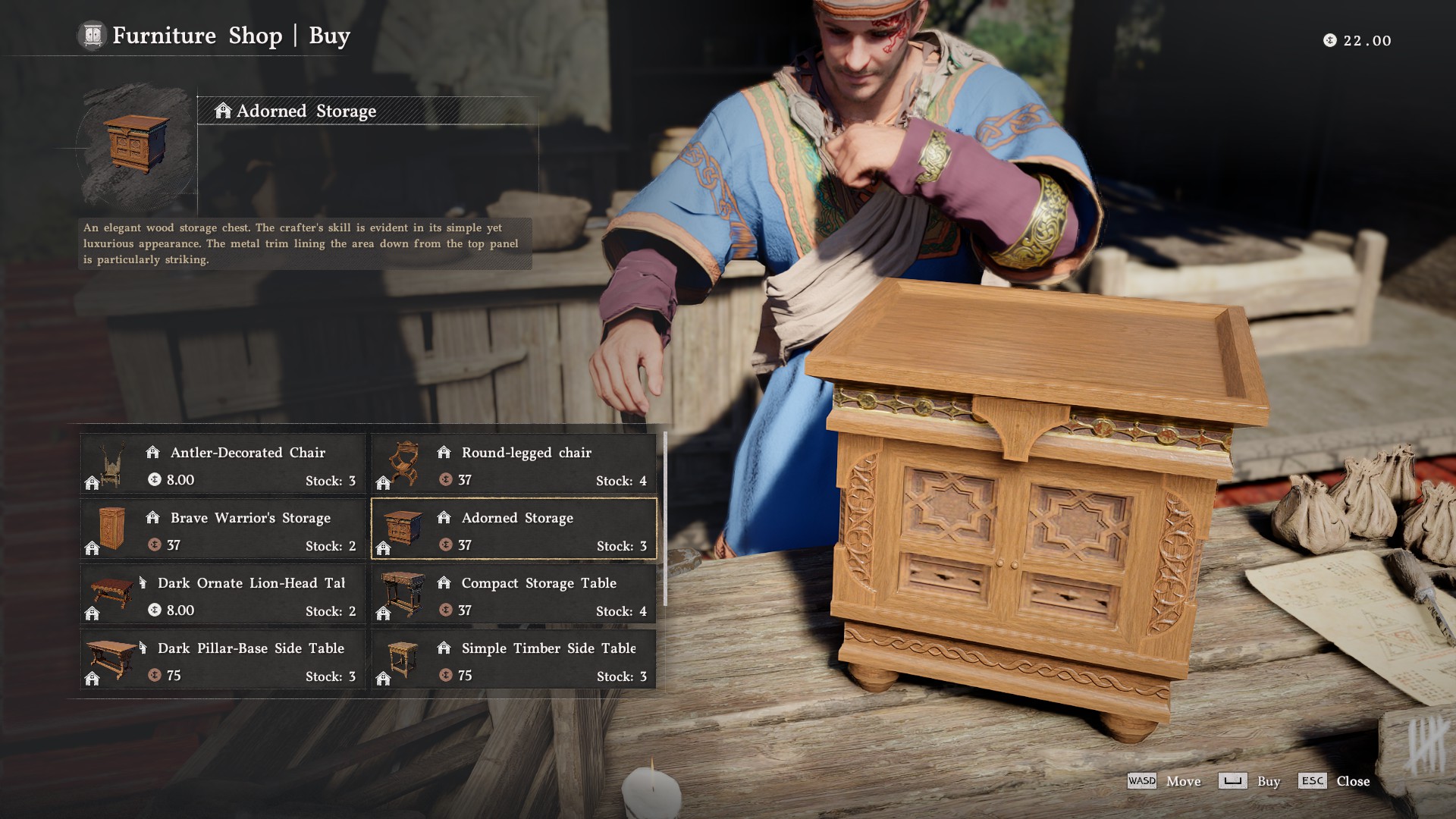
There's simply exploring the open world and the Abyss to find treasures or just to enjoy the beautiful landscapes. There are countless quests and side quests. There are FIFTEEN different mini-games (card games, arm wrestling, archery, hand-to-hand combat, horse racing, fishing, ROCK-PAPER-SCISSORS, to name a few). There is dungeon exploration. There is environmental puzzle-solving (which is quite difficult and logic-based; you’ll never find the solution to a puzzle conveniently written a little further away, as happens in many popular games). There is a crafting aspect and gathering of crafting resources (metals, insects, animals, plants, gemstones, hides, and more). There are various breeds of dogs and cats that can be tamed and kept as pets. There is furniture shopping and home decoration. You can dye clothes and gear. There’s an entire trading meta-game, with item prices fluctuating as in-game days pass and with optimal deals you can make to maximize profit. You can cook meals and brew potions. There’s animal husbandry, with the option to raise animals on a farm. There’s agriculture for growing fruits and vegetables.
Want more? Let's have some more. There's a Stealth system for stealing items and/or committing assassinations, and a Bounty system against us if we're put on the wanted list. There are also Bounties we can hunt ourselves, bringing suspects dead or alive to justice. There are strongholds controlled by enemy forces that must be liberated through combat. And there is also an extensive system of passive missions in which we send the Greymanes we have assembled on missions that require in-game time to complete (I repeat, IN-GAME time, not real time, so you simply send the main character to sleep for 12 hours and then explore for a bit, and the necessary time passes) with various rewards, ranging from extra resources for our camp to the construction of buildings in the open world that aid further exploration. Phew.
Oh, and in case anyone was worried, it’s worth noting that there are no survival elements in the game, so you don’t have to worry about hunger, thirst, or anything like that getting in the way of your exploration. However, there is a temperature gauge in the UI, and extreme cold or heat in certain areas of the world will affect the player’s health and stamina.
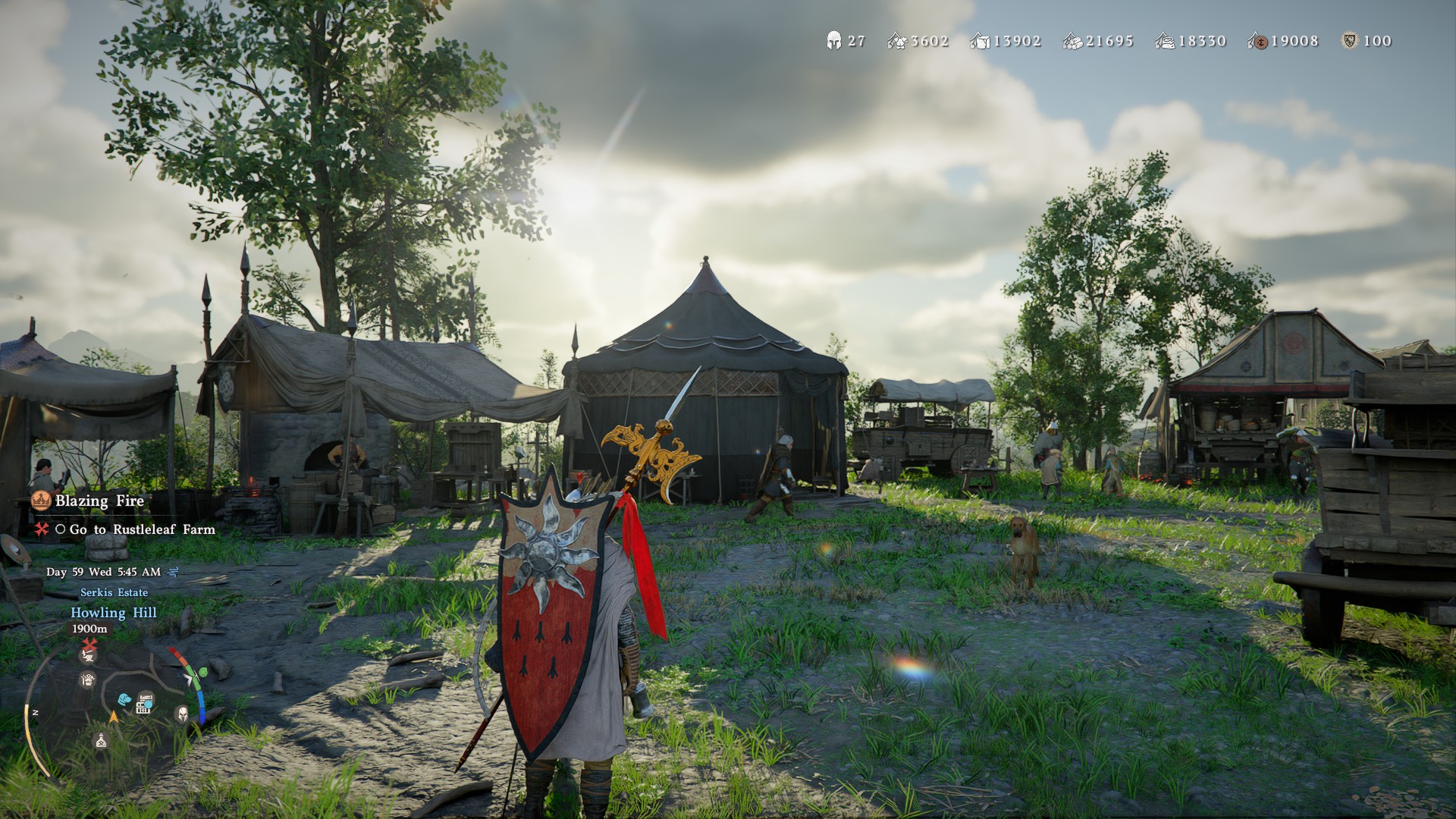
The game engine also plays a major role in the overall experience. Crimson Desert was built on the BlackSpace Engine, Pearl Abyss’s proprietary engine (any open-world game that breaks away from Unreal Engine 5 is a victory for humanity), which manages to deliver truly stunning graphics. I’d say it’s a small miracle that a game developer who isn’t Rockstar and doesn’t have a 1-2 billion budget managed to create such a seamless and beautiful open world. It should also be noted that the game is mostly bug-free even in the preview version I played (the truth is that I encountered exactly 2 bugs during my playthrough, both related to broken quests that cannot be completed), but in any case, it is expected to receive a massive day-one patch after release that will fix any issues.
It’s becoming clear that Crimson Desert is a “goodbye real life, goodbye outside world, see you in six months” kind of game, in the spirit of Red Dead Redemption 2, where the players simply lose themselves in a parallel world and engages in activities within the digital neighborhood. The sheer volume of content inevitably affects the overall game length. The developers claim that the Main Quest takes about 50 hours to complete, and the rest of the content takes just as long, but personally I'm VERY skeptical about these numbers, especially regarding the Main Quest. Given that the average player will need to explore at least some of the side content to level up enough to progress through the Main Quest, I’d say that 90–100 hours are required AT A MINIMUM just for the main story and most of the major side quests. I really can’t estimate how many hours a super-completionist playthrough would take, but we’re definitely talking about a three-digit number. Personally, I’ve put in about 80-something hours into the game so far, and I feel like I haven’t even seen half of what it has to offer.
But it’s not all sunshine and roses. Despite the highlights it offers as an open-world action experience, the truth is that Crimson Desert also has some features that, at best, elicit a wry smile of disappointment, and at worst, are downright infuriating. The first of these is likely the biggest flaw I can point out in the game, and it concerns the writing. Specifically, I feel that there are almost no memorable or particularly well-written side characters in the game. Most of them come across as generic and “formulaic” at best, or even just annoying at worst.
Unfortunately, the biggest culprits in this regard are Kliff’s own Greymane companions, whom I found, with very few exceptions, quite unlikeable. This turned out to be problematic because a significant portion of the story’s early chapters revolves precisely around our interactions with the Greymanes and their attempt to regain their lost power following the events of the prologue. This is coupled with an EXTREMELY IRRITATING pattern in the missions involving the Greymanes, in FAR too many of which we are required to mount a horse and follow some NPC, slowly and without the ability to pick up speed, with pointless and rather poorly written dialogue in between, and without the option to skip the journey. EVERY TIME I saw the quest prompt “Follow so-and-so on horseback,” something inside me honestly snapped, to the point where I didn’t want to do any more quests. I realize the same thing happened in RDR2, for example, but there, on the one hand, the dialogue was of Oscar-winning quality, and on the other, once the necessary dialogue ended, you could SKIP the rest of the journey to the destination.
Now that I think about it, Crimson Desert must have some kind of issue with the Skip function in general. Apart from the above, there’s no option to skip EITHER THE DIALOGUES OR THE CUTSCENES, only to play them a bit faster (with “faster” meaning 1.25x speed, mind you, don’t imagine lightning-fast playback). A fact that inevitably gets on your nerves at times. Aside from the annoying unskippable dialogue when resolving certain quests, which seems like a mere formality to waste the player's time, imagine, for example, fighting a boss and having 30–40-second unskippable cutscenes play between the battle “phases,” and if we keep dying in the third phase, then we have to watch the same cutscenes over and over and over again with every new attempt at the battle.
Another potentially frustrating mechanic at the heart of the game is Inventory Management, which is based on an idea that’s kind of interesting but also pretty annoying: you have to complete side quests to unlock more inventory space. When, from the very beginning of the game, you end up having to throw away items because your inventory is full, it doesn't really feel like peak gaming. The problem is exacerbated even further by the fact that there is no player stash in the game, so we literally have to carry our entire livelihood with us, all the gear we might want to use, all the unique items we don’t want to sell, and all the materials we might need.
There are also various other minor issues that, on their own, might not amount to much but collectively create small cracks in the experience. One of these is the rather poor pacing of the game’s tutorials. A large portion of the main quests (especially in the early chapters of the game, but occasionally in later ones as well) are essentially tutorials for a minigame or other gameplay aspects, but the developers probably didn’t give much thought to the possibility that someone might skip the Main Quest and just start exploring the world right away, in which case they’d figure out on their own everything the tutorials are meant to teach. So in my case, as soon as I got into the game, I spent, say, 3–4 hours playing cards and hunting Bounties, but quite a while later I had to do quests (which always started with the mind-numbing logic “Ride alongside so-and-so,” let’s not forget) where a Greymane companion would explain to me how to do activities I already know perfectly well.
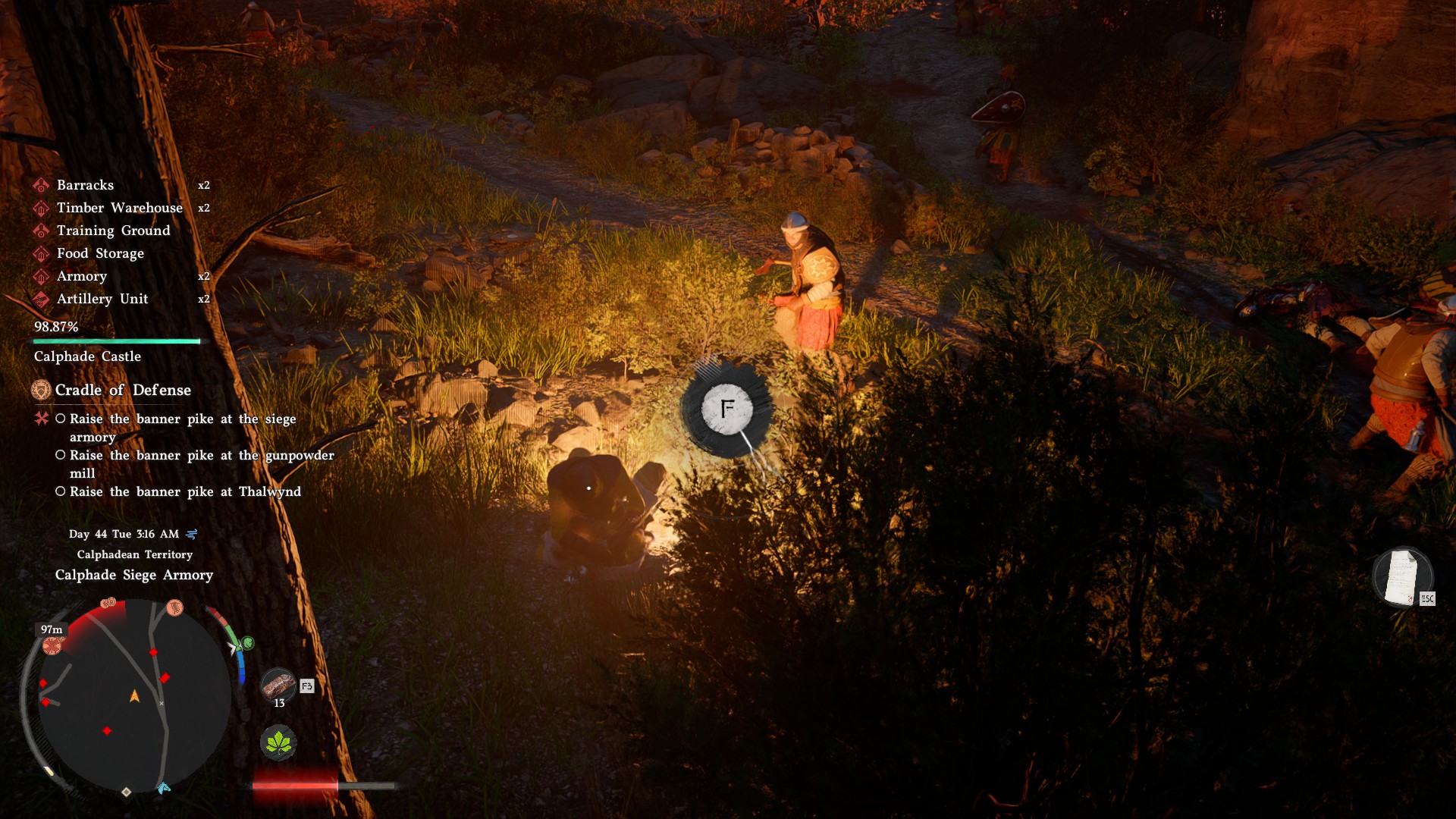
Another minor gripe I can think of is the fact that, for some reason, there’s no fast-travel point at the Greymane Camp. It’s a location we’ll be called upon to visit countless times throughout the game, yet it’s impossible to simply spawn there instantly whenever we want; instead, we have to select the nearest fast travel point “on land” or in the Abyss and then continue the journey manually for 1–2 minutes until we reach the Camp. It’s not exactly a long time, but as I said, these are small, minor annoyances that eventually add up. There’s also the, unsurprisingly, Eastern-philosophy-inspired UI design. That is, you can’t for example press I to go to the Inventory or J to open the Journal, but you must first press Escape to open the main menu, and from there click on Inventory or Journal. There isn’t even a direct “Quit Game” option; you must first select “Exit to Main Menu” and, after a short loading time, then choose “Quit” from there. At least, of course, it should be noted that in Crimson Desert, using the mouse in the Inventory is allowed, so the nightmare I experienced in games like Dark Souls is avoided, marking a small victory for the orthodox Mouse+Keyboard crew against the controller-wielding villains.
Finally, I should point out that the game comes with the infamous Denuvo DRM, with all that entails in terms of its impact on performance. Personally, I managed to play on my system (GeForce 4070, i5-13600k CPU, 32 GB DDR5 RAM) with all settings on Ultra and without the slightest drop in FPS (though, as was the case with Borderlands 4, for example, I could hear my PC’s fans racing constantly while the game was running), but this is something a prospective buyer should always keep in mind.
Of course, these minor or major cracks don’t detract from the fact that Crimson Desert seems to almost entirely live up to the hype surrounding its upcoming release. I went into this with skepticism and curiosity, to be honest, but I ended up completely hooked to a degree I didn’t even expect, and I’m really looking forward to finishing this review just so I can get lost in the game’s world again. Because it is precisely a case of "getting lost" given the satisfaction offered by exploring its exceptional and incredibly rich open world, its well-crafted gameplay mechanics, and the welcome old-school challenge stemming from its difficulty. Don’t talk to me about jobs, PhDs, interpersonal relationships, and other such banal things; just leave me here in Pywel, looking down on you smugly from atop my trusty bear.
RATING - 85%
85%
An exceptional and stunningly beautiful open-world action game, with incredibly rich gameplay and a pleasantly old-fashioned level of difficulty, regardless of its potentially frustrating flaws.