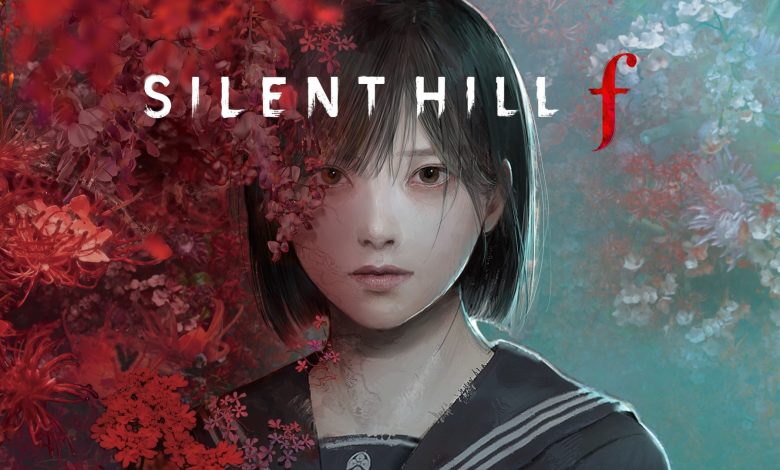

Silent Hill f is one of the most peculiar cases of games I have had the chance to come across. Especially when it comes to Konami's long-running horror series. From the various trailers we saw from time to time, it became clear, both from the setting and art direction as well as the way the encounters are set up, that the creators (a team consisting of individuals with varying levels of experience, both from the Chinese Neobards Entertainment and Konami themselves) intended to experiment. I applaud this approach, as the convenient solution would have been to follow the formula of the highly successful Silent Hill 2 that we saw last year.
Among other things, we will take a look at how the implementation turned out. I assume many of you would like to know whether it lives up to the Silent Hill legacy. In other words, whether it resembles a game from the series or if the name was strapped on for the purpose of boosting sales. We will answer this question below, after dissecting the elements that are part of Silent Hill's identity. As for whether there is a connection to any of the previous episodes, I will preface by stating, for those who are unaware, that all games in the series, with the exception of Origins and its sequels, the first and third SH, are self-contained stories, with occasional references and Easter eggs. Therefore, Silent Hill f can be played on its own, without knowledge of the previous parts.

The events of Silent Hill f take place in the rural town of Ebisugaoka. This is not the first time that a Silent Hill game is not set in titular town, at least for part of its duration. According to existing lore, the influence of Silent Hill can, under certain conditions, extend to neighboring towns. There is nothing here to justify a premise placed so far away, even more so a one located in another continent. Let's not jump to conclusions, though.
It all begins at the home of the protagonist, Hinako, where, after a heated exchange with her father, she leaves to meet her best friend, Sakuko, and go for a walk to unwind and forget her problems at home. These problems stem from her alcoholic father's outbursts towards her submissive mother. So, imagine post- WWII Japan in the 60s, where society has ingrained specific roles for men and women. Add to that a dysfunctional family, and you have a heavy backdrop on which the devs can skillfully build a psychological horror story. After meeting the rest of their friends, Shu and Rinko, they gradually realize that the town has become suspiciously deserted. As if that weren't enough, a mysterious fog begins to spread through the alleys, bringing with it hideous creatures and death.


Hinako's friction with her parents and her struggle to find her place in the world is something anyone can relate to or at least understand. On the surface, we see a rebelious teenager. However, the story hides twists and turns, with details hidden beneath multiple layers. Each new ending opens up additional perspectives on the events that took place in Ebisugaoka. For those familiar with the writer and his creations (the visual novels When They Cry), this will come as no surprise, as it is his usual technique to gradually reveal the mystery and mislead the viewer. The initial and (admittedly shocking) finale already hints that Hinako may not be who she seems to be... Let's leave it at that, as anything more would be a spoiler.
Subsequent playthroughs, in addition to the new endings that become available (if we meet the appropriate conditions, of course), unlock new paths within the city's central map, adding new areas to explore. Some boss fights are replaced with new ones, while additional notes appear, adding to the lore, as well as items (Ema) that can furrther enhance Hinako's attributes. These are divided into: Health (no explanation needed), Sanity, Stamina, and Omamori Slots. Sanity allows us to use Focus in battle, which makes it easier to perceive when we can counter specific enemy moves. At the same time, if we concentrate for a few seconds, we can unleash a devastating move. Stamina is consumed every time we run while being detected or pursued by a creature. We also expend it, when we attack. as expected. Regarding Omamori, these are talismans that give various passive abilities, such as more Health, the damage we receive being transferred to Sanity, enemies having a harder time detecting us, etc.

Mismanagement of these variables obviously has consequences. If we run out of Stamina, we will be vulnerable to attacks for a few seconds. Empty Sanity means that if we become the target of an attack that affects it, then instead, we take damage directly to our Health. There are items that replenish these three parameters (the most common ones focus on Health). Stamina, as one would expect, replenishes over time, while Sanity replenishes at Hokora Shrines, where we also can save our progress. Among other things, there we can give a variety of items (some are offerings with no other use, while most are powerful medicines) to earn Faith points. We use these, along with one Ema at a time, to strengthen Hinako's abilities.
Combat consists of a combination of light-heavy attacks, dodges, and counters. Light attacks are faster and consume less stamina, but they cannot stun the opponent like heavy attacks do. If executed with good timing (just before receiving a hit), a dodge becomes a perfect dodge and gives back all the stamina we have spent up to that point. In addition to avoiding certain attacks, we can interrupt them before they even occur by using a counter when a red outline appears around the enemy. Weapons have durability and will break after some use. I hear you, dear reader, you, who abhor such survival mechanics, but there is no need to worry as the replacement (or repair) of them comes quite often. There are no ranged weapons in the game, which, if we think about it, is realistic (whether we consider it in the context of Silent Hill or in general), as a teenage schoolgirl would not be able to handle them, let alone had access to them at that era. The developers' intention to experiment here is evident, and the overhauled combat works well, overall.

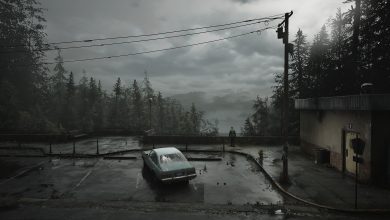
Ebisugaoka may not be as expansive as Silent Hill, but its narrow alleys can provide a sense of claustrophobia. An isolated, picturesque place in the countryside can be beautiful but also terrifying. With wooden houses, devoid of life, standing like silent observers The fields that children were afraid to cross, lest they get lost. An old shrine in the forest, forgotten by time. The thick veil of fog that covers the landscape intensifies the loneliness you feel as you traverse it. It may be a slightly different feeling from the ruined urban landscape dominated by concrete and metal in previous games in the series, but the vibe is there. Silent Hill f excels at atmosphere. That said, it loses a few points, especially when compared to the recent SH 2, in how the maps are structured, particularly Ebisugaoka and some parts of the Dark Shrine (more on that in a moment). Progress in the game is much more linear and doesn't offer many moments where we can deviate to discover something well hidden or helpful supplies. It wouldn't be a Silent Hill game without the necessary puzzles, of course. They come close to the level we have come to expect from the series, with the exception of some that have vague descriptions (or are not well worded) and can be solved by brute-forcing them.


Somewhere between consciousness and dream lies the Dark Shrine. A place with locations inspired by Japanese temples. Darkness reigns there, and the creatures that roam it are stronger, in the sense that their death is temporary (at least until a certain point in the story). A nice detail is that weapons here have no durability. The Dark Shrine is also where most of the game's bosses are located. They are excellent overall, both in terms of mechanics and well-communicated patterns, as well as their symbolism for Hinako. If I have one gripe, it would be that while it is the equivalent of the Otherworld for Silent Hill f, the various locations seem somewhat disjointed from the real world. In other parts of the series, it was almost always a putrid, nightmarish version of the location where the main character was at that moment.


In terms of performance, this is perhaps one of the most optimized titles in Unreal 5. In Silent Hill f, I was able to set all settings to maximum (without Ray Tracing) and get performance ranging from 60 to 80 frames per second, except for one point towards the end where I had drops to 50. The result is deemed highly satisfactory, especially since I did not have FSR or any other upscaling technique enabled. Putting aside the fantastic art direction in terms of textures, characters, post-processing effects, etc., Silent Hill f is at least on par with Silent Hill 2, while being more optimized. As for the music, the soundtrack consists mostly of compositions by the well-known Akira Yamaoka, interspersed with traditional Japanese instruments. Thematically, they are perfectly fitting, but to be honest, I found it relatively weak compared to the series' best moments. It's not that there's a lack of interesting tunes, but the atmospheric ambient tracks that chip away at the sense of security have overshadowed the melancholic, pensive melodies that evoked a multitude of emotions.

Before we wrap this up, we should take a moment to assess the game and answer the question we asked at the beginning of this presentation: Does it live up to the series' name? Musically, it's not one of the strongest moments in the series, as it largely lacks emotional intensity. Our passage through the Dark Shrine is more like a fever dream (though there are some scary moments, of course) than something truly nightmarish. The town of Silent Hill, with its mystical presence influencing the protagonists, is also absent. Combat is a new step for the series, at least in its concept. It's not that the implementation is flawed, but the camera can be a hindrance in confined spaces, as it struggles to properly capture the action. Something I really appreciate in a survival horror game is when it gives you agency (at least in most cases) of whether to fight or flee. Well, in the last 1/5 of Silent Hill f, it often locks you in obligatory arenas, where there is no escape unless you destroy everything in sight. Combined with the creatures' resilience, this artificially lengthens the duration and affects the pacing that we were used to until then. Finally, if there's one thing that really rubbed me the wrong way, it's the limited inventory. I lost count of how many trips I made to shrines to offer items in order to to make room for the ones I wanted to keep.

I hope that the information above has helped you reach the necessary conclusion. The scenario and atmosphere are Silent Hill f's strongest points and will draw you in without you even realizing it. The revamped combat system works well, without any major flaws. The presentation (Japanese voice-overs are recommended) is befitting of an AAA title. I would suggest weighing up each aspect and how important it is to you. Depending on it, you can form your own opinion on whether or not it is a true offspring of the series. As for me, I've already started my second run...


Thanks to CD Media for providing the review code.
female, fox, flower, fear, forte
RATING - 83%
83%
Silent Hill f is a distinct entry in the Silent Hill series, which attempts to break new ground without completely avoiding some missteps. Nevertheless, it leaves a positive impression as the series' return after so many years and makes us optimistic about its future.