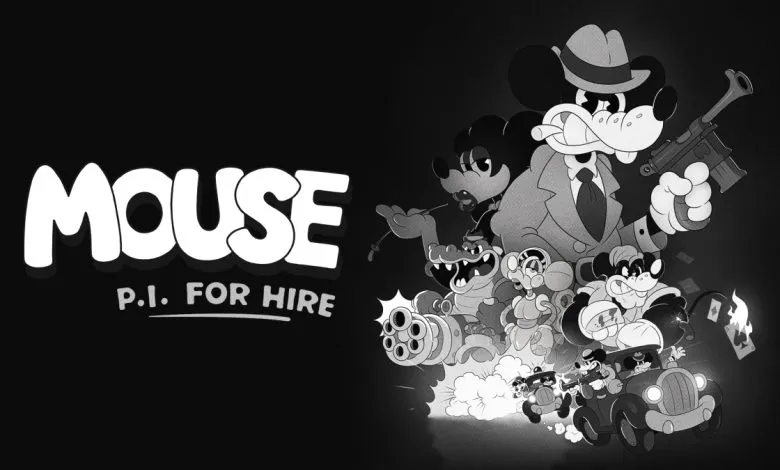

The original concept behind Mouse: P.I. For Hire was fascinating from the start. The integration of Cuphead’s “cartoon” aesthetic into an FPS, wrapped in a noir setting, isn’t something you see every day, and, most likely, only an indie development team like Fumi Games could pull it off. A team that shows a strong willingness to take risks, as this is essentially their first game, which, during its development, became increasingly ambitious. So, with the risk of the game turning out to be a flop (something that could easily happen), after about four years of work, Mouse: P.I. For Hire is now a reality—and it’s anything but a flop.
If there’s one thing we need to make clear, it’s that the game is first and foremost an old-school FPS—or a “boomer shooter,” as we’ve come to call them in recent years. Consequently, it neither promises nor aims to present anything radically different. However, its main goal is to evolve, as much as possible, the general concept of boomer shooters, in order to avoid the usual “ailments” of the genre, such as monotony and/or saturation. The first element pointing in this direction is none other than the audiovisual aspect.
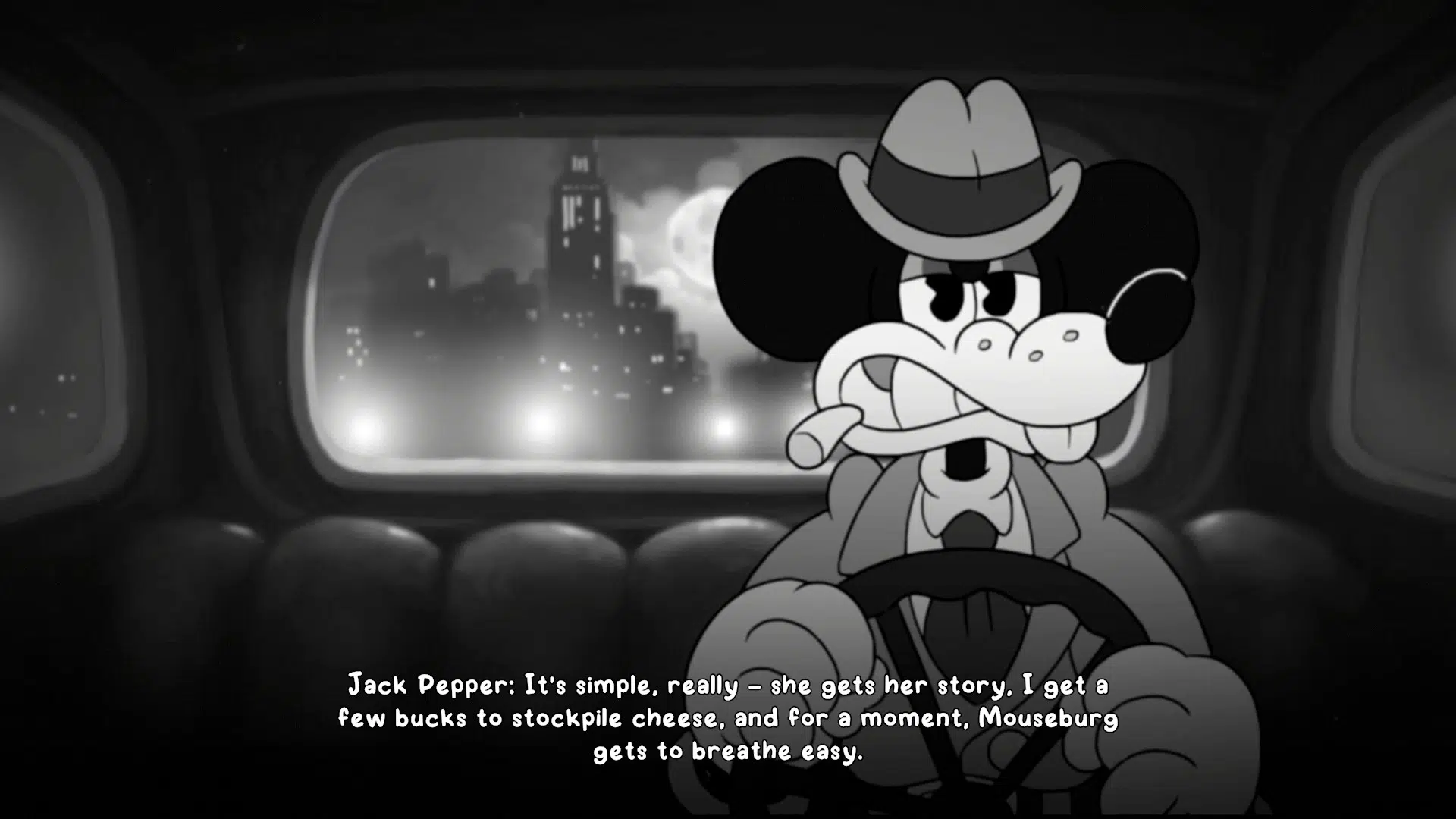
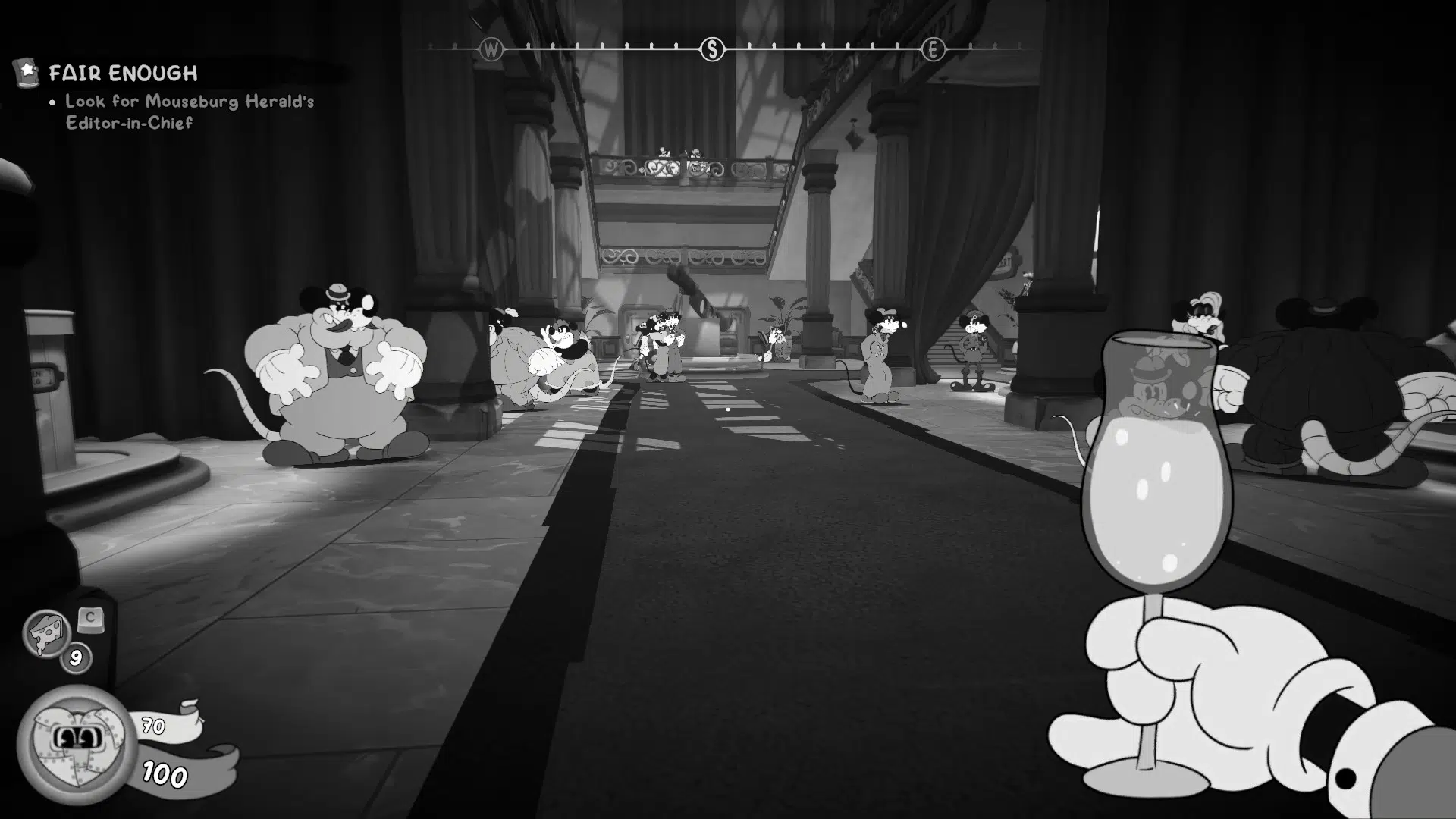
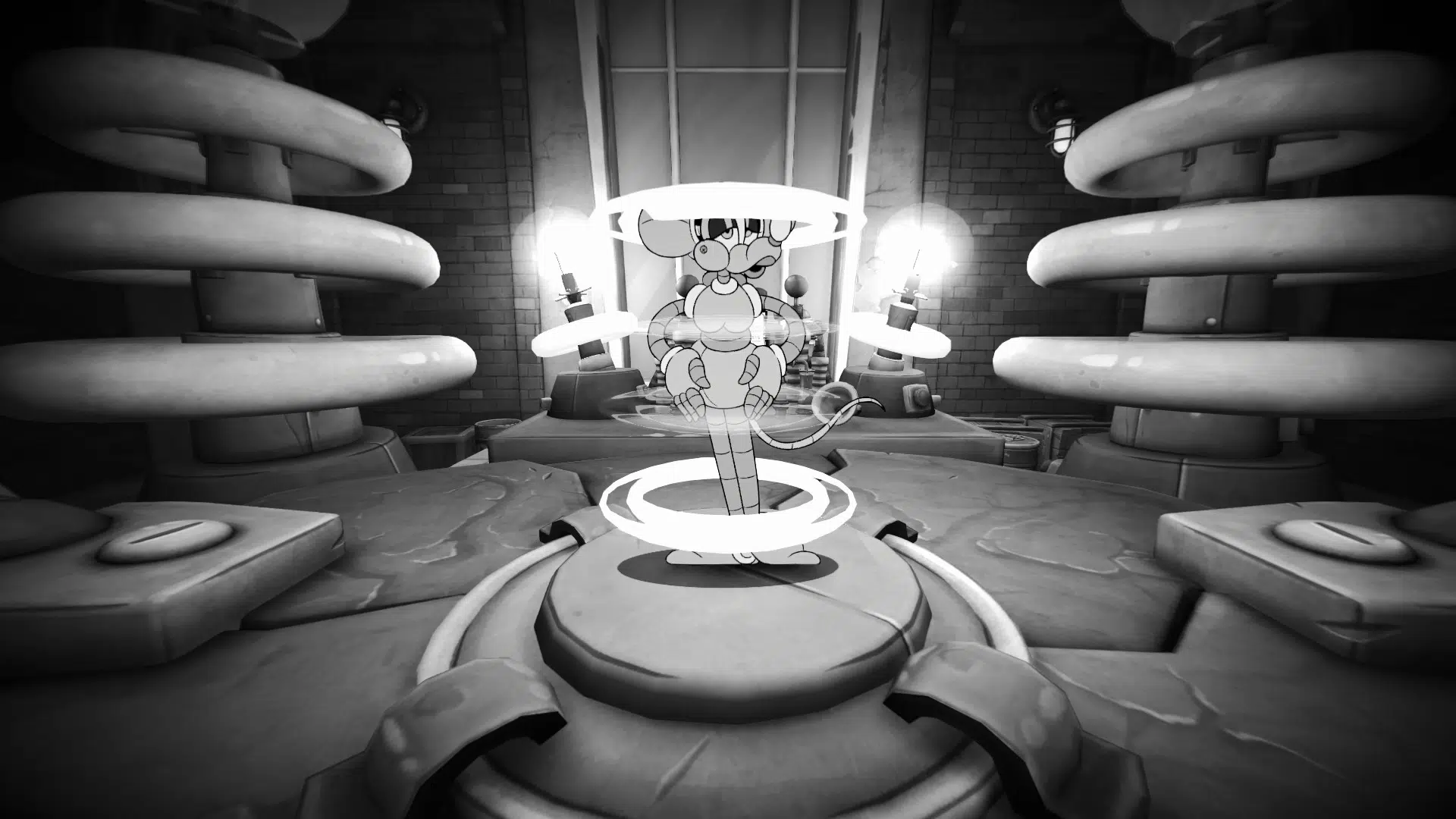
The unique black-and-white aesthetic, with two-dimensional characters moving through 3D environments (like an animated theatrical set), is mesmerizing. Mice, rats, and alligators represent human figures, while both the main character and the surrounding atmosphere are clearly influenced by Humphrey Bogart films. These are standard features that spellbound the aspiring player who has even the slightest interest in films or books of this genre.
The wonderful jazz soundtrack, written specifically for the game, plays a huge part in creating that ’30s atmosphere, with the main theme being incredibly catchy—so much so that you’ll find yourself humming it even when you’re not playing (this is also helped by the fact that in the opening credits, the melody plays a cappella through the speakers). Furthermore, Troy Baker from the excellent voice cast is amazing, once again, with his gravelly voice immediately setting the tone for the protagonist Jack Pepper: yet another upright, yet always prone to alcohol and beautiful women, detective who hopes to one day bring order to his corrupt city, Mouseburg.
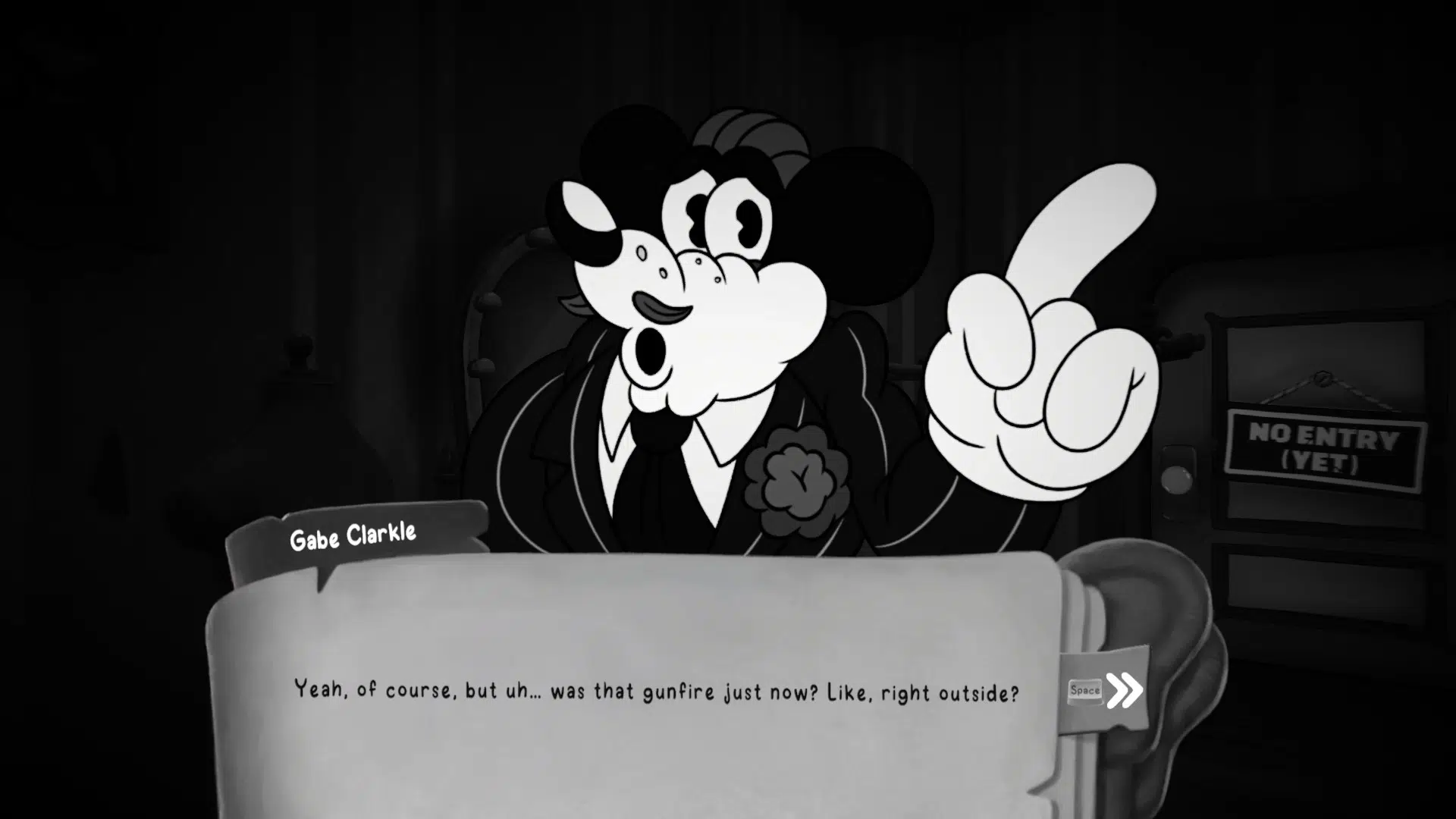
Another standout feature of Mouse: P.I. For Hire is its strong emphasis on the plot. The game features a vast amount of dialogue, packed with witty one-liners and dark humor, and a rich story where we essentially try to unravel three (seemingly) different cases, which, however, soon converge into a common thread. As is obvious, all the clichés of noir stories are included, such as corrupt politicians and cops, femme fatales, tough gangsters—you name it. The result is satisfying, and certainly, due to the adult themes it tackles, as well as the depiction of cartoonish violence, it is not intended for young children, even though the game’s characters resemble… Mickey Mouse.
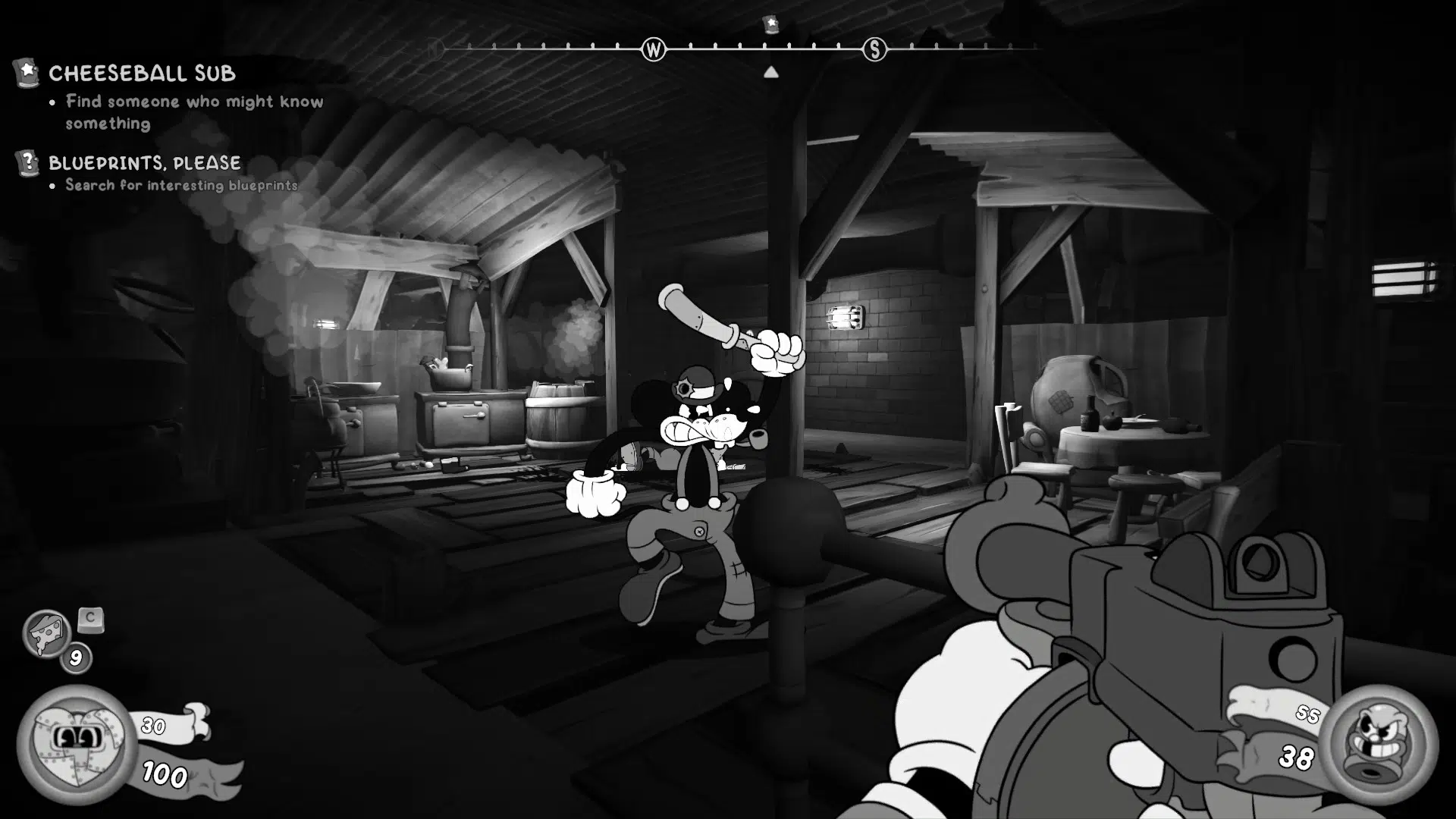
It’s rare to see an FPS with such a well-crafted storyline, and Mouse: P.I. For Hire manages to keep the player engaged with its narrative, beyond its strengths as a shooter. As we mentioned at the beginning of this review, the game doesn’t forget that it’s an FPS and not an adventure (though it could be), and it stands tall, fearless and passionate. The shooting mechanics are extremely well-thought-out and polished, with the action moving at high speeds, while Jack’s traversal is flawless and is one of the main reasons why playing the game is so enjoyable. Jack Pepper proves to be particularly agile as a mouse, as his repertoire includes a double jump, the ability to walk on walls, climb specific spots, and even glide, with his tail acting as a propeller (!).
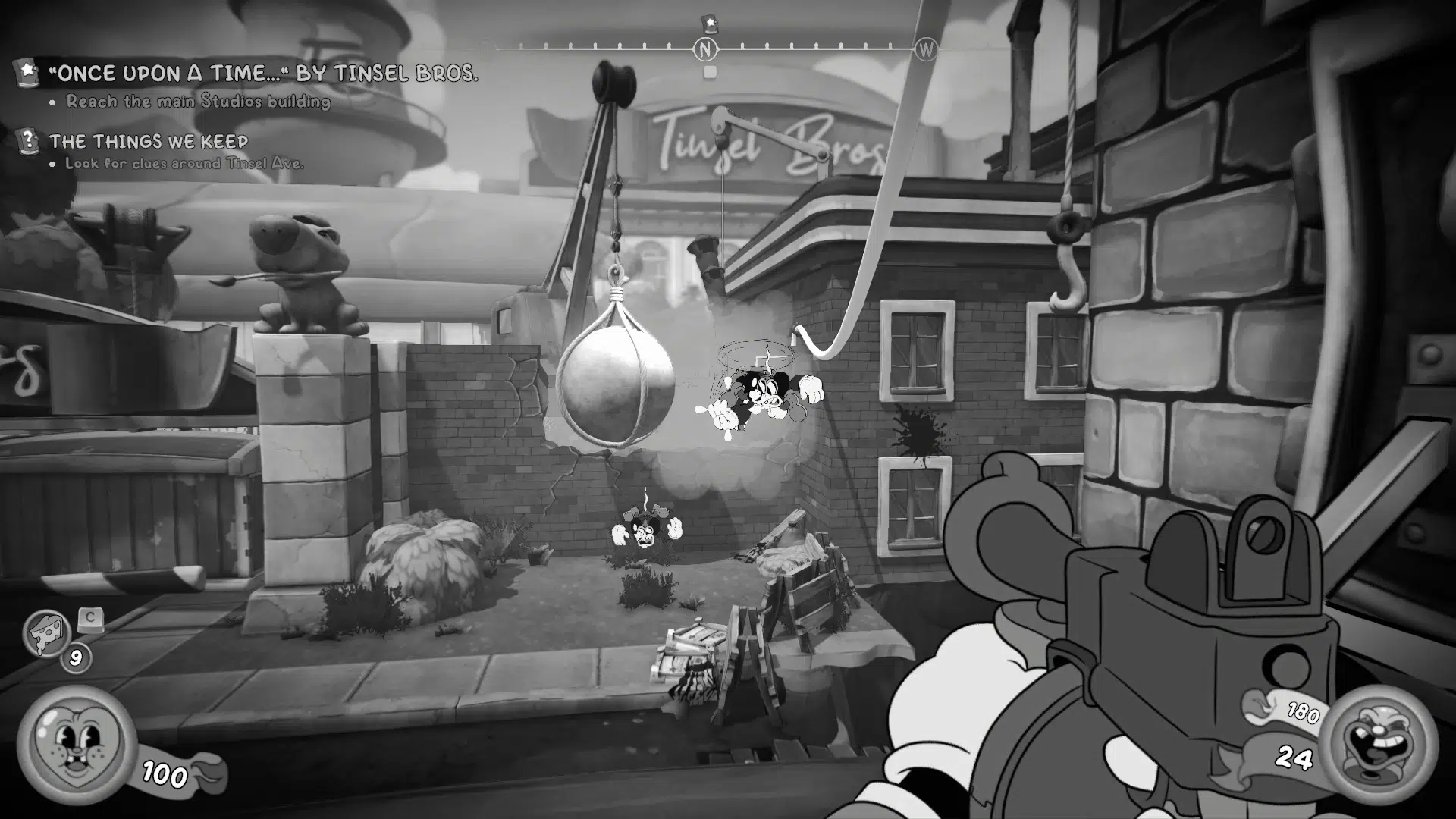
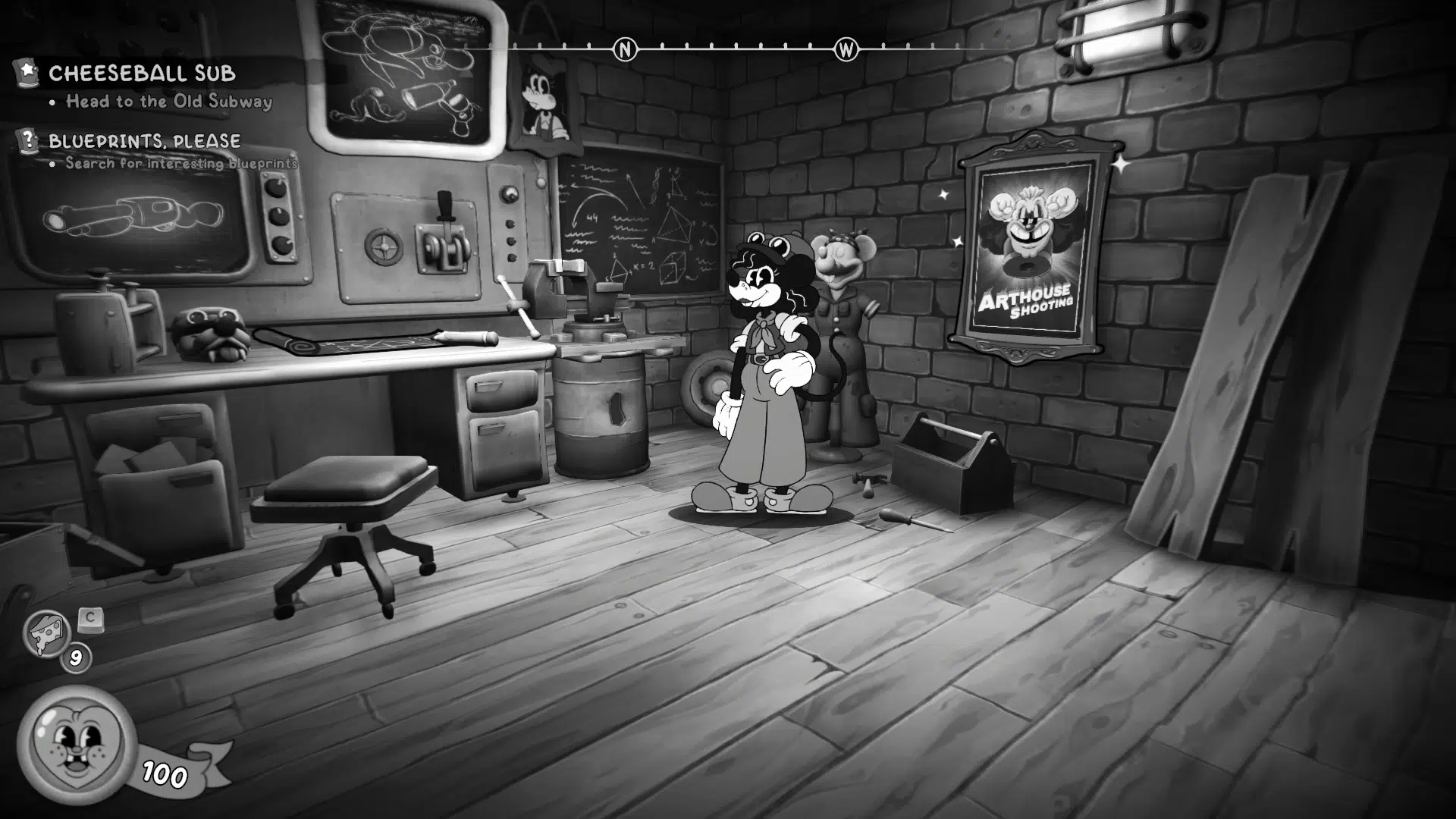
These abilities are unlocked gradually as we progress through the adventure, just as with our hero’s equipment. There is a remarkable variety of weapons, which can even be upgraded if we visit Tammy at the game’s hub—that is, the neighborhood where our office is located. We start with the basic Micer, which is rather weak (but useful at long range), and then acquire more effective weapons, such as the Boomstick for “close quarters,” the all-powerful Devanisher for crowd control, or the rapid-fire James Gun (similar to the Tommy Gun). Of course, later on some very imaginative and unusual weapons appear (with alternative fire, please), but we won’t reveal their nature, as they are directly tied to the game’s plot.
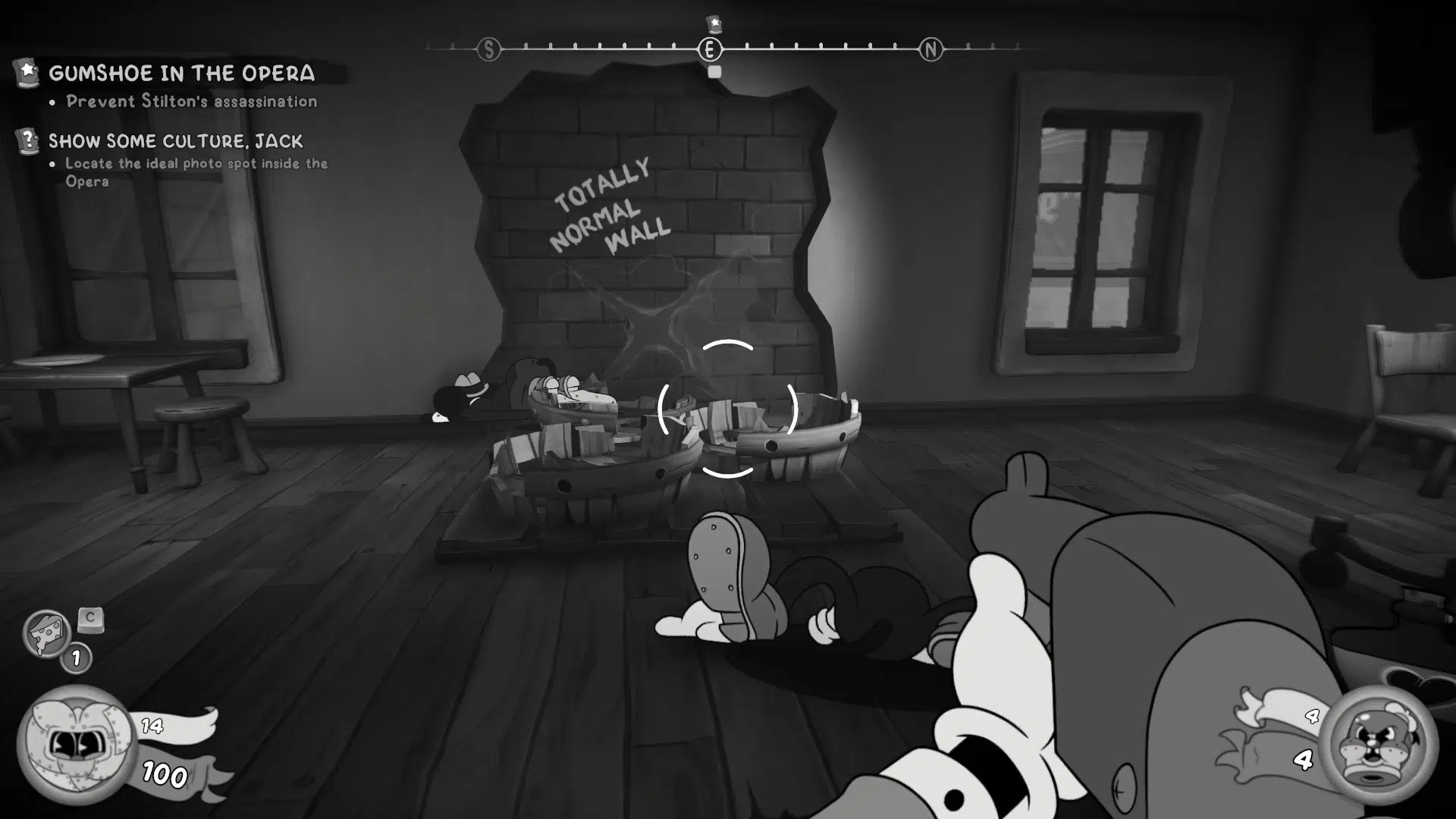
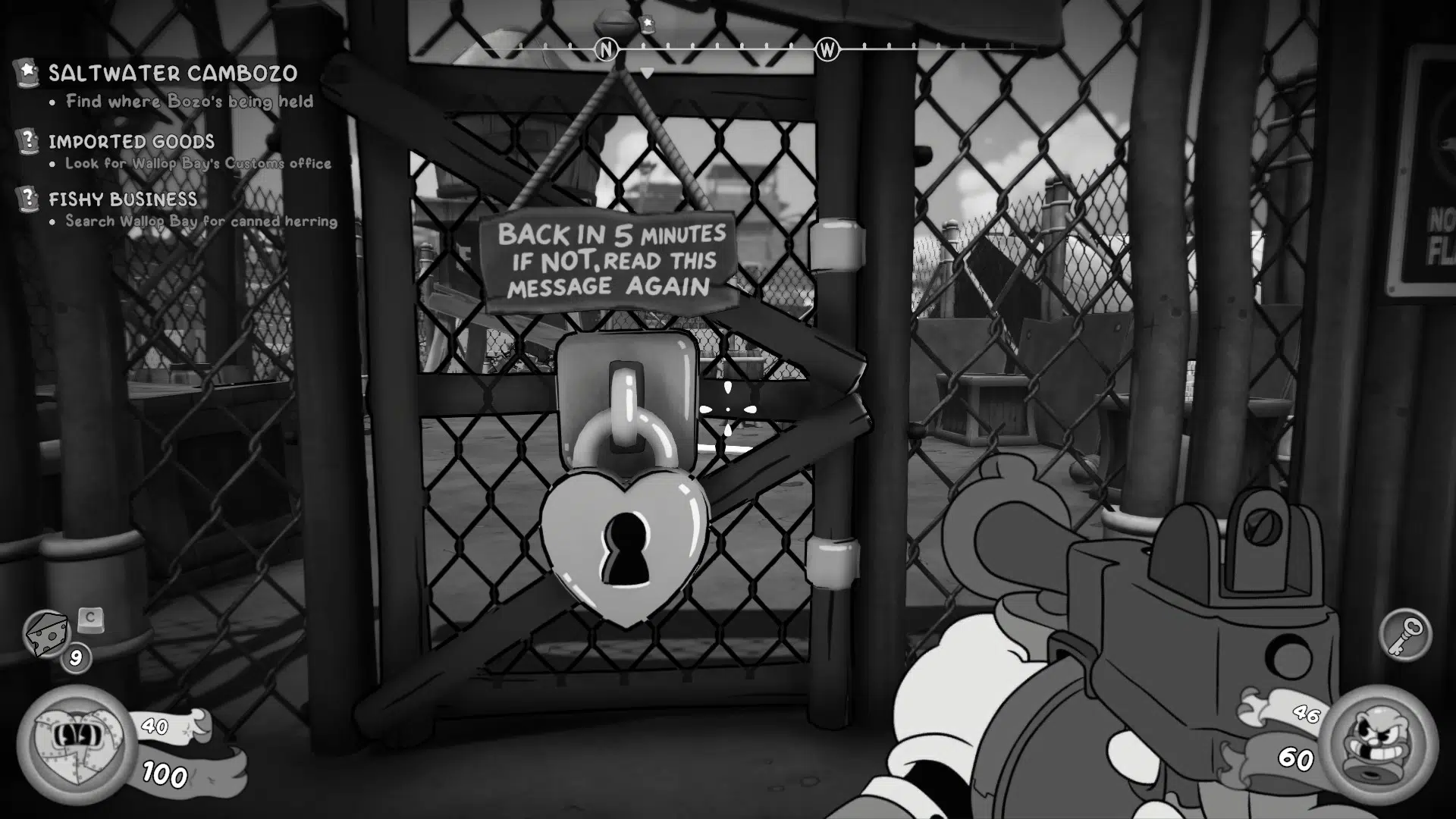
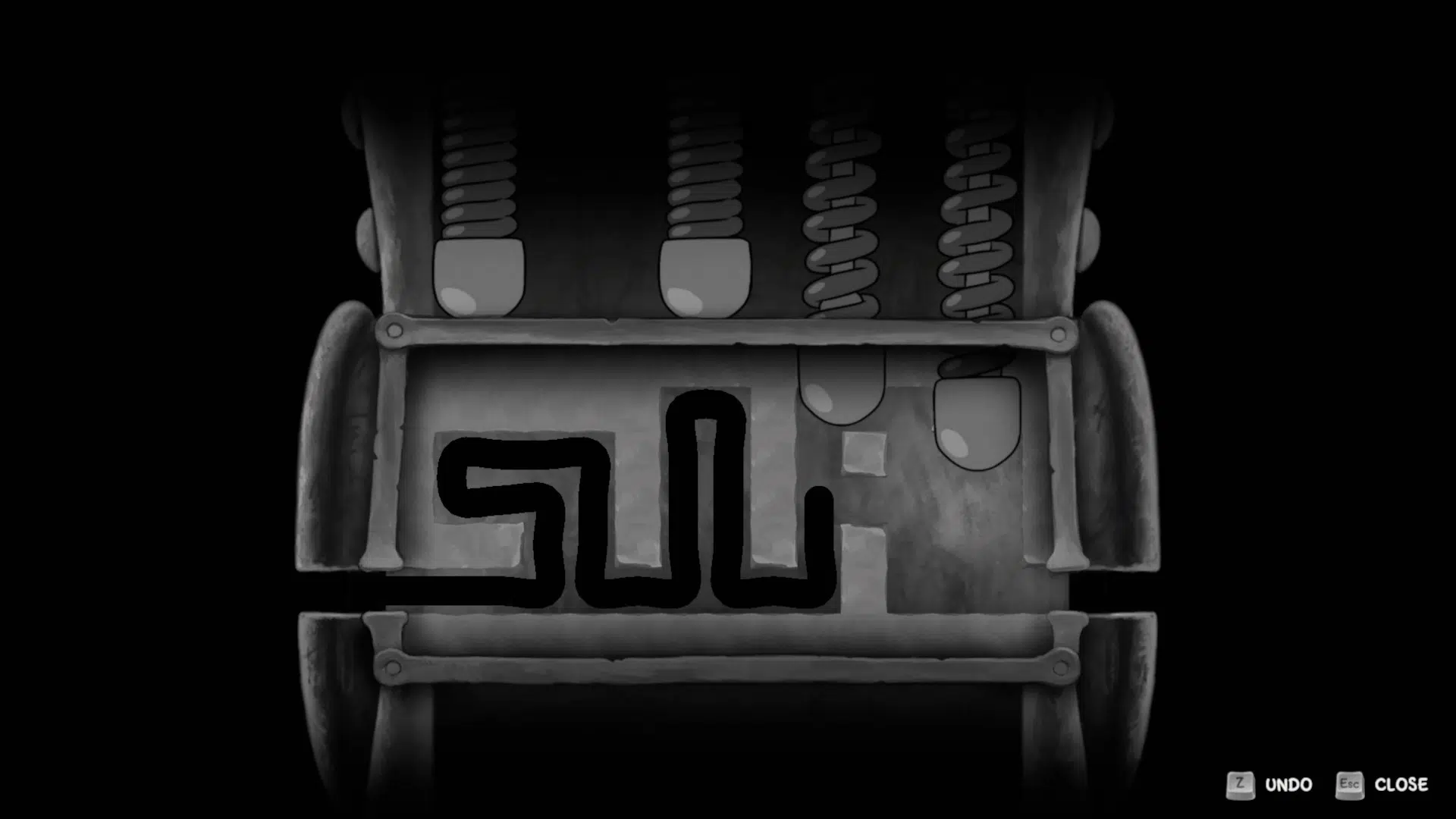
We can upgrade our weapons once we discover the corresponding blueprints during our explorations and give them to Tammy upon returning to our base. It’s worth noting that, with a few exceptions, the game doesn’t hand us the blueprints on a silver platter; instead, we’re often required to search for them. While the level design is generally linear, there are many secrets in every level, which, in many cases, are cleverly hidden—so it’s advisable to be observant. Nevertheless, Jack’s agility greatly aids in the thorough exploration of the levels, and among his already impressive abilities is the fact that he can squeeze into air vents and break locks with his tail (!), after completing an easy mini-game.
The surprises in Mouse: P.I. For Hire don’t end there, as we find that the game becomes increasingly interesting as it progresses and reveals the tricks it has up its sleeve. For example, in the game’s hub, we can take on side quests from various friends/associates, which offer corresponding rewards in the form of money (for restocking ammunition and purchasing collectibles) or blueprints, while gathering evidence for the three cases we’ve taken on unlocks new missions, which we can complete in any order we choose. This small sense of freedom is most welcome, and it’s very interesting that we move from mission to mission via our car, on a top-down map, which, in turn, also hides its own secrets.
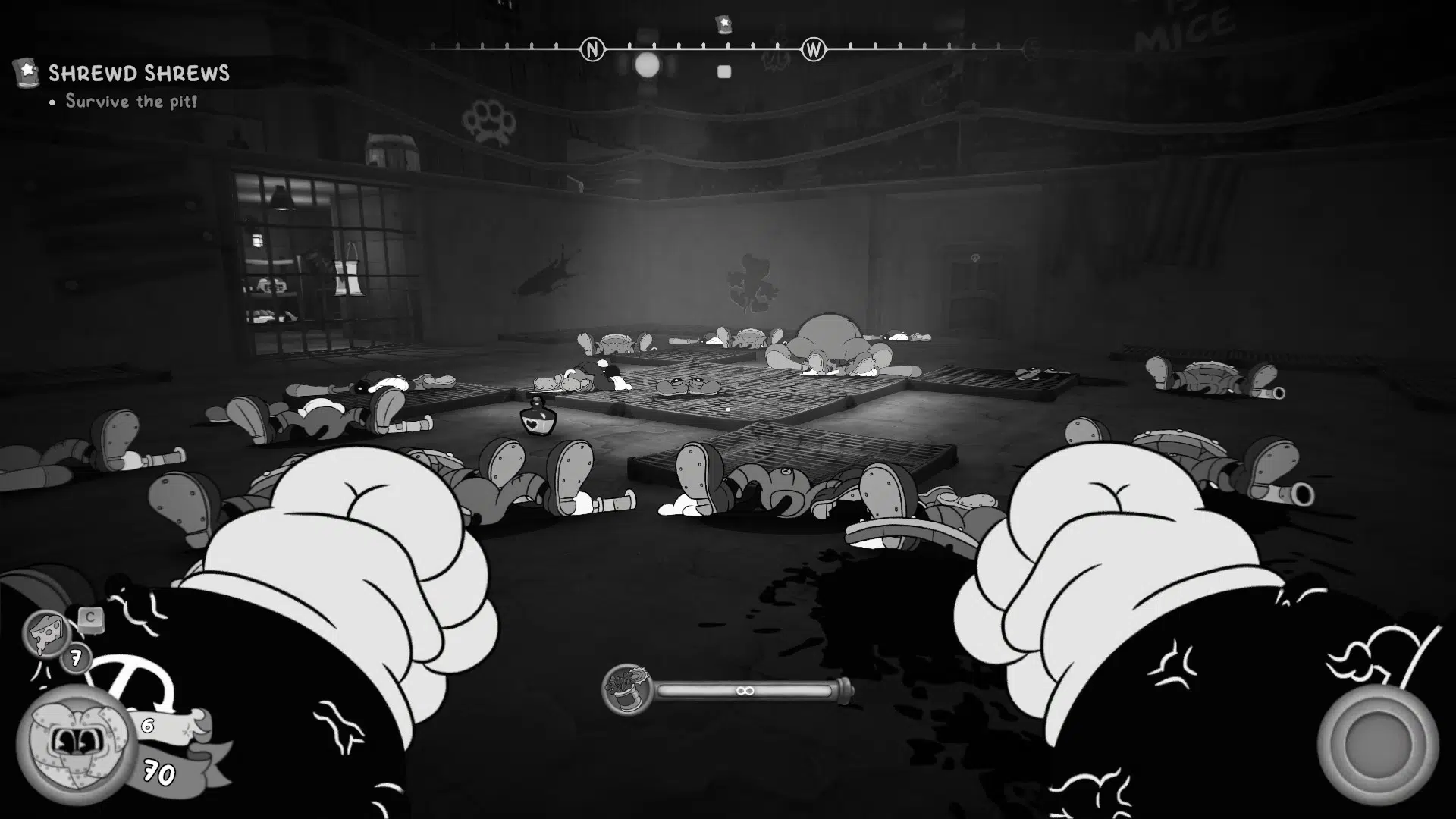
One of the most impressive aspects of the game, aside from those mentioned above, is the variety of situations we encounter on each mission. Mouse: P.I. For Hire is a boomer shooter that has the charm of never feeling repetitive. The environments we visit are unique to each location, the challenges we face vary significantly, and at times they are particularly imaginative, and there is also a notable number of bosses, against whom (for the most part) it’s not enough to simply “unload” all our ammunition on them, but rather to put our minds to work.
Perhaps the most important aspect of all this is something that many developers forget to incorporate into their games: moderation. Whether we’re navigating a series of platforms, engaged in combat, or solving environmental puzzles (yes, there are those too), the game doesn’t force the player to do so for an excessively long period of time, to the point of becoming tedious. It also regularly replenishes our health and ammo, with levels featuring a very satisfying supply in every area (note: there is no auto-heal), ensuring we never run out. If we were to voice any (rather minor) complaints, it would be that enemy types don’t evolve much by the end (which is partly to be expected) and have simplistic attack patterns, while certain weapons are unlocked very late, by which point we’ve already settled on the ones that work best for us.
However, so as not to end this review on a negative note, let’s also mention the “icing on the cake,” which is none other than its substantial playtime. In my playthrough, it took me about 14 hours to see the end credits, without completing all the side quests and without spending almost any time on the extra mini-game with the baseball cards (perfect for compulsive collectors). Of course, that time increases dramatically if someone attempts to explore everything or tries to play on the highest difficulty level, while the game’s ending leaves clear hints of a continuation of Jack Pepper’s adventures (in the form of DLC, at least initially). We’re eagerly awaiting it.


SCORE - 89%
89%
Blue Cheese
A superbly crafted boomer shooter that stands out for its interesting artistic style and substantial playtime.