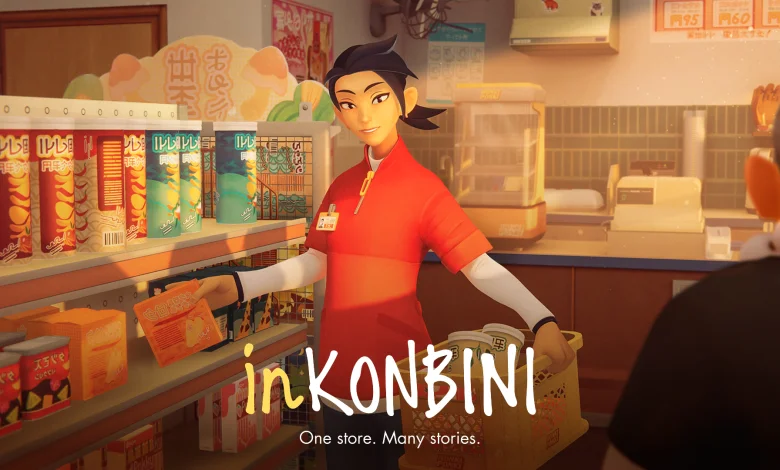

My journey with inKONBINI began as a personal commitment to integrate more "cozy" games into my playtime—titles without the pressure of performance or leaderboard chasing. My goal was to replace evening "doomscrolling" with quiet sessions of relaxation. inKONBINI certainly achieves this, along with several other successes, though I must clarify: this is not a store simulation in the typical "endless sandbox" sense; it leans much more toward the visual novel genre.
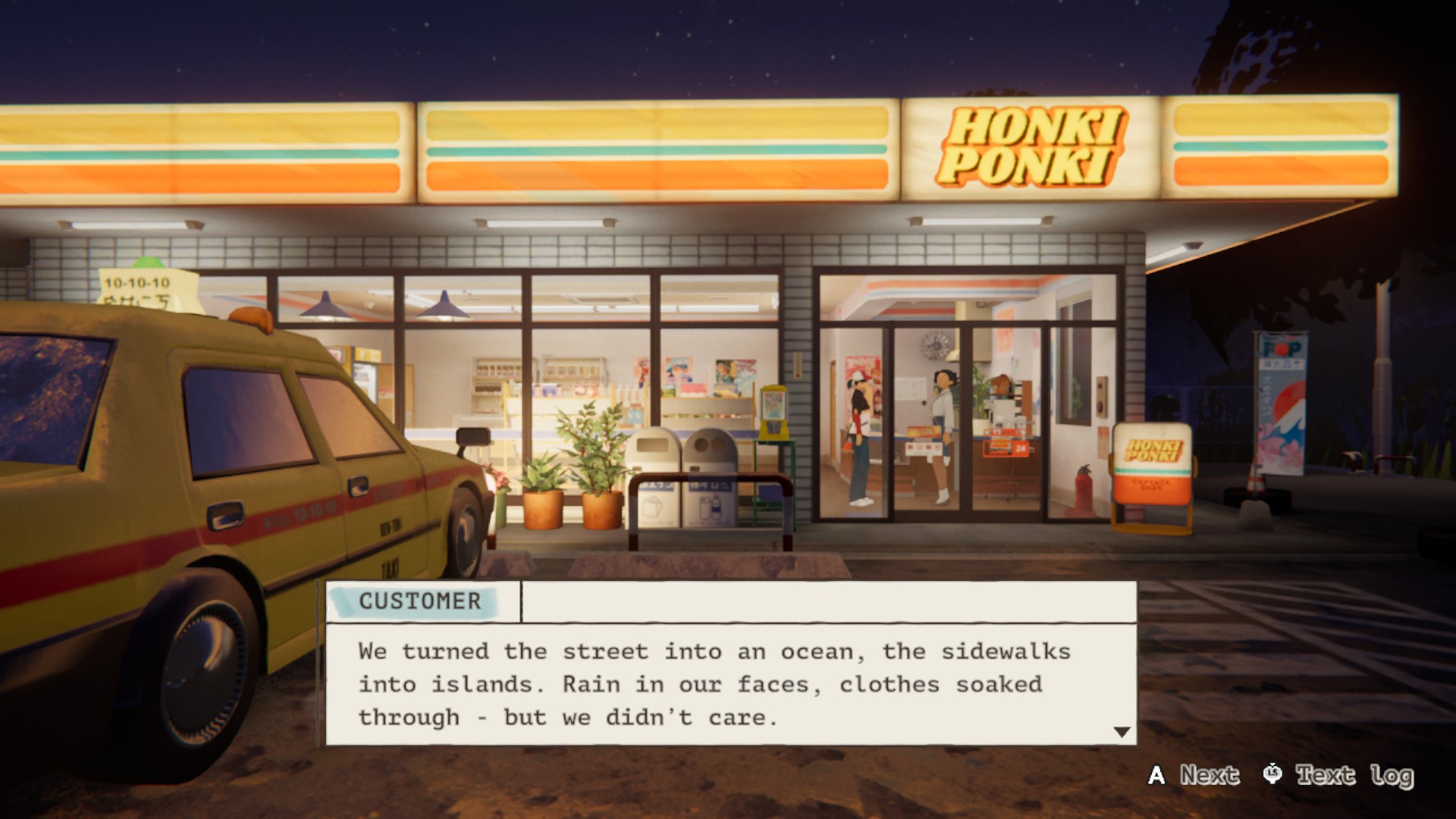
What immediately stands out is the game's aesthetic grace - that specific visual charm we’ve come to associate with Japanese minimalism. The theme revolves around the "Konbini," which roughly corresponds to mini-markets globally, but with a focus on ready-to-eat meals: onigiri, bento boxes, and sushi-to-go.
In Japan, these small, usually 24-hour shops became a staple after the 70s and peaked in the 90s - the decade in which inKONBINI takes place. They served the grueling, continuous schedules of the country's workforce and were typically staffed by young, temporary workers and students on low wages but with a high commitment to serving their local community. While they still exist today, they face new challenges from a shrinking youth labor force and aggressive franchising that has squeezed profit margins.
Despite the specific Japanese setting, there is a universal connection to the mini-market condition. In previous decades, these shops were the lifeblood of neighborhoods in cities and villages alike. Those of us old enough to remember a change in ownership at a small village grocery store during our summer holidays can recall how much it felt like the "end of an era." We remember the sting of seeing a favorite snack discontinued because it wasn't moving stock, or the many times we’d drop by just to ask if our favorite magazine had arrived.
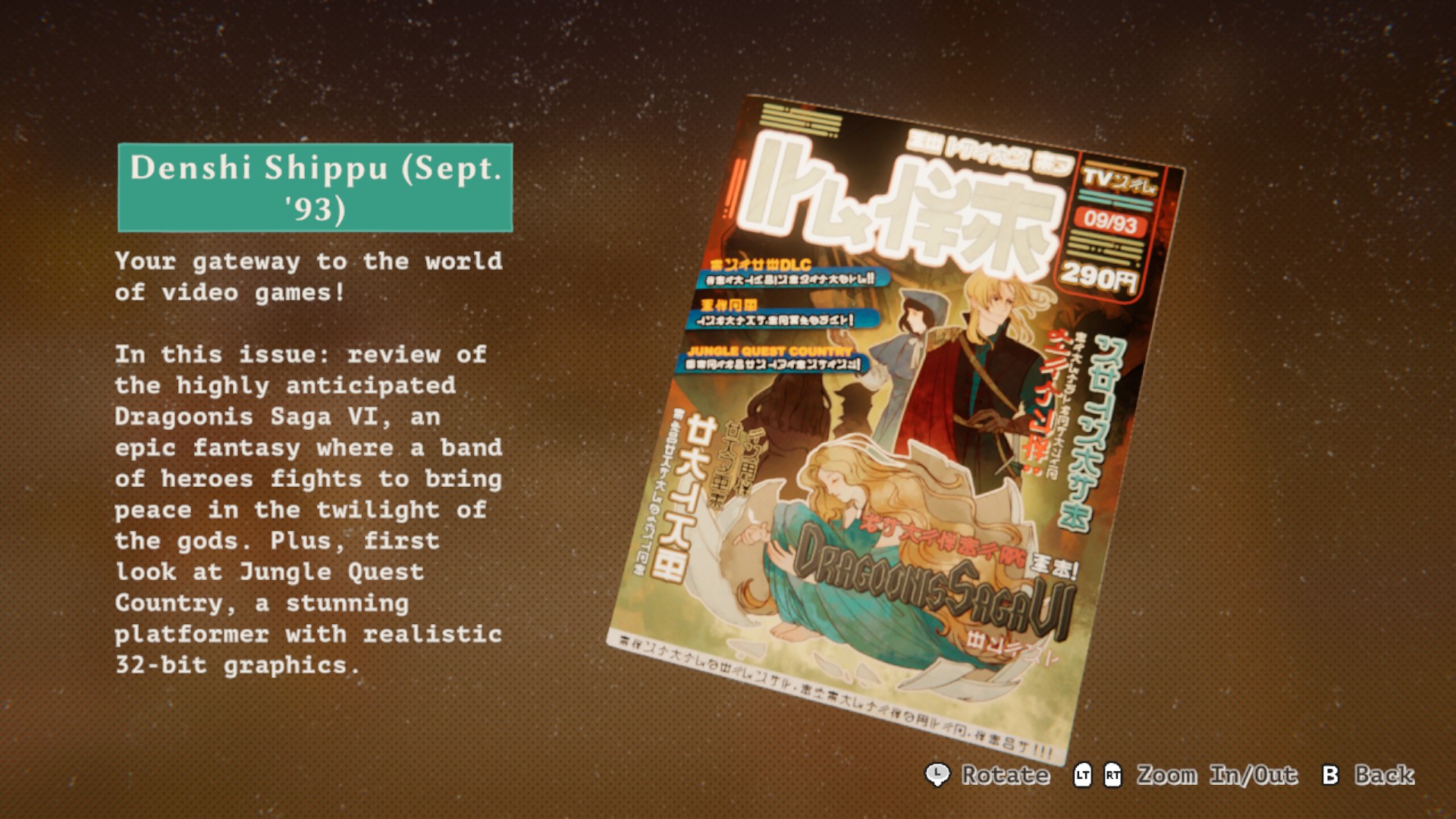
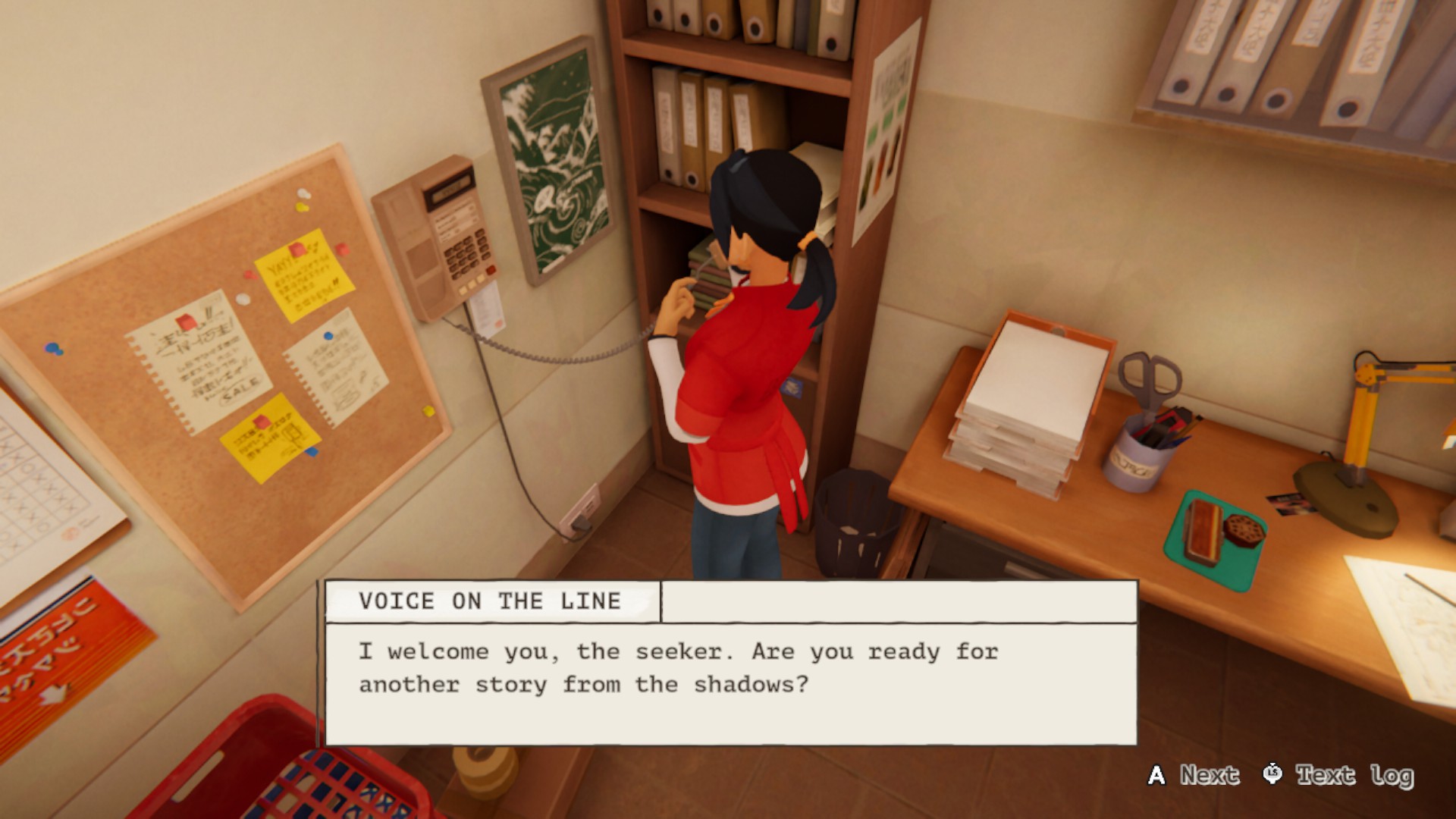
inKONBINI puts us in the role of Makoto, a young student who temporarily takes over the night shifts at her aunt’s shop for a week in August 1993 (clearly paying tribute to Sayaka Murata’s book, Convenience Store Woman).Each shift is a chapter: first, we manage stock and shelves, and then we attend to the night-shift customers. Previous shifts leave us "to-do" lists via post-it notes, and once Makoto is ready, she flips the "Open" sign to welcome the night owls.
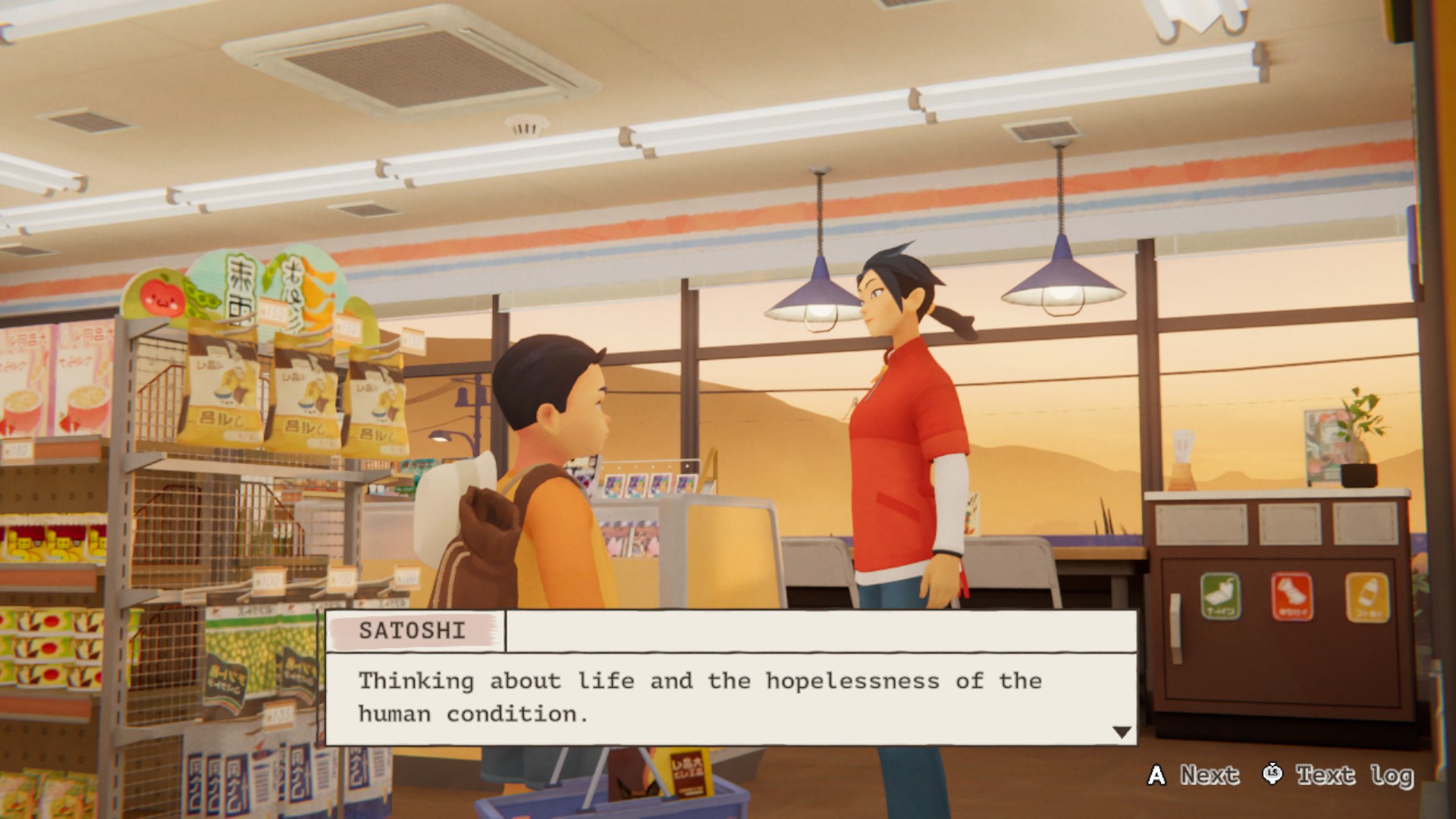
The customers are not random NPCs but central figures in the story's progression. Our interaction follows the philosophy of Ichi go – ichi ethe logic that every meeting is unique and unrepeatable, every dialogue an ephemeral treasure. While the final outcome of the story is fixed, the way we approach each visitor or the items we suggest can influence various aspects of their lives.
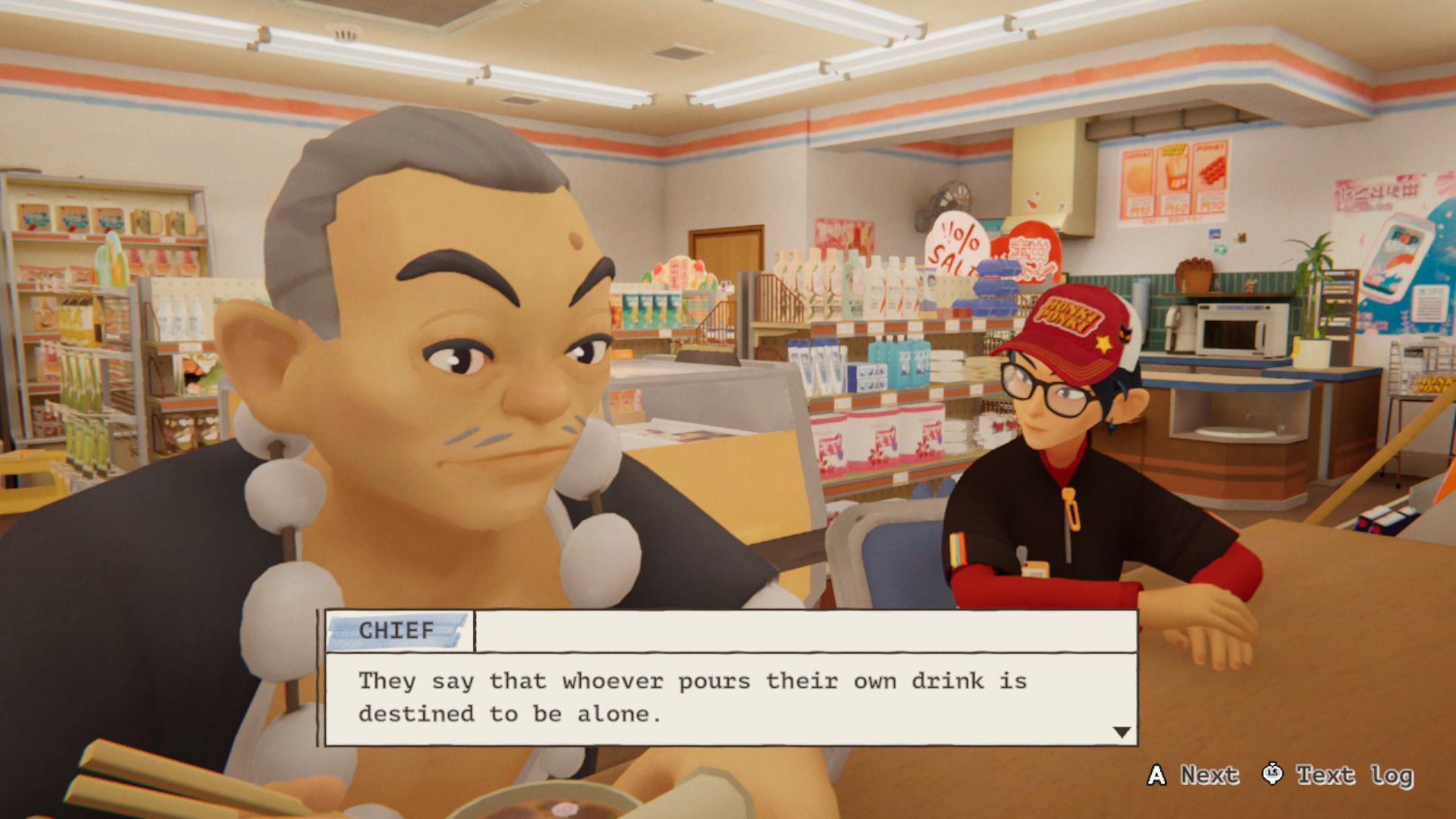
The characters, their anxieties, and the dialogue overall remain interesting even when touching on melodrama. The game triumphs because it examines themes generally rather than specifically. It deals with the mundane - selling cheese-and-salmon toast or frozen dumplings - while maintaining an abstract commentary that shifts the reflection onto the player. To link it to a similar work, there is a scene in Clerks (1994) where convenience store employees discuss the destruction of the second Death Star. Without a giant sign saying, "Hey! We’re talking about the ethics of killing thousands of innocent workers in a war," they simply pass the thought to the audience. Similarly, inKONBINI uses its serene night-shift encounters to comment on community, overwork, the hesitation to act, and, primarily, the necessity of being present in the moment rather than deferring life to an "ideal" future.
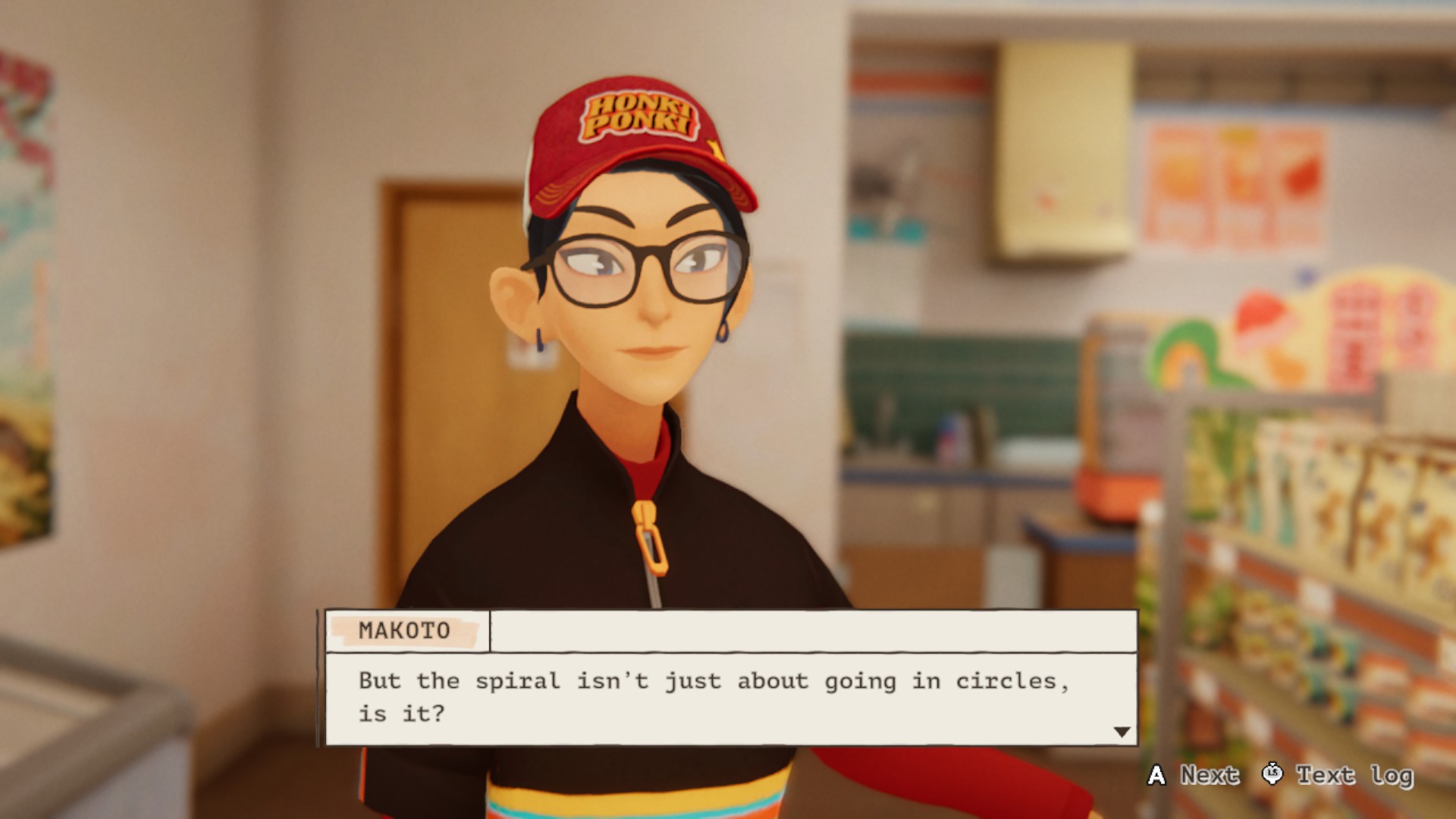
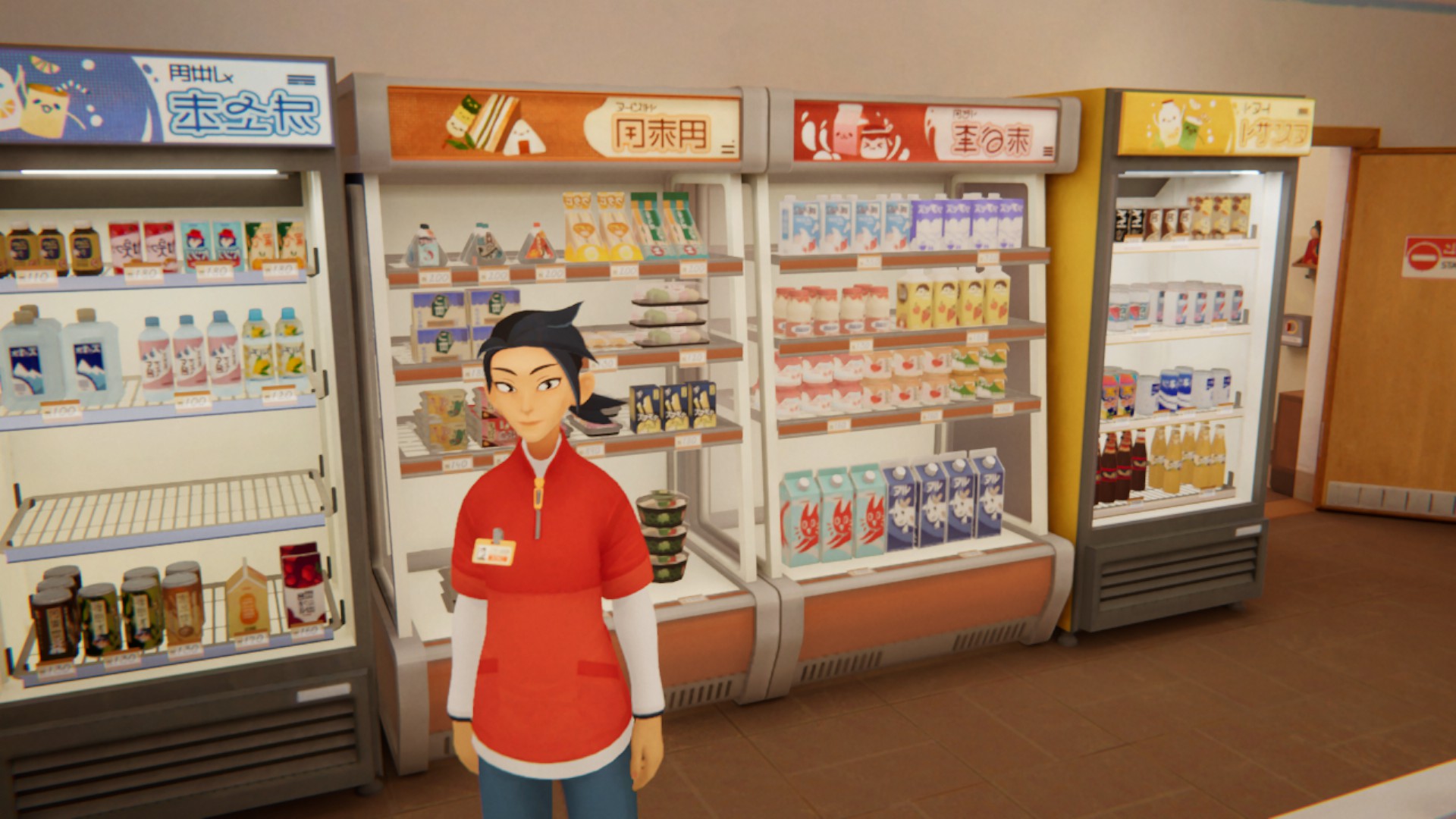
On a secondary level, the game is incredibly relaxing during the shelf-stocking phase. There is something strangely rewarding about organizing products, adjusting them so the "best side" faces forward, and admiring the kawaii packaging. Small details like the ASMR-centric sound design -where every package you touch sounds exactly as you'd expect - greatly contribute to the immersion. At one point, I actually stepped out onto my balcony to see where the two-stroke engine I heard was coming from, only to realize it was the in-game vehicle of 12-year-old Satoshi arriving to buy groceries for his elderly neighbors.
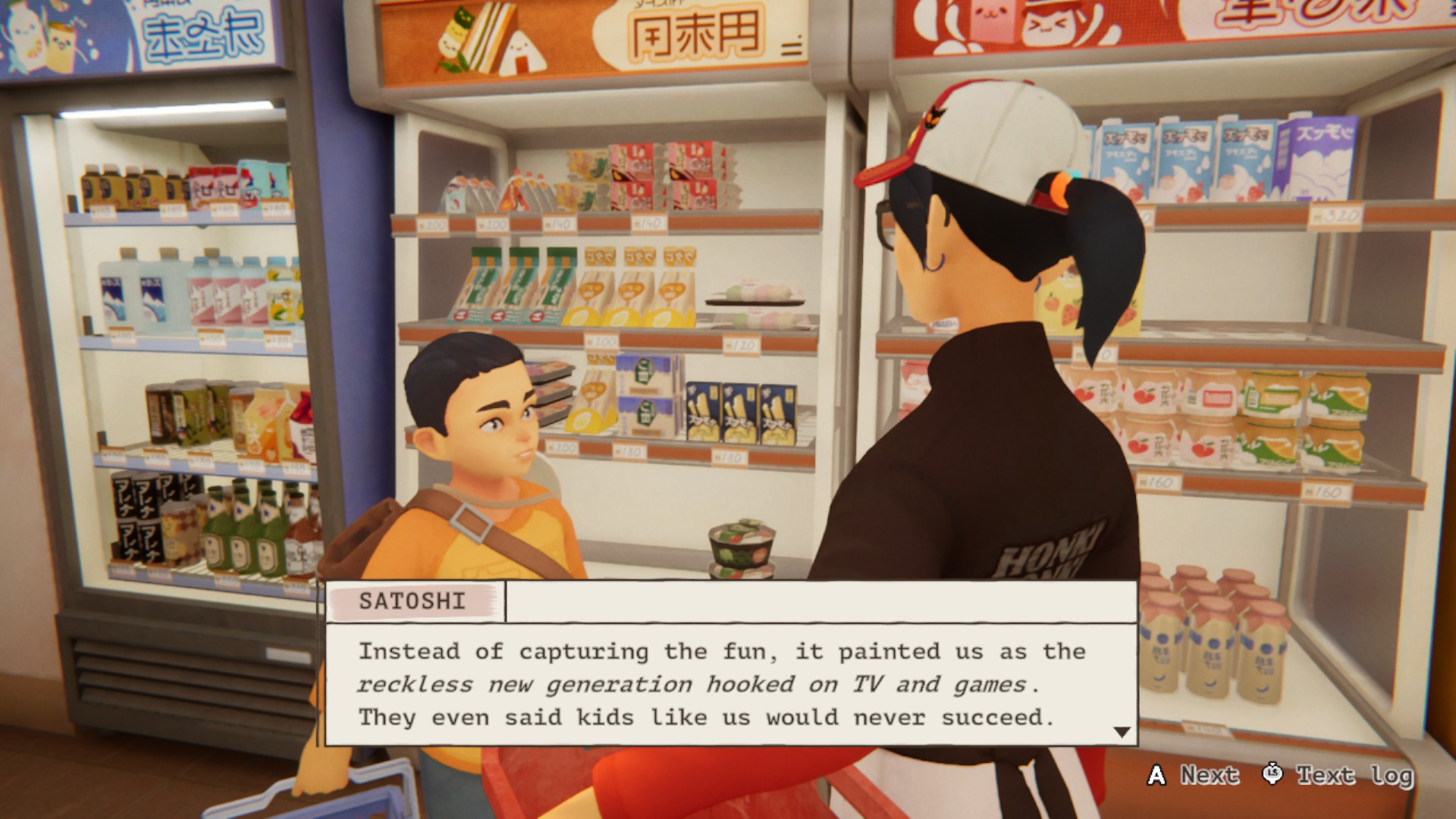
Makoto's story takes roughly 7-10 hours. While there is interaction and gameplay, the goal here is reflection and relaxation, not complex dialogue trees or financial success. It’s worth noting that while the theme is heavily Japanese, the game isn't strictly educational. The Kanji and Kana used are intentionally "gibberish" (similar to a milk bottle saying "MLIK"). Dmitry Cluev, the founder of Nagai Industries (a Tokyo resident of Russian origin), noted that the game’s purpose is not to be a photograph of Japan, but a painting. It touches brilliantly on the fallacy of searching for an "eternal authenticity" that exists in a vacuum.
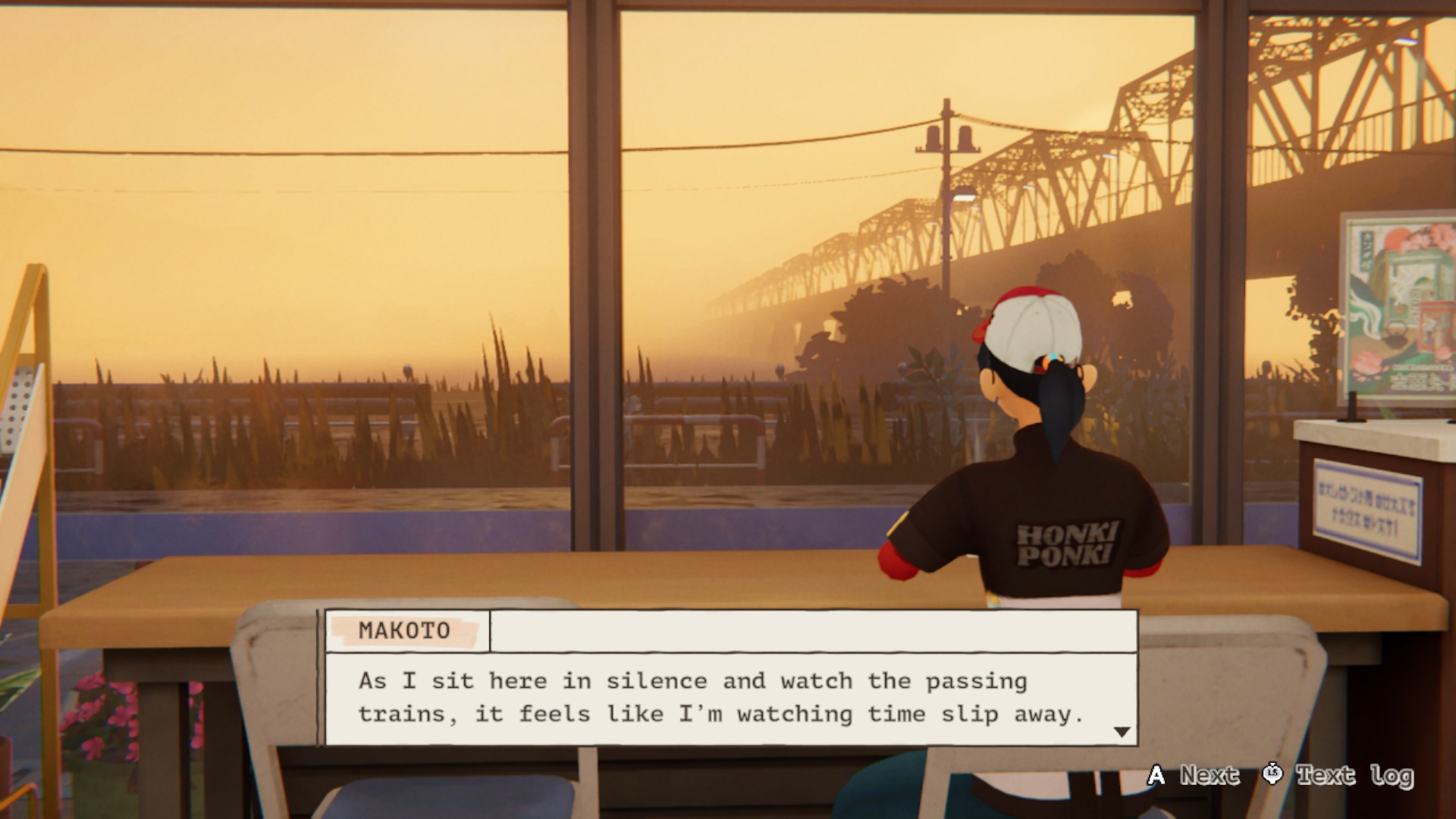
If your goal is relaxation, slow rhythms, and reflection—and if you accept that this is a narrative experience rather than a business sim—inKONBINI is an excellent proposition. Makoto is a quietly charismatic lead, and the summer of '93 will linger in your memory. Played entirely on Steam Deck LCD (256GB) without a single issue.
RATING - 85%
85%
Cozy and relaxing, it invites reflection on our stance toward the ephemeral and being present in the moment. Less simulation, more visual novel, and artistically pleasing to the senses.