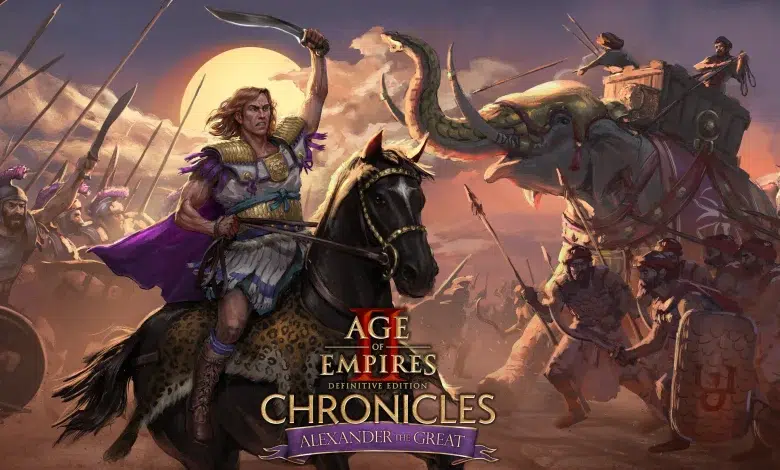
AGE OF EMPIRES II: DE – CHRONICLES: ALEXANDER THE GREAT
His name struck fear into hearts of men, became a legend amongst mortal men

At the end of last year, we had the pleasure of enjoying one of the best DLCs and single-player stories for a real-time strategy (RTS) videogame in recent memory, with Age of Empires II: DE – Chronicles: Battle for Greece. Chronicling both the Median Wars and the main events of the Peloponnesian War, it left us with a beautiful cliffhanger that the series would continue with the story of Alexander the Great. Less than a year has passed and we are now in a position to examine the sequel, with the tongue-twisting title Age of Empires II: DE – Chronicles: Alexander the Great.
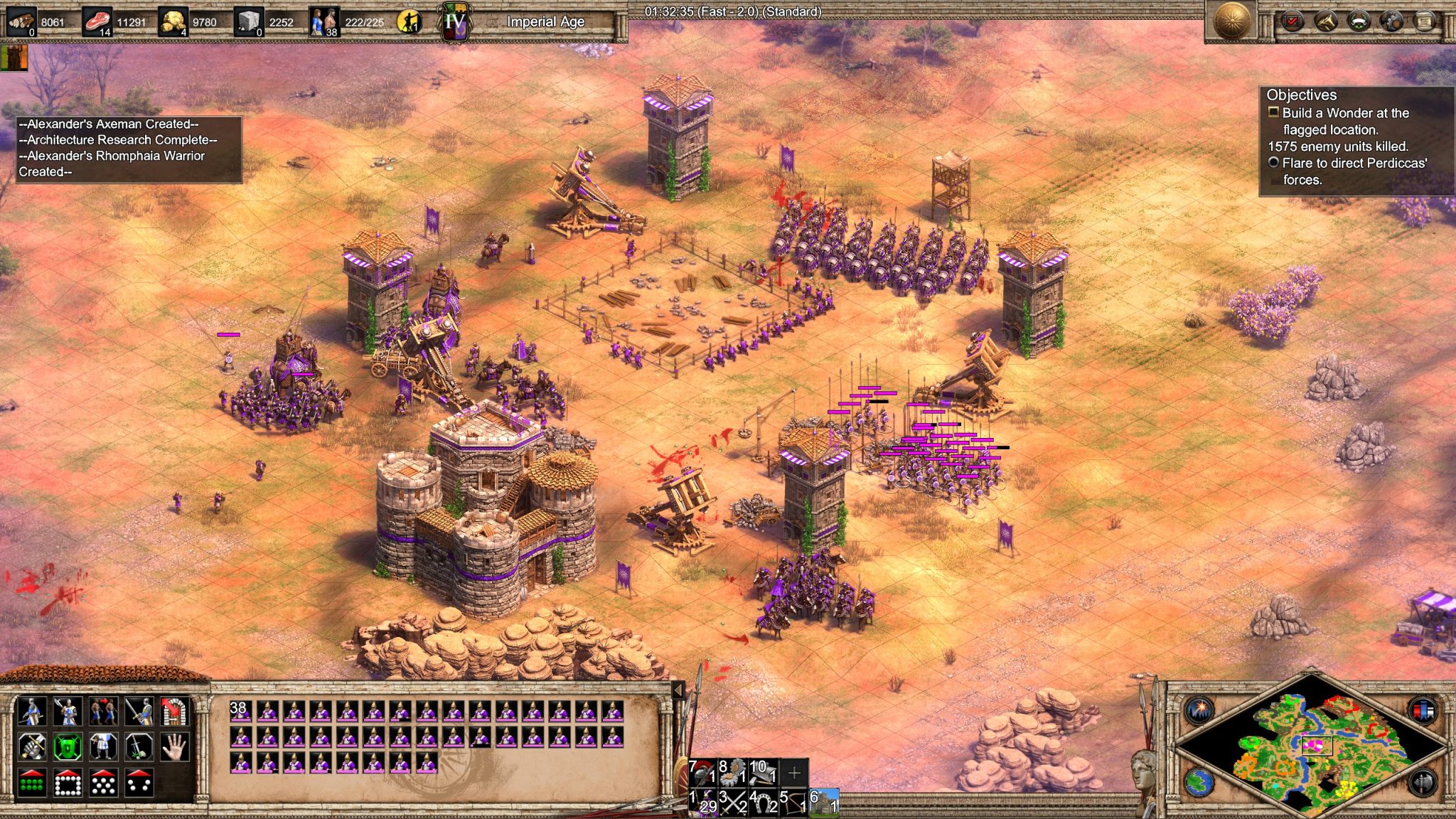
As expected, the story covered by Alexander the Great (hereinafter referred to as AtG) spans a shorter historical period (15 years) than that covered by Battle for Greece (25 years), a natural consequence of the great commander's untimely death. CaptureAge has thoroughly studied all the literature and, with full respect for the original material and historical research (and less reliance on the "Alexander Romance"), has managed to combine the idiosyncratic gameplay of an RTS with the events and peoples of that historical period. As expected, AtG provides a purely single-player experience, which means that the three new civilizations (Macedonians, Thracians, and Puru) are only available in their respective campaign missions or in single-player skirmishes. Apart from a few intriguing changes (e.g., the Thracians can build anywhere without restrictions from uneven map tiles), the civilizations seem a bit like reskins of existing ones. Avoiding the obvious and boring pitfall of explaining the basics (what is an RTS, what is Age of Empires, what is life), let's examine the essence of the single-player campaign.
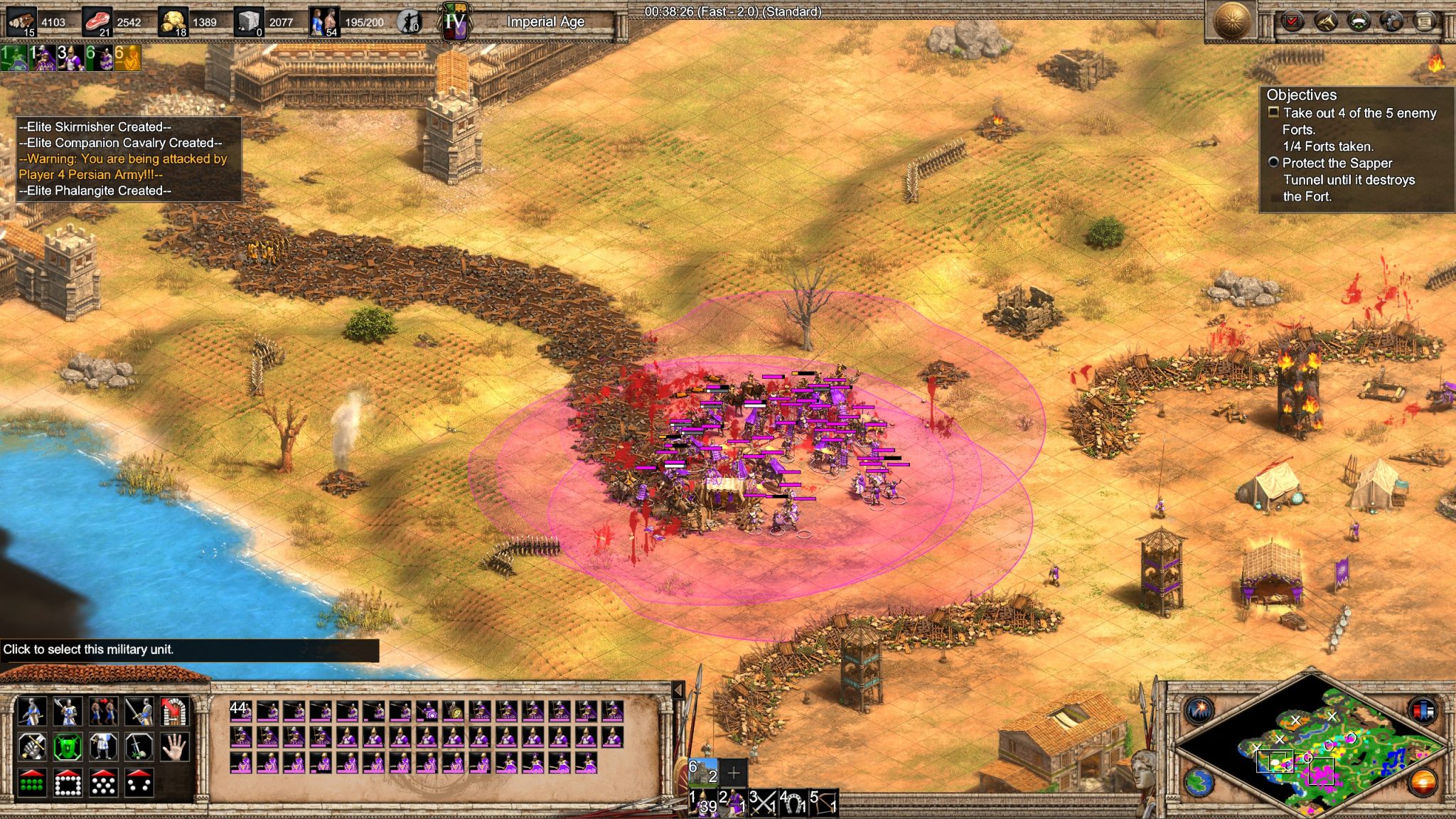
Through a total of 18 missions, AtG presents the most important events in the life and military career of Alexander the Great, as well as the geopolitical context of certain side events (such as the mission of Puru, where we take on the role of King Porus). Starting with our familiarization with the Macedonians through the campaigns of Philip II against the Scythians, when Alexander was still a teenager, we move on to the Battle of Chaeronea, which is the official turning point with the complete domination of the Macedonians in Greece (except for Sparta, which refused to recognize Philip). AtG also places particular emphasis on the Balkan Campaign with three expeditions (Thracians, Siege of Illyrian Pelion, Fall of Thebes) before moving on to the Persian Campaign with all its battles until Alexander's death.
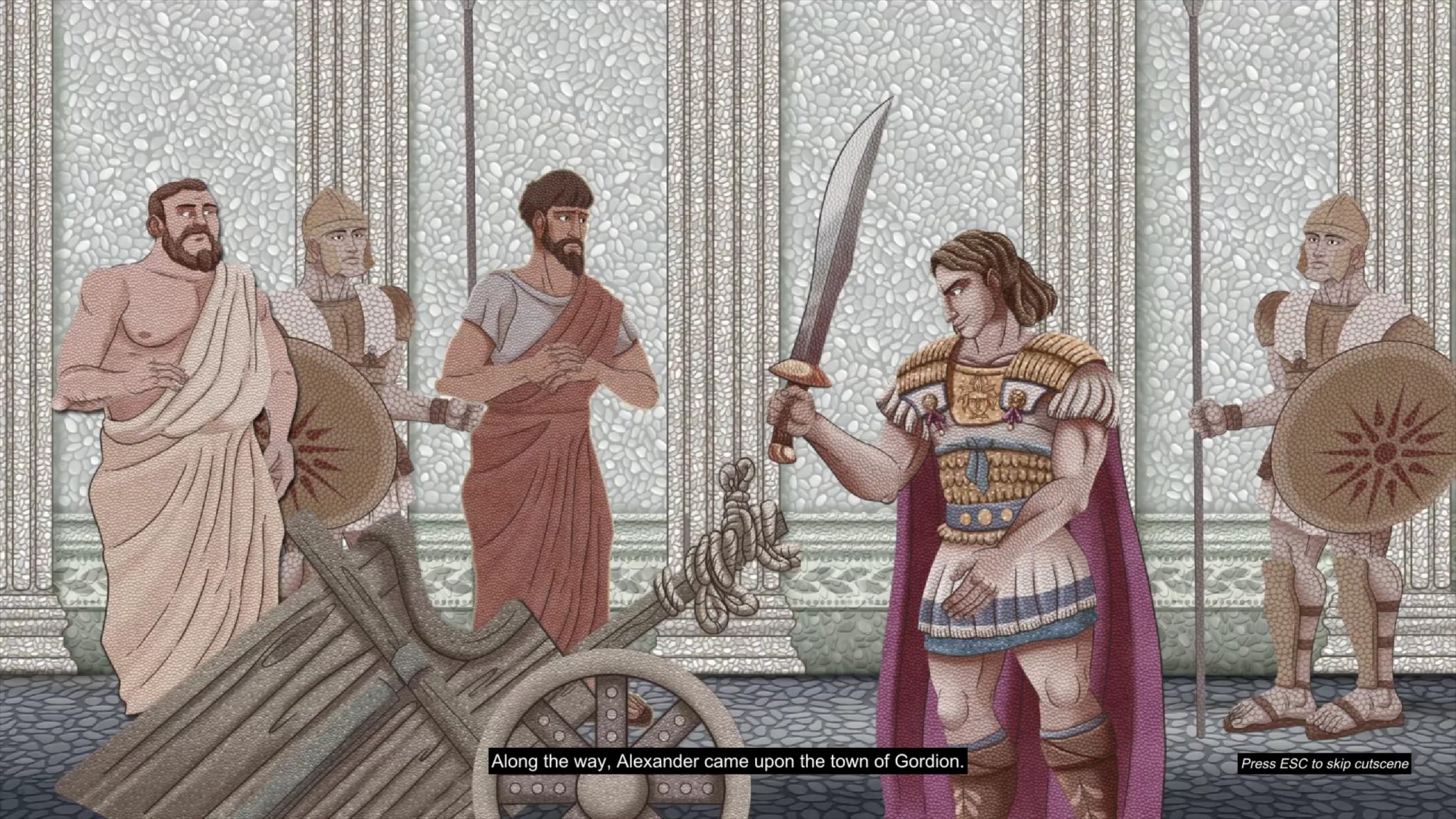
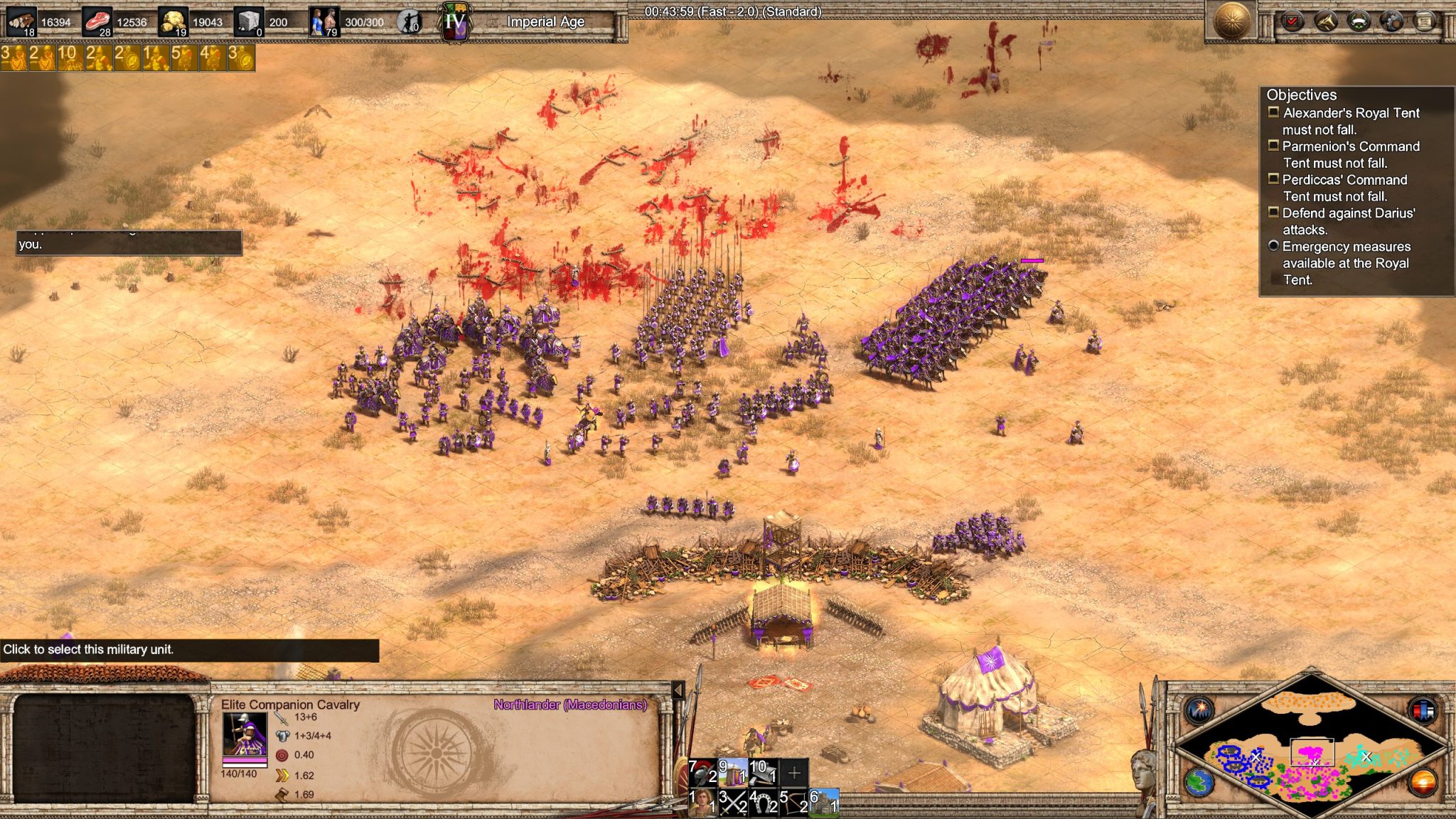
What is evident from the outset is that, unlike Battle for Greece, AtG is more linear and considerably simpler in the design of its missions. Naturally, it couldn't be otherwise, since, for example, the Battle of Granicus or the Battle of Gaugamela can be rendered in only so many ways. This does not mean, of course, that the designers' ingenuity was limited; on the contrary, there are examples where quite a few strategic elements can be incorporated, such as the small sub-missions at Granicus that determine the outcome of the battle. The revisit to Halicarnassus or the revival of the siege of Tyre also bring a sweet nostalgia from school days, when studying them seemed more like a romantic fairy tale (which, unfortunately for many, remained just that, reinforcing a nationalistic sentiment) rather than decisive events that changed the course of history.
With the exception of the Indica mission, where we take on the role of Nearchus during his voyage around the entire Indian peninsula, by far one of the most beautiful missions in the entire game, AtG seems like a story on rails. Small but satisfying missions, without the huge variety or impact of choices on subsequent events that we experienced in large volume in Battle for Greece. The soundtrack accompanying the DLC brings a note (no pun intended) from the great, epic films of the 1960s (e.g. Jason and the Argonauts, L'ira di Achille) with the appropriate nostalgia from our childhood when we hear the melody of the unsurpassed Cave.
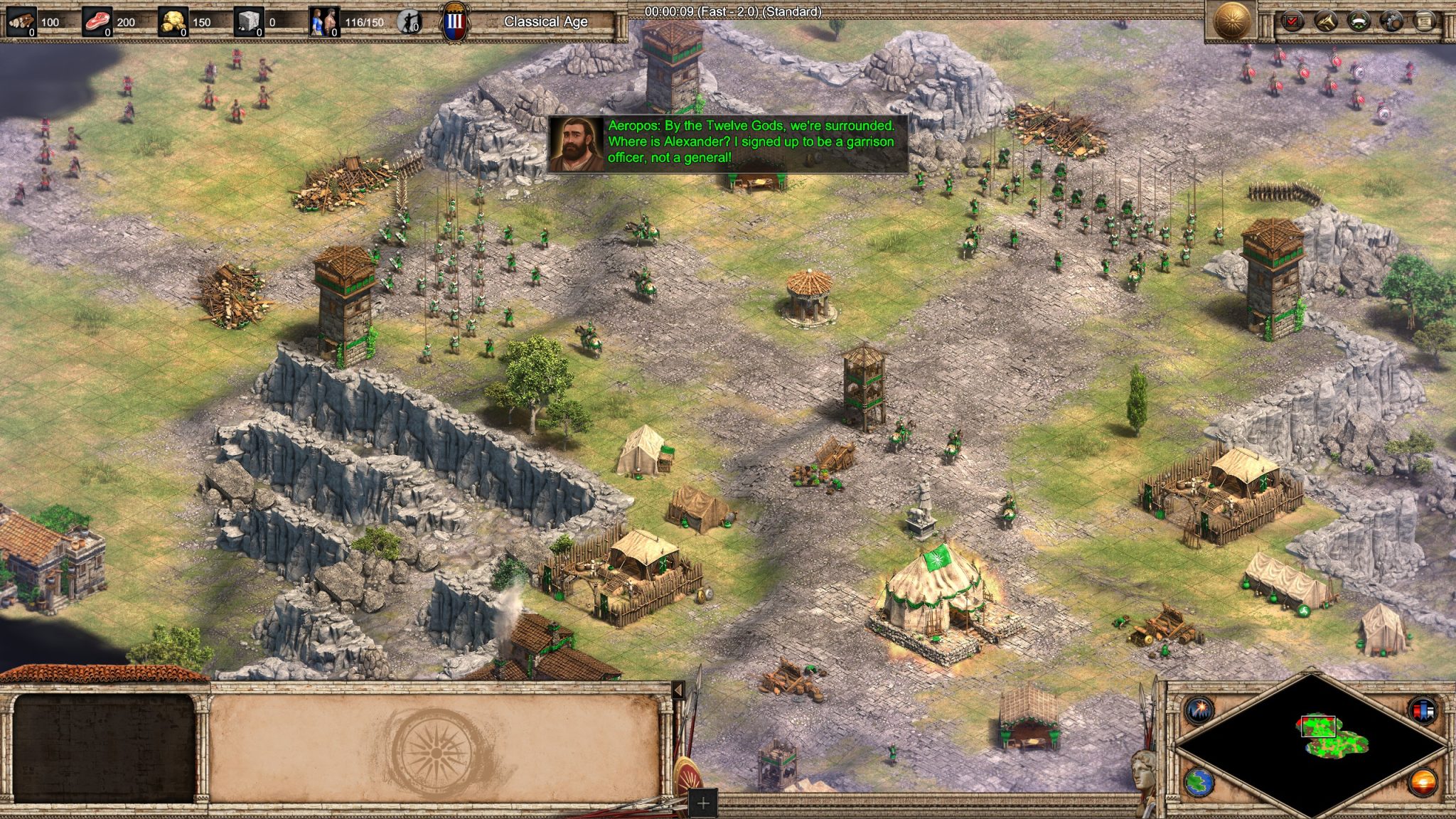
The narrative itself, throughout the missions, has a buddy movie feel to it (Alexander and his entourage of Perdiccas, Cleitus the Black, Nearchus, and the eternal comic relief, Aeropos), where young men envision glory and riches. Perhaps the narrative sought to contrast this with the fatigue that set in after the decade-long campaign deep into the Persian Empire, when Alexander died. There are ups and downs in the performance, with Alexander constantly reciting Homer and his followers having one-dimensional personalities, e.g. Hephaestion as a groupie, Perdiccas as a less spontaneous Alexander, Nearchus as a more idealistic traveler-scholar than a soldier. This category also includes Parmenion, who is limited to the unflattering role of a cowardly caricature and acts more as a counterforce to Alexander the Great than as a worthy and prudent advisor. The only exception is perhaps Cleitus the Black, who has perhaps the most obvious character development in the course of the campaign among the secondary roles.
Be that as it may, the Chronicles: Alexander the Great DLC provides 15 full and satisfying hours of new Age of Empires II, while serving as a prelude to the next chapter, or chapters, of Chronicles. The mosaic in the final cinematic leaves us with the necessary cliffhanger, showing the Mediterranean basin and referring to an empire that was built slowly and endured. Which one could it be?
SCORE - 89%
89%
Great enough.
Although Alexander the Great continues in the same vein as Battle for Greece, it ends up being more one-dimensional due to the historical period it covers. Therefore, it can be considered an intermediate, refreshing appetizer for the next main course of the series.