

…Και έτσι ξαφνικά, πέρασαν 10 χρόνια.
Εδώ και λίγες ώρες, ο αγαπημένος μας/σας ημιθανής ψευδοχαρκόρ ιστότοπος εορτάζει τα 10 του γενέθλια. 10 χρόνια από την εποχή που μια ντουζίνα περίεργοι, απλήρωτοι τύποι με αφύσικη έφεση στη συγγραφή game reviews πήραν τη μεγάλη απόφαση να ξεκινήσουν κάτι δικό τους. «Για το ρωκ» κυρίως, χωρίς βλέψεις για πλούτη και δόξα, αλλά απλά ως αποτέλεσμα της σκέψης να αποκτήσουν μια ανεξάρτητη στέγη όπου θα μπορούσαν να γράφουν ανεπηρέαστοι τις αηδίες τους τα review τους προς τέρψιν των ανώμαλων του κοινού που για κάποιο λόγο αρέσκονταν να αλληλεπιδρά μαζί τους.
Η επέτειος αυτή γεννάει πολλά και παράξενα συναισθήματα, και γίνονται οι αναπόφευκτοι στοχασμοί: πώς γνωριστήκαμε, πώς ξεκινήσαμε, πού ήμασταν και πού φτάσαμε, τι κάναμε σωστά και τι λάθος, πώς ήταν η προσωπική και επαγγελματική ζωή του καθενός τότε και τώρα, τι άλλαξε, τι έμεινε το ίδιο, ποιοι ήταν μαζί μας από την αρχή και ποιοι μας βρήκαν στην πορεία, ποιους συμπολεμιστές χάσαμε άδοξα στο δρόμο, τι μέλλει γενέσθαι από εδώ και πέρα. Το κάθε ένα από αυτά τα ερωτήματα είναι σαν ένα ξεχωριστό κεφάλαιο ενός τεράστιου βιβλίου που συνεχίζει να γράφεται. Σε τελική ανάλυση όμως, όπως σε όλες τις εκφάνσεις της ζωής, αυτό που μένει είναι οι στιγμές.
Το brainstorming για την ονομασία. Το e-mail που έγραφε «παιδιά, το site μας είναι πάνω, τσεκάρετε στο link» και η πρώτη επίσκεψη. Ο διάχυτος ενθουσιασμός των πρώτων ημερών. Το δοκιμαστικό «early closed beta» event, η μαζική είσοδος του κόσμου στο φόρουμ και τα πρώτα, χαοτικά threads που άνοιξαν. Οι πρώτες ομαδικές συναντήσεις/meatings, που έγιναν δεύτερες, τρίτες, τέταρτες… Η γλυκιά Kunena της νιότης μας, το SMF, η κακή παρένθεση bbpress και το prestigious XenForo Master Race. Οι σαρδόνιες συζητήσεις μεταξύ των συντακτών για τα site που μας επικαλούνται, μας βρίζουν, μας αντιγράφουν. Η είσοδος του site στο Metacritic. Το review του Wasteland 2 που έγραψα καταδρομικά, στις σκοπιές, όσο υπηρετούσα την πατρίδα στα Ελληνοαλβανικά σύνορα. Το review του Fallout 4, που κυριολεκτικά έγραφα πίνοντας ουίσκι για να καταφέρω να μεταλαμπαδεύσω πληρέστερα την απόγνωσή μου. Η συνέντευξη με τον J.E. Sawyer. Το γέλιο του «δάσκαλου». Τα επικά multiplayer matches στο Rocket League. Η εισβολή των Ρωσικών bots στα σχόλια των άρθρων. Οι έκτακτες συνεδρίες trial and error εκμάθησης εντολών Linux στις 4 το πρωί επειδή ο σέρβερ έπεσε και δε λέει να σηκωθεί. Η Joomla, το Wordpress, ο κώδικας CSS, οι γέφυρες ανάμεσα στα databases, τα προβληματικά plugins, το MySQL database που τρώει όλη τη RAM, και άλλες backend εκφάνσεις που είναι ικανές να οδηγήσουν τον αρχαιολόγο στην τρέλα. Τα inside jokes, οι αρκούδες, οι καμήλες, οι χελώνες, τα κοτόπουλα, και τα υπόλοιπα ζώα που ποτέ ξανά δεν θα φαίνονται ίδια…
…Και έτσι ξαφνικά, πέρασαν 10 χρόνια.
Παράλληλα με το RageQuit έχουμε μεγαλώσει κι εμείς, ευτυχώς ή δυστυχώς. Οι υποχρεώσεις αυξήθηκαν, οι ρυθμοί χαλάρωσαν λίγο έως πολύ, ο ενθουσιασμός υποχώρησε, η “real life” προχώρησε… Αλλά στο κάτω-κάτω της γραφής, αυτό ίσως να μην έχει και τόση σημασία όταν πρόκειται για κάτι που είναι αναπόσπαστο κομμάτι της ζωής σου πλέον. Δεν είναι ούτε δουλειά, ούτε αγγαρεία, ούτε «χώσιμο» – απλά… είναι. Σαν καταφύγιο, σαν καθημερινή ιεροτελεστία, σαν το καφενείο που πηγαίνουν παππούδες για να μαλώνουν για μπάλα και κόμματα, είναι εκεί. Όσο γραφικό κι αν ακούγεται, το RageQuit ως αποτέλεσμα της “Ρωκ εν Ρολλ” ιστορίας που είναι η ίδρυσή του αλλά και των δεσμών που έχουν σφυρηλατηθεί από την πολυετή συνύπαρξη της κοινότητάς του και των συντακτών του, είναι κάτι πολύ, ΠΟΛΥ περισσότερο από ένα site.
…Και έτσι ξαφνικά, πέρασαν 10 χρόνια.
Ε, και; Rookie numbers. Τα ξαναλέμε στα 20.
ΥΓ. Μέσα για την κλήρωση.
Κώστας “Hellion” Καλλιανιώτης

Σε κάποιο παράλληλο σύμπαν, δέκα χρόνια και τρισήμισι περίπου ζωές πριν, μας θυμάμαι σε μεγάλη φούρια τέτοιες μέρες. Έλεγχοι και κόντρα-έλεγχοι στην υποδομή του ιστοτόπου. Γυάλισμα Κούνενας με θρησκευτική προσήλωση (“Μα ρε παιδιά δεν είναι φόρουμ αυτό, με τις πέτρες θα μας πάρουν!” “Τσάμπα, αυτό έχει.” “Βάλτο, θα συνηθίσουμε”). Τα κείμενα για το λανσάρισμα, παραδόξως ήταν το μοναδικό πράγμα που δεν μας ανησύχησε ποτέ. Ωσάν σπηνταρισμένες μαϊμούδες, τα δάχτυλά μας, έγραφαν στον αυτόματο. Ήταν ένα από τα δύο μεγάλα μυστικά του Ragequit.
Θέλαμε να μιλήσουμε γι’αυτά τα παιχνίδια που μας “καίγαν”. Που για κάποιο απροσδιόριστο λόγο, έμοιαζαν σημαντικότερα από την πραγματικότητά, το 9-5 και τη στοίβα των απλήρωτων λογαριασμών. Ήμασταν σίγουροι πως αν αποτυπώναμε όσα περισσότερα κομμάτια του Ονείρου θυμόμασταν στη σελίδα, μια μέρα, θα σπάγαμε την πόρτα. Θα περνάγαμε στην άλλη πλευρά. Μαζί.
Και ξέρετε τί; Συνέβη. Και ερχόμαστε στο δεύτερο μεγάλο μυστικό του Ragequit.
Η σελίδα στήθηκε σαν πράξη γενναιότητας, θάρρους και αλήθειας, στο γέρμα ενός ολόκληρου κόσμου. Στήθηκε σαν περήφανα υψωμένο μεσαίο δάχτυλο στην ηττοπάθεια, την εκμετάλλευση, τους μικρούς που τρέμουν μην καταλάβουν οι μεγάλοι πως η αλυσίδα σπάει. Η σελίδα γεννήθηκε στη φωτιά. Κι αν σκορπίσαμε κι αν σπάσαμε και χαζοπικραθήκαμε για εγωϊσμούς αστείους και ανύπαρκτους, η φωτιά έμεινε. Το Ragequit είναι καμωμένο στο φως αστεριών που βλέπουν μονάχα οι Θεοί.
Και όταν σηκωνόμαστε το βράδυ, αλαφιασμένοι από την κούραση και προσπαθούμε να θυμηθούμε πώς, πότε και γιατί, είναι πάντα ένα φως αναμμένο. Είναι ένα καπηλειό που έχει πάντα γιορτή. Είμαστε όλοι μόλις τριάντα και δεν υπάρχει πόνος, θλίψη ή απώλεια. Στη γωνιά μια παλιά καμπίνα παίζει το demo του Street Fighter II. Θα στήσουμε πρωτάθλημα μετά και ο Χόντα μου θα σας διαλύσει στις πουνιές. Είμαστε όλοι τριάντα και η νύχτα κρατάει για πάντα.
Στέφανος “Borracho” Κουτσούκος
Δράττομαι της ευκαιρίας να ευχαριστήσω τα παιδιά της ομάδας του Ragequit.gr, για το βήμα που μου έδωσαν να διοχετεύω τις σκέψεις μου με συγκροτημένη μορφή τόσα χρόνια. Δεν ήμουν στην αρχική ομάδα (το πρώτο μου κείμενο ήρθε δύο χρόνια αργότερα), αν και βρισκόμουν ανάμεσα σε εκείνους που ακολούθησαν το site από το “prequel” του, PC Master και στην επακόλουθη γέννηση κάτι σπουδαίου.
Ποτέ δεν ενδιαφερθήκαμε τι λένε ή τι κάνουν οι απ΄έξω. Δε μας ενδιέφερε το “consensus”, οι τάσεις και οι δημόσιες σχέσεις. Η ευχαρίστηση μας ήταν να μεταφέρουμε με μεράκι, λεπτομερώς, εντυπώσεις από τους τίτλους που έφθαναν στα χέρια μας. Αν τα κείμενα μας («Kεντρική σελίδα; Τι είναι αυτό;;,») έδιναν μια καλή, σφαιρική εικόνα για τα αντίστοιχα παιχνίδια, έστω και σε 10-20-100 αναγνώστες μας, τότε ο σκοπός μας είχε επιτευχθεί. Indie, AAA, μικροί, μεγάλοι και άγνωστοι τίτλοι πέρασαν από τις ψηφιακές σελίδες του Ragequit. Το μενού είχε για όλα τα γούστα. Σε αυτά τα πρώτα 10 χρόνια ζωής του ήταν η ταβέρνα με τις σπεσιαλιτέ που δύσκολα θα έβρισκες αλλού και αυτό είμαι βέβαιος πως δεν πρόκειται να αλλάξει σύντομα.
Το forum μας ήταν και θα είναι μια οργανική κοινότητα, με τις κόντρες, διαφωνίες, χαβαλέ αλλά και τον υγιή διάλογο που αρμόζει σε ένα ζωντανό σώμα. Κάθε μέρα έβρισκες κάτι νέο και ενδιαφέρον. Μια εξόρμηση σε αδιάβαστα σχόλια ημερών ήταν μια περιπέτεια από μόνη της. Με moderation που δε φίμωνε και «εξαφάνιζε» φωνές επειδή… αντιτίθονταν στο “go blue/green/{εισάγετε τυχαίο χρώμα} team!11!!”. Σε αυτό το διαδικτυακό – και όχι μόνo, τα RQ Meatings ήταν αλησμόνητα – pareaki (είπαμε, εδώ μόνο ποιοτικά memes και ρούμι) που δημιουργήθηκε, χτίστηκαν φιλίες και ανταλλάχθηκαν απόψεις για όλα τα θέματα, προεξέχοντος του gaming φυσικά.
Οι λέξεις έρχονται εύκολα και αυθόρμητα για τούτο το επετειακό κείμενο, ίσως αναμενόμενο όταν η έμπνευση είναι αυτή η ζεστή γωνιά του διαδικτύου. Μεγαλώσαμε όντως. Νερό κύλισε στο αυλάκι, οι υποχρεώσεις και τα τερτίπια της ζωής στραγγαλίζουν τον χρόνο που αφιερώνουμε στο αγαπημένο μας χόμπι. Τα games που μας ενθουσιάζουν αληθινά μπορεί να μας φαίνονται λιγότερα πλέον (ή εμείς γίναμε πιο αυστηροί και επιλεκτικοί γεροπαράξενοι) αλλά η φλόγα του παιδιού, του έφηβου μέσα μας θα μείνει κάπου να σιγοκαίει. Για το επόμενο The Witcher, για το επόμενο Hollow Knight, για το επόμενο Stalker. Για την επόμενη εμπειρία που θα κάνει το απίστευτο, πιστευτό. Ξανά, όπως άλλοτε.
Παναγιώτης “Adhan” Μητράκης
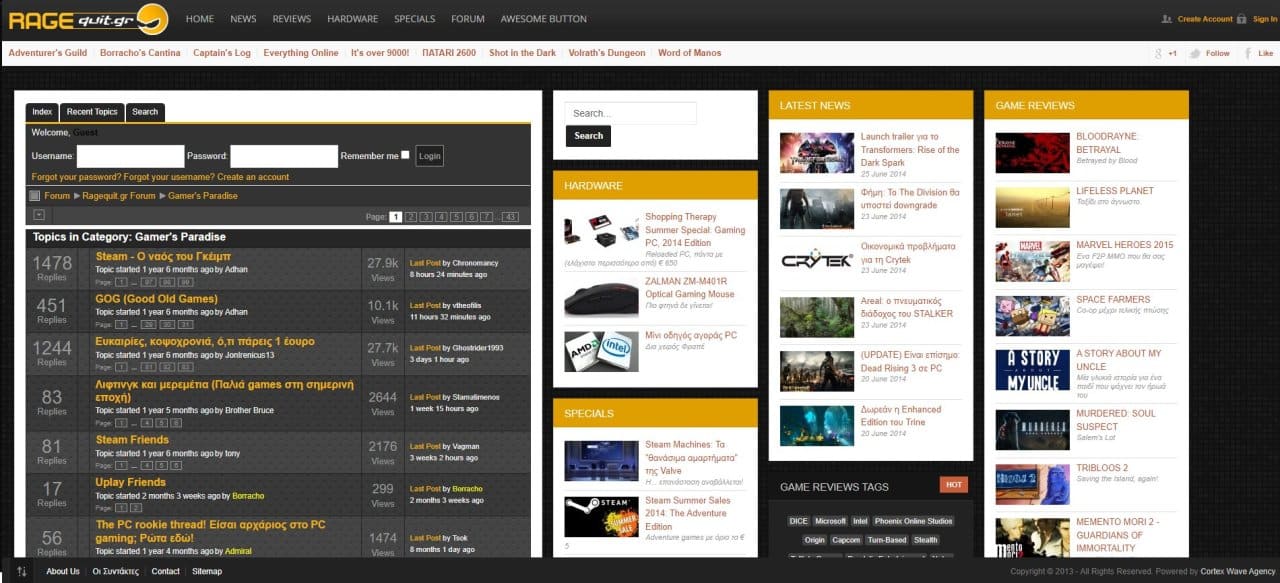
Πέρασαν δέκα χρόνια, και όμως μου φαίνεται σαν χθες, όταν ξεκινούσαμε, γεμάτοι χαρά και προσμονή, αυτό το ταξίδι που ονομάζεται Ragequit. Σε μία περίοδο που ήμασταν όλοι ξένοιαστοι, με λιγότερες «σκοτούρες» (κυρίως επαγγελματικές και οικογενειακές) και απεριόριστη… δίψα να συνεχίσουμε να κάνουμε αυτό που τόσο πολύ μας άρεσε στην προηγούμενη, έντυπη, «καριέρα» μας.
Οι πρώτες μέρες ήταν ιδιαίτερα αγχωτικές, μπορώ να πω. Όντας τελείως ξεκρέμαστοι, με μοναδικό όπλο στη φαρέτρα μας, την εμπειρία που είχαμε αποκτήσει στη συγγραφή άρθρων και reviews και το όποιο «όνομα» είχαμε αποκτήσει ως συντάκτες (λέμε τώρα), προσπαθούσαμε με κάθε τρόπο να κάνουμε εγκαίνια στο site με όσο το δυνατόν περισσότερο υλικό. Ακόμα θυμάμαι τα ξενύχτια που έριχνα, προκειμένου να τελειώσω εγκαίρως το Assassin’s Creed III και να γράψω το review… εντελώς μοναχός μου, χωρίς κάποιον άλλο να διορθώνει τα λάθη μου (ορθογραφικά και συντακτικά) ή να στήνει τις φωτογραφίες. Ένας τελείως καινούριος κόσμος, ασύγκριτος με τους ρυθμούς ενός μηνιαίου περιοδικού, που στην αρχή μας δυσκόλευε αρκετά μέχρι να βρούμε τα πατήματά μας, αλλά παράλληλα μας εξίταρε, γιατί αυτό που παρουσιάζαμε ήταν το δικό μας «παιδί». Ολότελα δικό μας.
Φυσικά, αρωγός στην όλη μας προσπάθεια ήταν το forum και οι… αξέχαστες νύχτες της Kunena, η συμμετοχή του οποίου ξεπέρασε κάθε προσδοκία μας. Τα δε RQ meatings απερίγραπτα. Κατά συνέπεια, η όρεξη για προσφορά ποιοτικής δουλειάς είχε φτάσει σε ύψη στρατόσφαιρας, παρ’ όλο που πρακτικά δεν υπήρχε καμία χρηματική απολαβή. Δεν μας ενδιέφερε καθόλου όμως: η αγάπη για αυτό που κάναμε και υποστήριξη του κοινού, ήταν παραπάνω από αρκετά.
Η συνέχεια μοιάζει με παραμύθι: προσθήκη του site στο Metacritic, συνεχής επικοινωνία με εγχώριους αντιπροσώπους αλλά και του εξωτερικού, προσκλήσεις για ταξίδια (βλέπε Daedalic) και events, ενώ η επεισοδιακή μετάβαση στη Wordpress (από την πάλαι ποτέ κραταιά Joomla) συν το Xenforo forum, επέτρεψε στο site να ανέβει ποιοτικά ένα σκαλί παραπάνω, με τη δυνατότητα τοποθέτησης δίγλωσσων άρθρων (Ελληνικά/Αγγλικά), ακόμα και αν μας ταλαιπωρούν ενίοτε κάποια τεχνικά θεματάκια.
Θα μπορούσα να γράφω για ώρες για όλα αυτά τα δέκα χρόνια. Μπορεί ο χρόνος να είναι συντριπτικά μειωμένος σε σχέση με το 2012, να μην κατοικεί κανείς από εμάς πια στην Αθήνα (ούτε καν στην Ελλάδα κάποιοι), αλλά το Ragequit.gr αποτελεί ένα κομμάτι της ζωής μας. Τόσο μεγάλο, που είναι στιγμές που αναρωτιέμαι πως θα ήταν η καθημερινότητά μου, χωρίς αυτό. Μάλλον λιγότερο διασκεδαστική και δημιουργική.
Γιώργος “Sephir” Δεμπεγιώτης




99 comments