
Writing a review for Vampire: The Masquerade – Bloodlines 2 feels a bit like spreading a meme, to be honest, given the game's turbulent development cycle since its initial announcement back in 2019 and through many twists and turns, to its final release a few days ago. And yet, here we are. The developers of The Chinese Room essentially received... a bag of Bloodlines 2 fragments from the work already done by Hardsuit Labs, and were asked to transform them into their own game. But what kind of game is this?
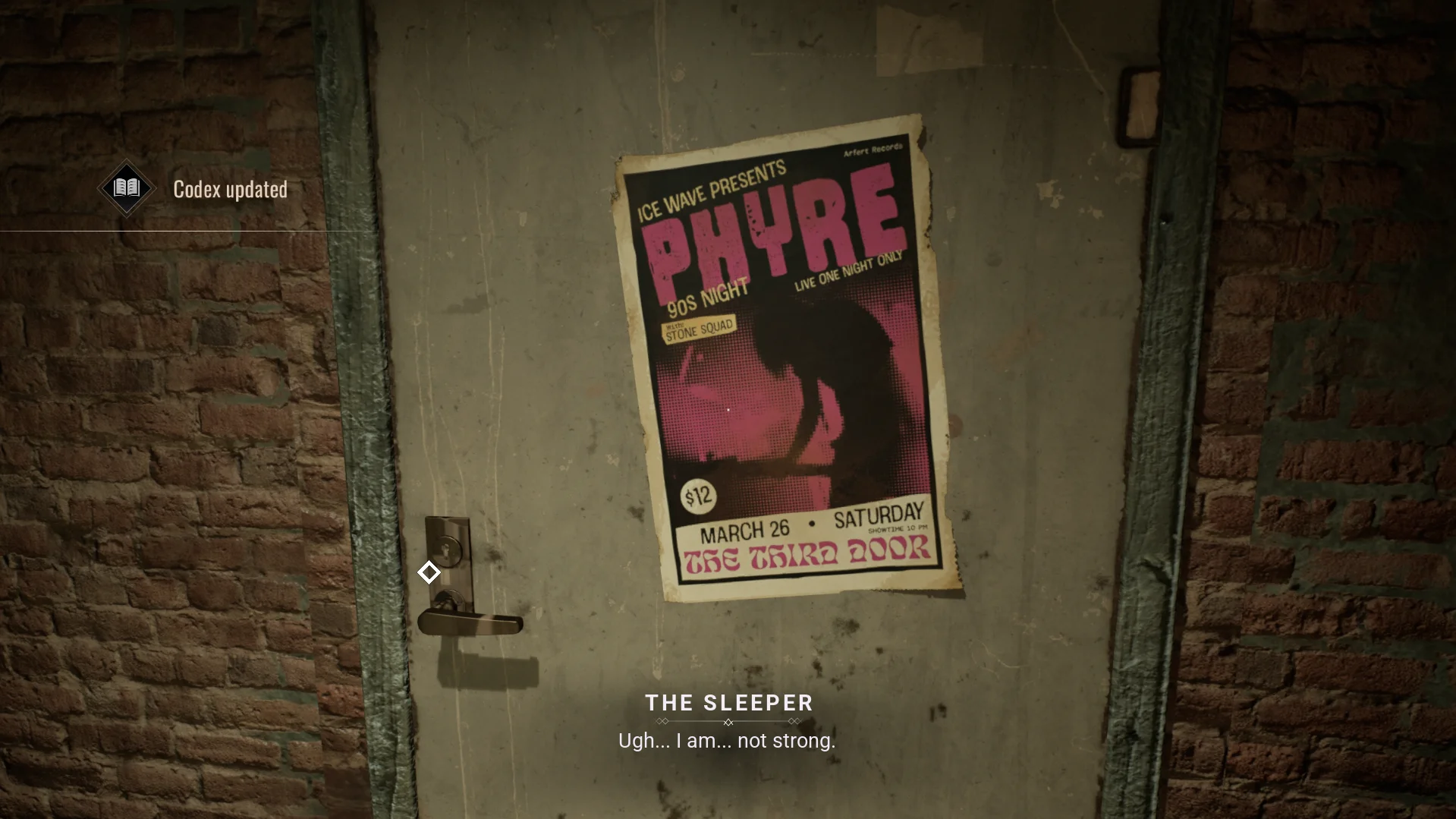
In Bloodlines 2, we control Phyre, an Elder Vampire (in the lore, Elders are defined as vampires who have managed to survive for over 2-3 centuries) who awakens from his/her century-long Torpor one night in the city of Seattle, with no knowledge of why, how, or when. Phyre has a strange symbol carved into his hand, which seems to have dramatically limited his vampiric powers. As an extra twist, he quickly realizes that he can literally hear voices, specifically the voice of Fabien, a Malkavian detective who, for reasons unknown to him (or mysteriously forgotten), seems to have forsaken his own body and taken up permanent residence in Phyre's mind.
Phyre's quest to rid himself of the symbol, and Fabien's quest to regain his memory, are essentially the vehicles through which the story of Bloodlines 2 unfolds, a story filled with all the expected characteristics of a VtM adventure. Unsuspecting citizens wandering the streets, while around them tower skyscrapers on the top floors of which high-ranking Camarilla members clash with each other for power. Anarchs pursuing more freedom. Sabbat sowing chaos. Precarious alliances between vampires of all Clans. And, of course, conflicts that could break the Masquerade at any moment.
In principle, the vibe that the game wants to convey is, obviously, that of a sequel to the original Bloodlines. The truth is, however, that at its core, beyond the common characteristics of the VtM setting, there's little to no connection between the 2 games. I would even dare say that Bloodlines 2 could only marginally be classified as an RPG, resembling more a visual novel or even a walking simulator. I would also dare say that even VtM: Swansong from 2022 ultimately has more traditional RPG characteristics than Bloodlines 2.
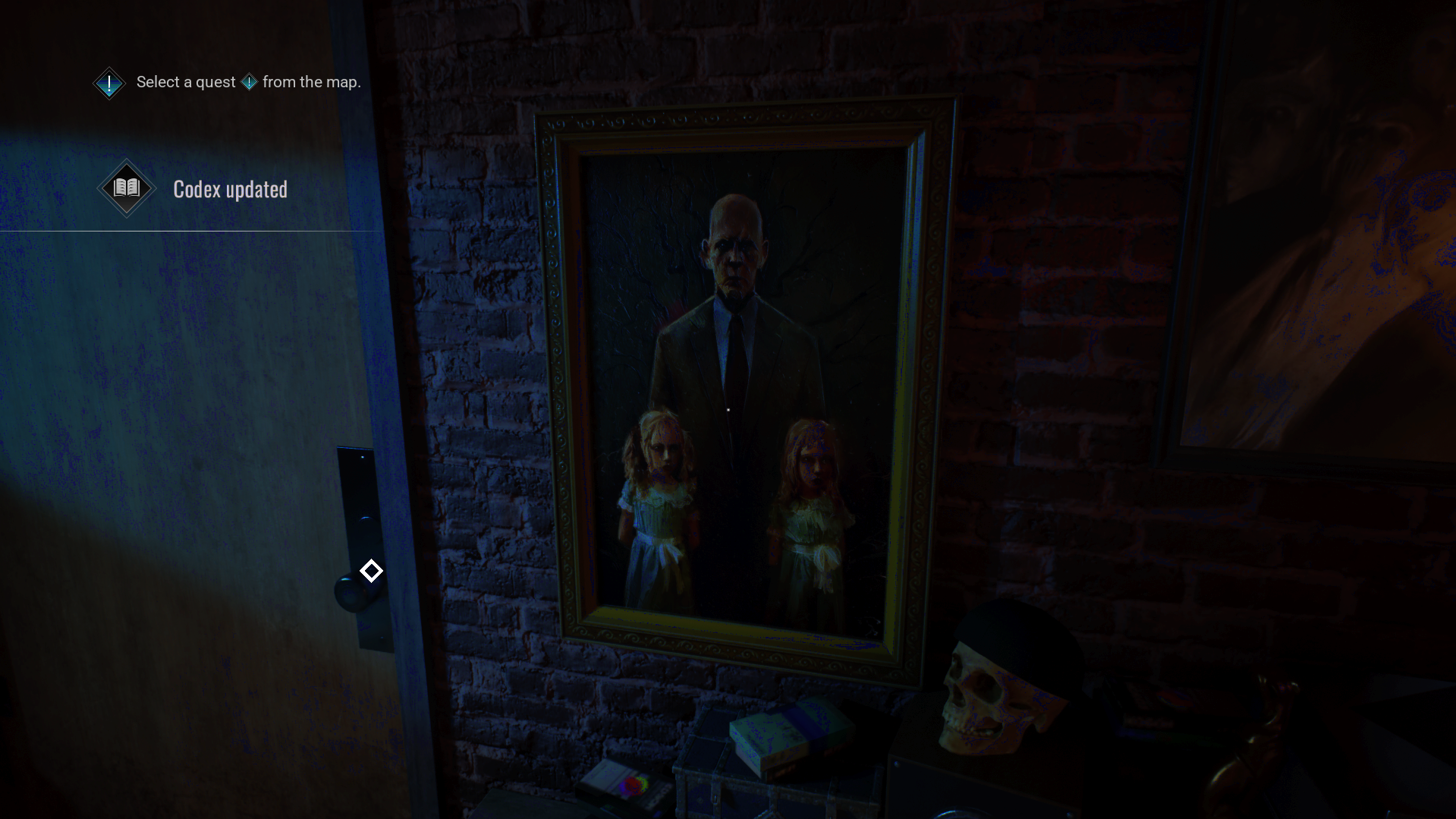
First of all, it doesn't have a traditional stat/skill system (hell, it doesn't even have an inventory, let alone stats). Beyond Phyre's gender and appearance, we choose the Clan to which he belongs, and this choice exclusively determines his initial combat skills, which are unlocked progressively as we accumulate XP. However, as the game progresses, we gain the ability to visit appropriate trainers in order to unlock literally any other skill from the arsenal of all the other clans.
Phyre's Clan is otherwise rarely mentioned in secondary dialogues and has little to no impact on gameplay (OK, it determines the character's initial cosmetics, which is very important). There is not even the option to use our Clan's Disciplines during dialogues, such as attempting to Dominate someone while playing as Ventrue.
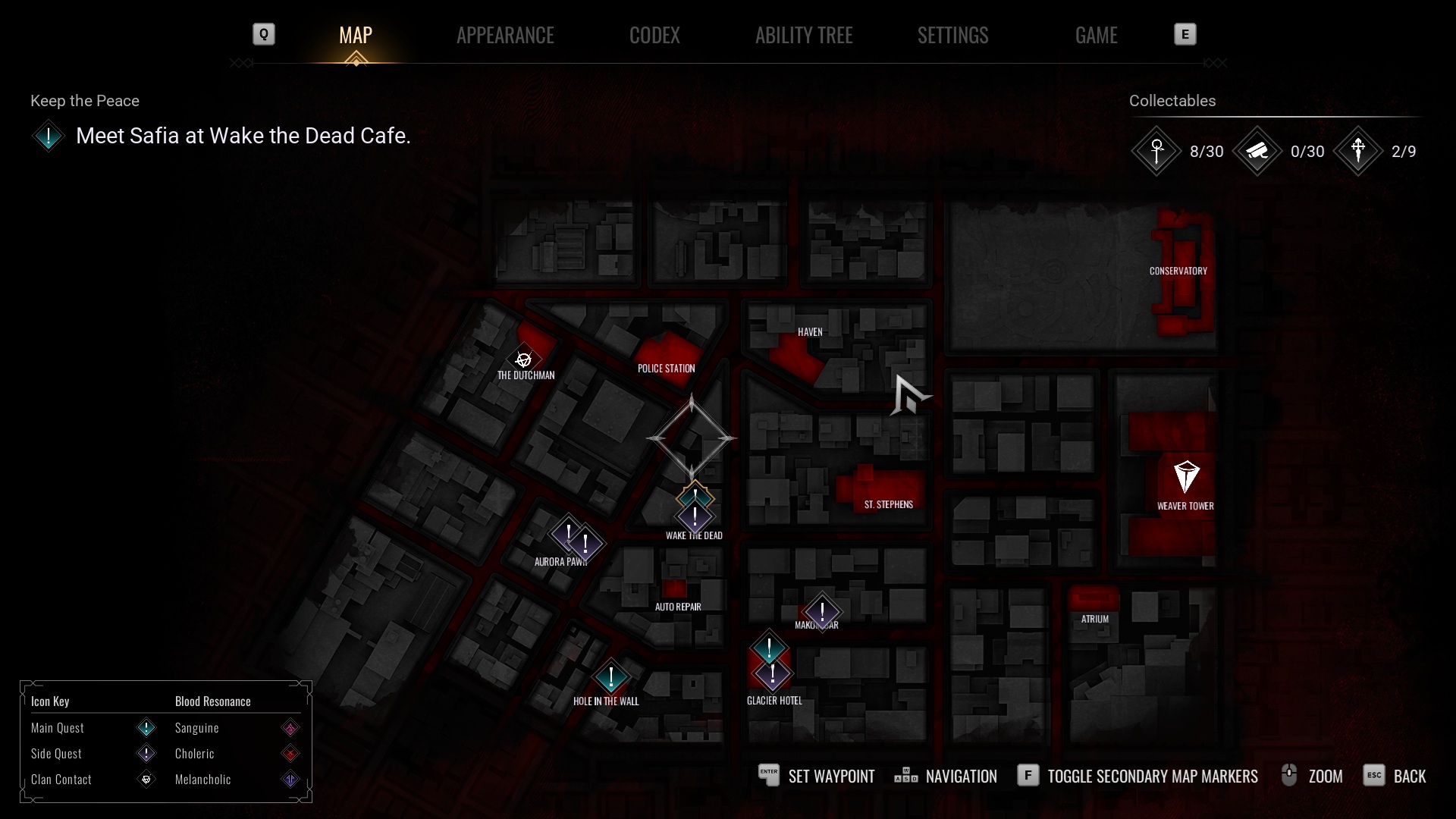
Furthermore, there are no particular choices to be made during quests. To be precise, the secondary, optional quests in the game are quite poor in both number and variety, reminiscent of slightly optimized Radiant AI quests in a Bethesda game: kill a character somewhere in Seattle (vampire or mortal), transport/deliver an item from one location to another... and that's it. As a reward, these quests give only XP and have absolutely no impact on the plot.
As for the Main Quest, things are slightly more complicated. First of all, it should be noted that the game's narrative is essentially split in two: on one hand, we play in the "present" controlling Phyre, and on the other, when Phyre goes to his Haven to rest, we control Fabien at some point in the past, from 1920 to literally a few hours before the game starts. The main missions of both are linear and straightforward, each in its own way.
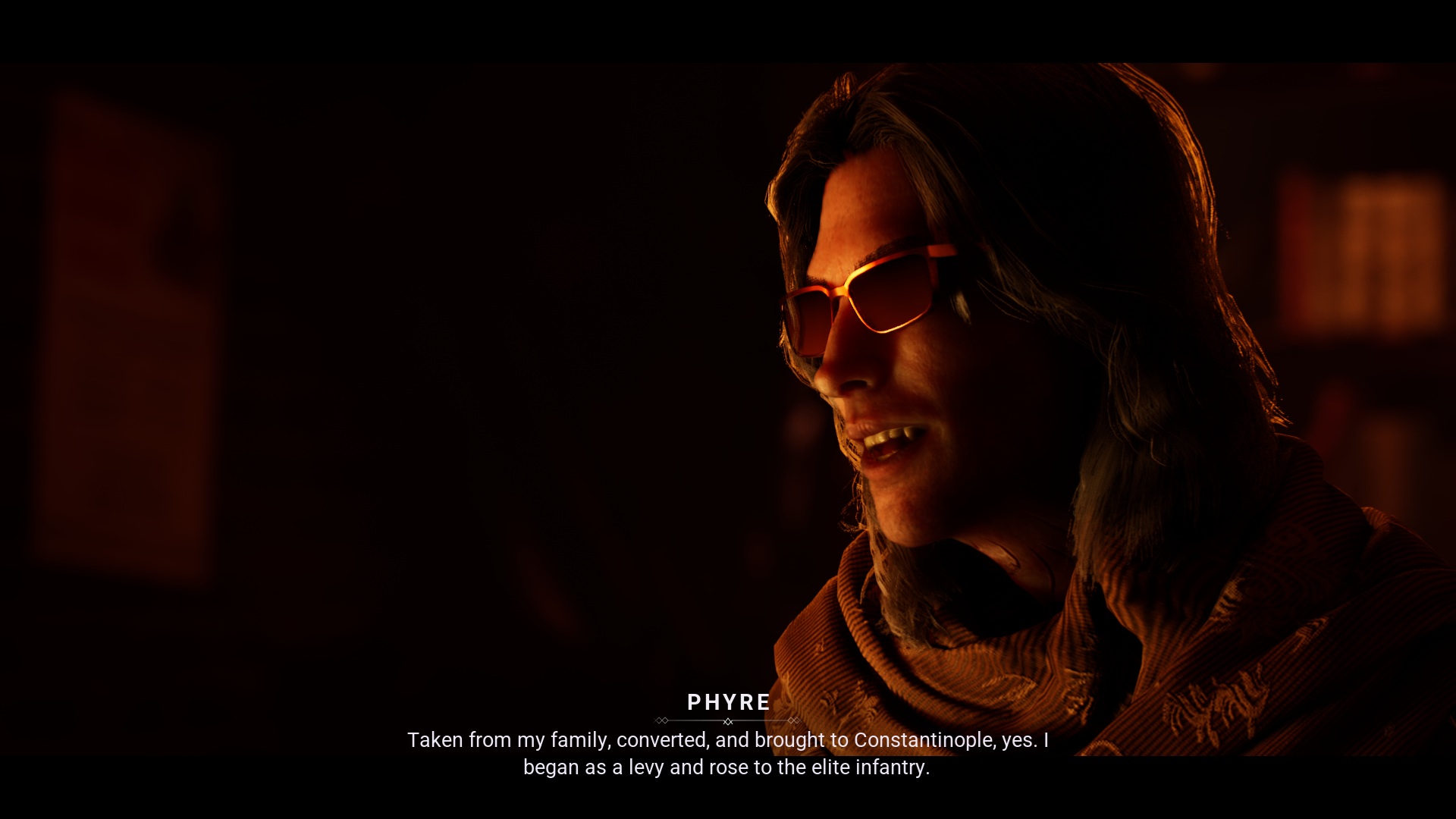
Phyre goes to the appropriate location, explores, kills opponents, and solves any puzzles until he reaches his goal or faces a boss. When playing as Phyre, the only choices throughout the game appear exclusively during dialogues. Most of these choices, depending on their style, will elicit a reaction from NPCs, which is displayed on the screen (e.g., X was impressed by this"). 95% of the choices affect only minor things, such as flavor dialogues or whether NPCs will speak to us calmly or angrily when we meet them again. However, there are some (relatively few) choices that are more significant and largely determine which of the game's six different endings we will get. In other words, the ending we get depends on what we choose in a series of dialogues that appear throughout the game. Literally a visual novel.
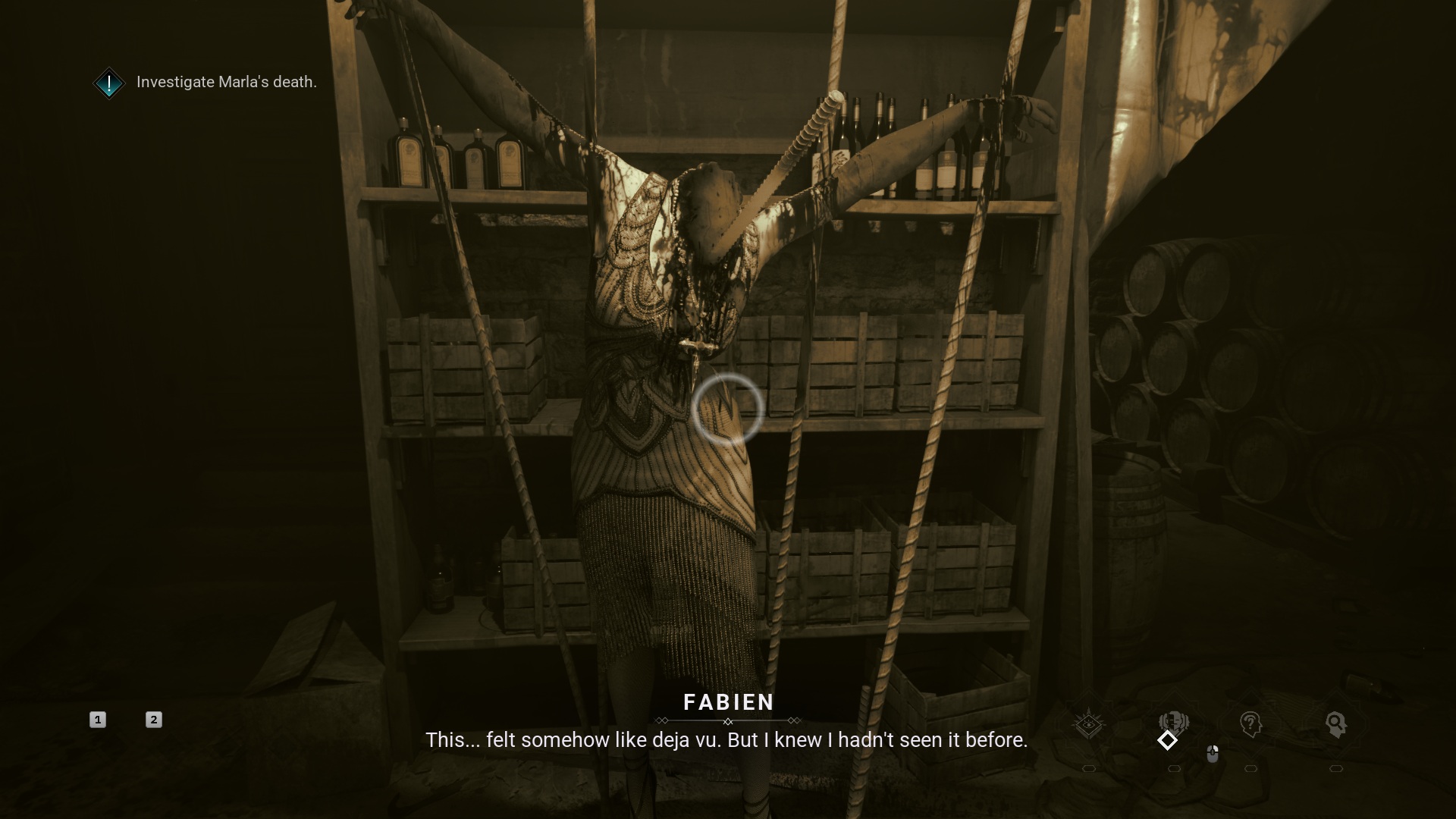
Fabien, on the other hand, must literally go from one point in the city to another, exhaust all dialogue options, and use the appropriate skill to obtain the information he desires (using the "wrong" skill does not result in any penalties) before traveling to ANOTHER location on the OTHER side of town to do exactly the same thing there. Fabien's gameplay is, for the most part, literally a walking simulator!
"Yes, but there's also combat. How can we have a visual novel/walking sim with combat?" someone might say. Combat, to put it simply, is... mediocre. Exclusively from a first-person perspective, Phyre uses his fists or his four active combat skills to eliminate his opponents. There is no possibility of using other melee or ranged weapons (how could we carry them anyway, since there is no inventory), other than temporarily utilizing those we find in the world by activating Phyre's telekinetic ability to "empty" a shotgun or throw an object—A sword? A club? A vase?—at opponents. Needless to say, the mediocre combat is accompanied by mediocre animation, another generous offering from Unreal Engine 5, as well as equally mediocre enemy AI.
We should also probably blame Unreal Engine 5 for the game's technical quirks. Although the graphics in Bloodlines 2 are not particularly cutting edge—in fact, they reminded me of 2010's Alpha Protocol, just as I had also written in my review of Swansong, which was incidentally also made with Unreal Engine – I could hear my PC fans struggling just as they did when I was playing Borderlands 4 recently (another UE title, what a curious pattern). Beyond that, there's the expected stuttering, some minor glitches (like enemies passing through walls), and some have reported game-breaking bugs, which I fortunately managed not to encounter.

Based on the above, one would think that we are dealing with a truly awful title that has no redeeming qualities whatsoever. Surprisingly, this is not entirely true. If one can get past the idea that this is the sequel to a now legendary RPG by the equally legendary Troika Games, one may be able to appreciate some of the game's good features.
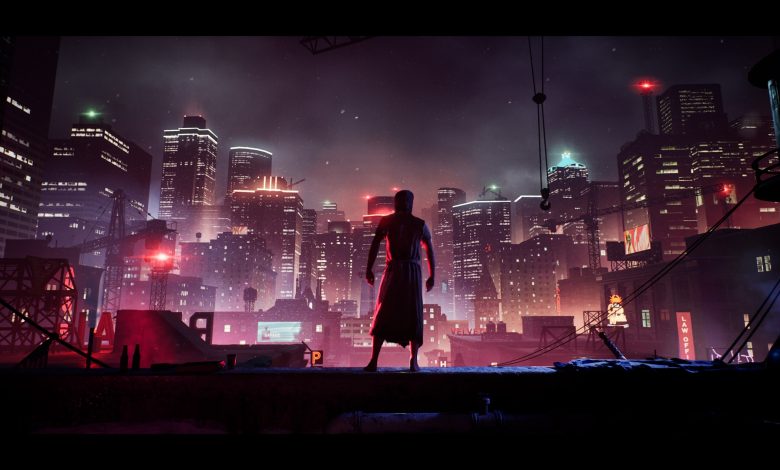
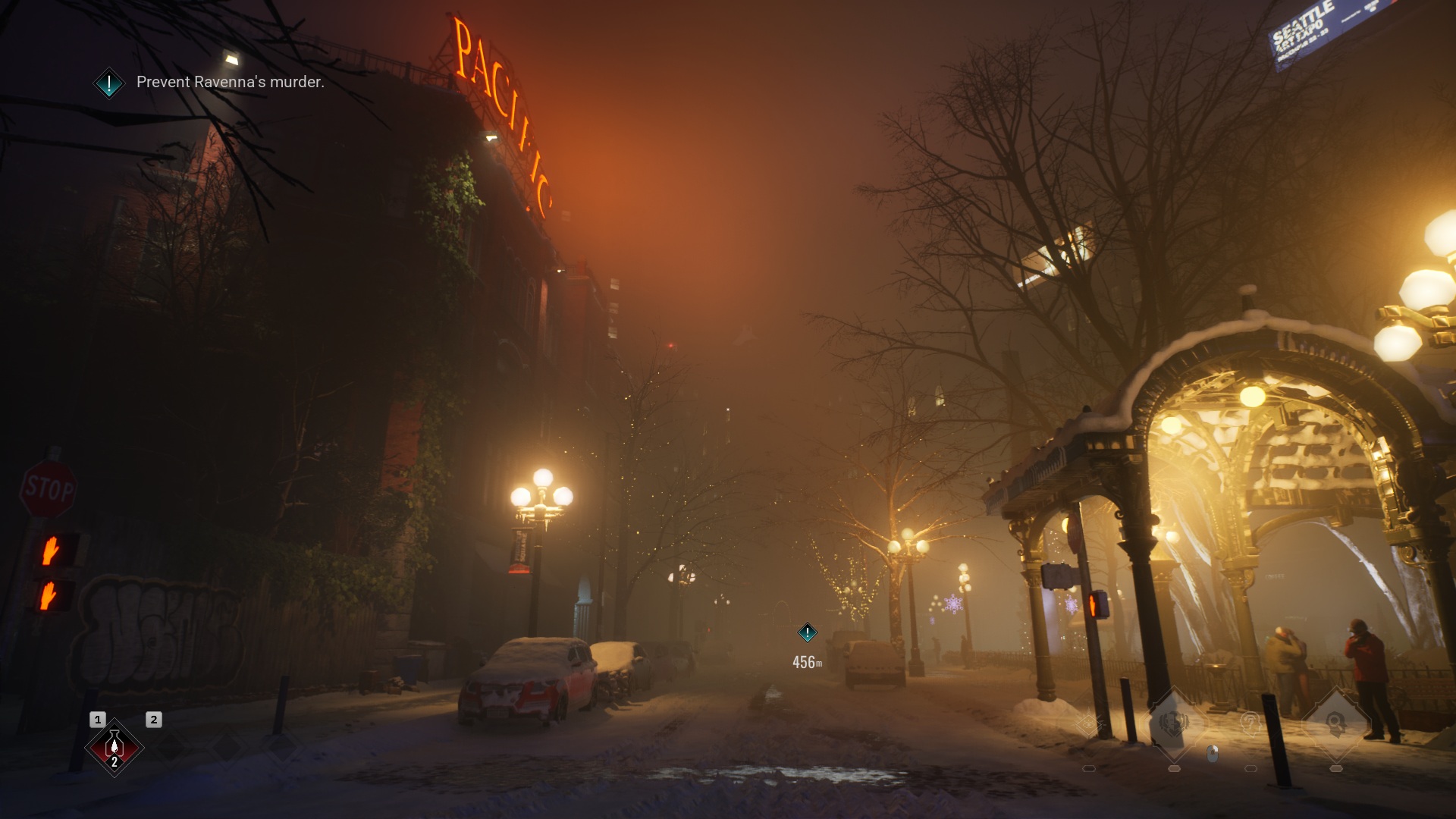
The first of these is Seattle itself and the atmosphere it exudes. The entire downtown area of Seattle is rendered as a single, fully open-world area that is fully accessible from the start of the game. In addition, the game is supposed to take place during Christmas 2024, amid heavy snowfall, resulting in a rather beautiful and wintry rendering of the US city, with snow covering everything. Beyond that, there is also extremely well-implemented verticality in the city's design. Phyre (but not Fabien, whose parts are full-on walking sim as already mentioned) has the ability to climb and roam the rooftops doing parkour, risking breaking the Masquerade if a citizen sees him floating around like a supernatural being, as it should be. The Masquerade meter has three levels—green, yellow, red—and if it maxes out, it leads to a brutal game over and automatic loading from the last checkpoint. (oh yeah I forgot to mention that the game does not have manual saving, but only automatic saves at specific points in time as we explore the world or progress through a quest). The city's beautiful design is combined with the game's decent stealth system, creating a result that is almost reminiscent of Dishonored or Deathloop in terms of logic.
The thing, of course, is that, beyond the mediocre Radiant AI sidequests and walking sim exploration, Seattle is practically devoid of meaningful content, and there isn't much for anyone to do in this beautifully rendered city. There is the option to feed, obviously, with the feeding system being connected to learning new combat skills (roughly, many citizens have a specific "temperament," and learning new skills requires points from the three different temperaments, points that are accumulated by sucking the blood of such citizens). There is also an informal hunt for collectibles that literally requires us to locate and erase about 40 graffiti tags throughout the city. Beyond that, however, the city is mostly just "in the way" as we go from location A to B, and then back to A, during our walking sim tours.
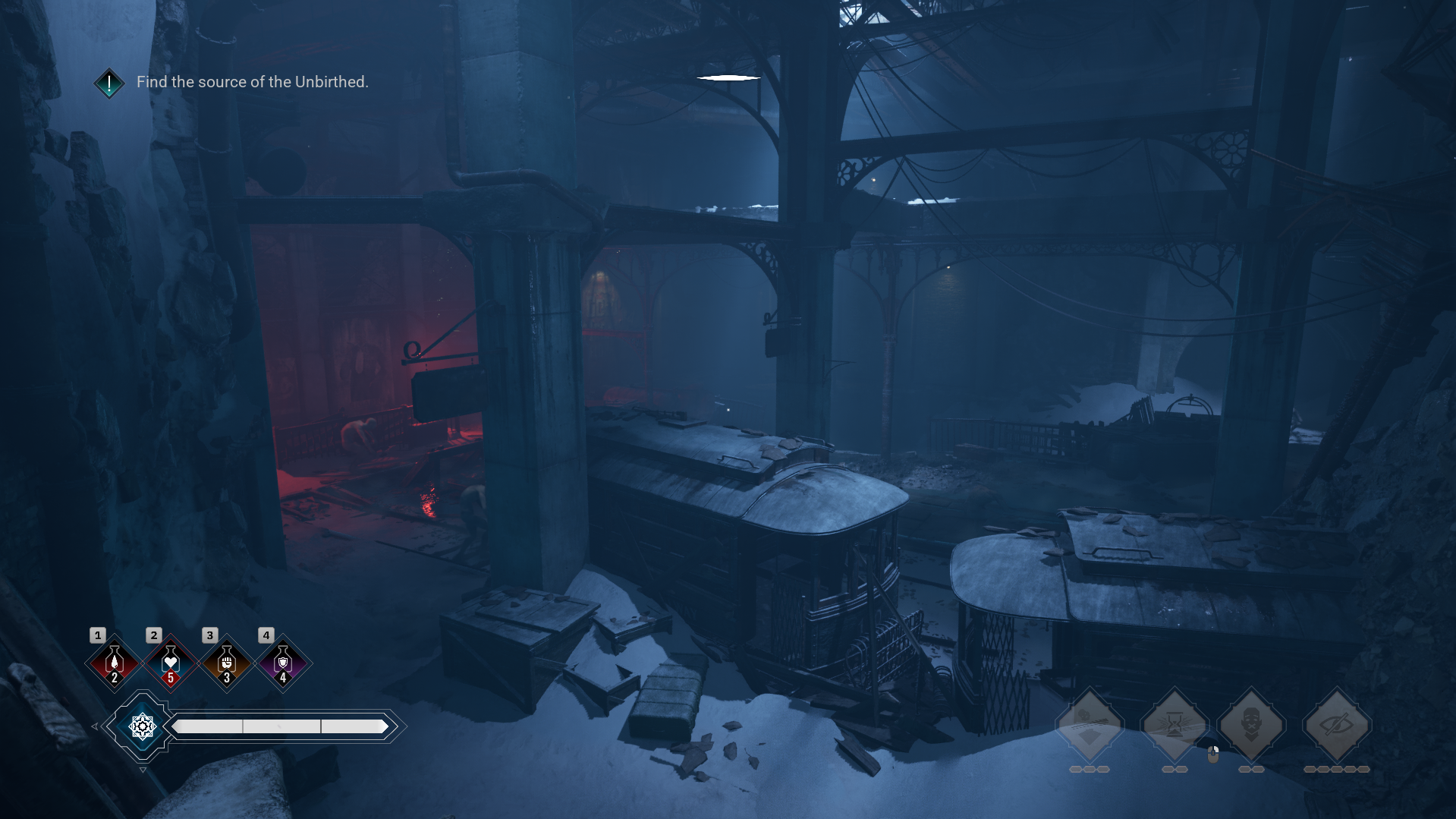
Then there's the main storyline. It may be a visual novel, but at least it is a well-written one. Both Phyre's personal story and the detective mystery that Fabien is called upon to solve in his past (elements that inevitably prove to be directly related) keep the interest piqued, escalate perfectly, and ultimately influence the state of Seattle in the ending. It is also worth noting that the interest increases dramatically in the second half of the game, I would say. In this half, we visit the most interesting locations, the variety of enemies increases somewhat (in the first half of the game, we literally exterminate hordes of Anarchs and Thin-Bloods, exclusively), and the main plot-critical choices appear in the dialogues.
Finally, I also liked the music. The original material recorded for the game is OK and mostly fitting, but here and there outtakes of the soundtrack created by Rik Schaffer for the original Bloodlines also appear (outtakes that are available on Spotify literally since 2021), which are SO GOD-DAMNED AMAZING. I really love the music of the first Bloodlines so much, and my ear has been trained to recognize Rik Schaffer's tracks from their first notes. Every time one of those started playing in Bloodlines 2, it was like my soul rejoiced.
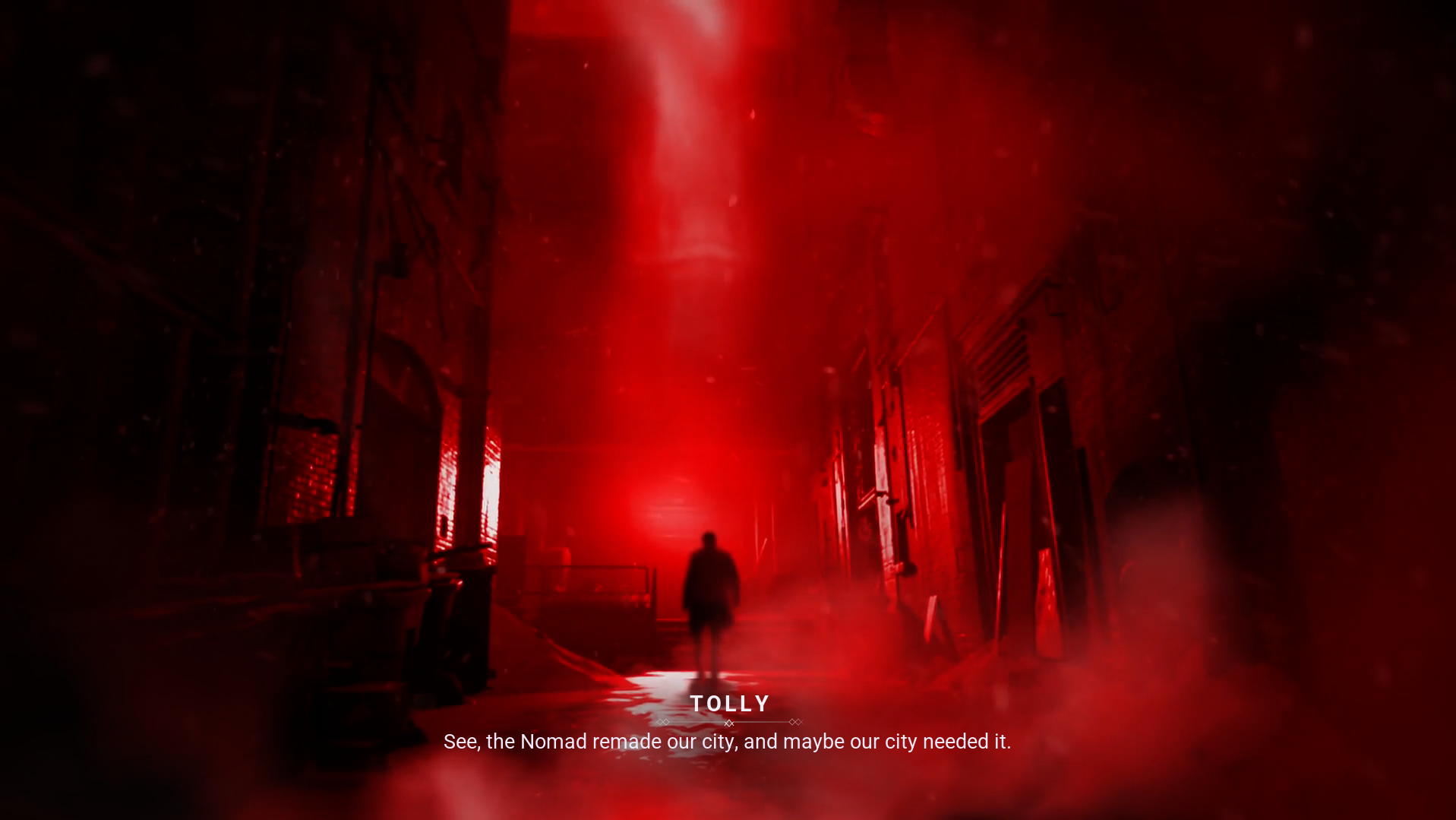
I realize that this review presents Bloodlines 2 as a hodgepodge of good and mediocre features that don't quite fit together, but paradoxically, this is an accurate overview of the overall situation surrounding the game. The Chinese Room took on an extremely difficult case, and at this point, I suppose we should be satisfied, even impressed, that they managed to take the uncertain mess that was Hardsuit Labs' unfinished Bloodlines 2 and turn it into a VtM game. Surely the entire story of Bloodlines 2's development is in itself a subject of study from beginning to end, and perhaps future historians will find it interesting to thoroughly examine the game and try to identify which elements belong to HSL's original design and which are the creation of The Chinese Room, although I suppose this kind of literary research is of little interest to today's consumer audience.
If a prospective buyer approaches the product that Bloodlines 2 ended up being, expecting an RPG experience comparable to the first Bloodlines, they will undoubtedly be bitterly disappointed. In fact, at this point, it might have been better for the game's image if it had completely dropped "Bloodlines 2" from its title and been renamed "VtM: Clans of Seattle" or something similar. Approaching it this way, the game is slightly (though certainly not completely) redeemed for what it really is: an atmospheric VtM game lasting 20 to 30 hours, with relatively limited gameplay but with a well-written detective story with vampires at its core. It is up to the consumer to decide whether this is enough for them.
RATING - 68%
68%
Undead
A rather underwhelming sequel to Troika's legendary RPG, which is somewhat redeemed if treated as a simple VtM action-adventure with an interesting detective story at its core.